



500-piece jigsaw sprint sounds like a contradiction until you watch a timed puzzle table. The pieces are not flying around at random. The best players look busy, yes, but the table usually has order before it has speed.
That is the part casual players can borrow.
A 500-piece puzzle is big enough to punish messy sorting, but small enough that one good opening routine can change the whole session. It sits in a useful middle zone: not a tiny warm-up, not a thousand-piece weekend project.
If you want a slower game after reading, start from Easy Daily Puzzle or browse jigsaw puzzle topics on Easy Daily Puzzle .
500-piece jigsaw sprint is really a sorting test
The World Jigsaw Puzzle Championship 2026 schedule lists individual first-round sessions using 500-piece puzzles with 90-minute time blocks. Later individual rounds also use 500 pieces, including 75-minute semifinal and final sessions.
That does not mean a casual player should turn every online jigsaw into a race. It means the 500-piece format has enough difficulty to reveal habits quickly.
Before a single piece fits, the table already starts deciding the result.
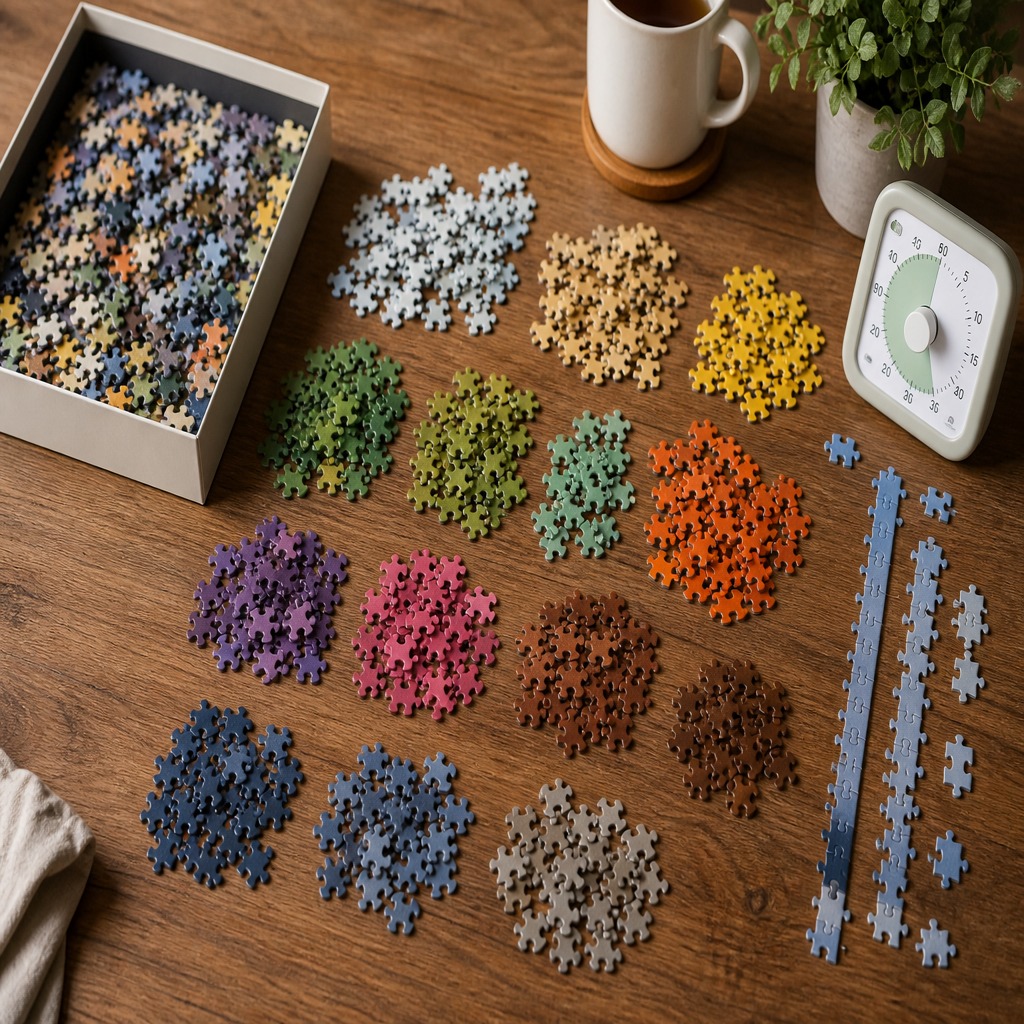
Are the edge pieces visible? Are strong colors separated? Are faces, signs, letters, sky, water, and texture grouped? Are pieces all upright enough that the eye can compare them without constant rotating?
The player who skips this stage may feel fast for the first five minutes. Then the table turns into a swamp.
The player who sorts well may look slower at first. Ten minutes later, they are building islands while the rushed player is still dragging blue pieces into other blue pieces and hoping one clicks.
What the old jigsaw story adds
Jigsaw puzzles did not begin as a speed event. The Strong Museum describes John Spilsbury's 1766 dissected map of Europe as a teaching tool, pasted onto mahogany and cut along geographical lines.
That origin story is useful because it reminds us what jigsaw play originally trained: looking carefully at relationships.
A border was not just a border. It was a coastline, a national boundary, a place where one shape carried meaning. Modern online puzzles are usually photographs, illustrations, or art scenes, but the same idea remains. Pieces are not isolated objects. They belong to a picture system.
That is why a 500-piece jigsaw sprint is not only hand speed. It is a reading test.
The puzzle asks: what does this piece know that the others do not?
Color can answer. Texture can answer. A line can answer. Sometimes shape answers last.
The first ten minutes matter more than the last ten
Most casual players remember the last stretch because it feels dramatic. A few pieces remain, the picture is almost done, and every match feels obvious.
The first ten minutes are less glamorous. They are also more important.
Use this routine:
1. Flip and orient pieces quickly.
2. Pull corners and clear edge pieces into one area.
3. Separate two or three bold color groups.
4. Make a small pile for text, faces, windows, signs, or other high-information details.
5. Leave uncertain pieces in a neutral zone instead of pretending they belong somewhere.
That last step matters. Bad sorting is worse than loose sorting. If a piece is placed in the wrong mental pile, the player stops seeing it as available.
In a 500-piece jigsaw sprint, the table should stay flexible. Sort enough to reduce noise. Do not sort so rigidly that every odd piece becomes an argument.
Why edge-first is useful but not sacred
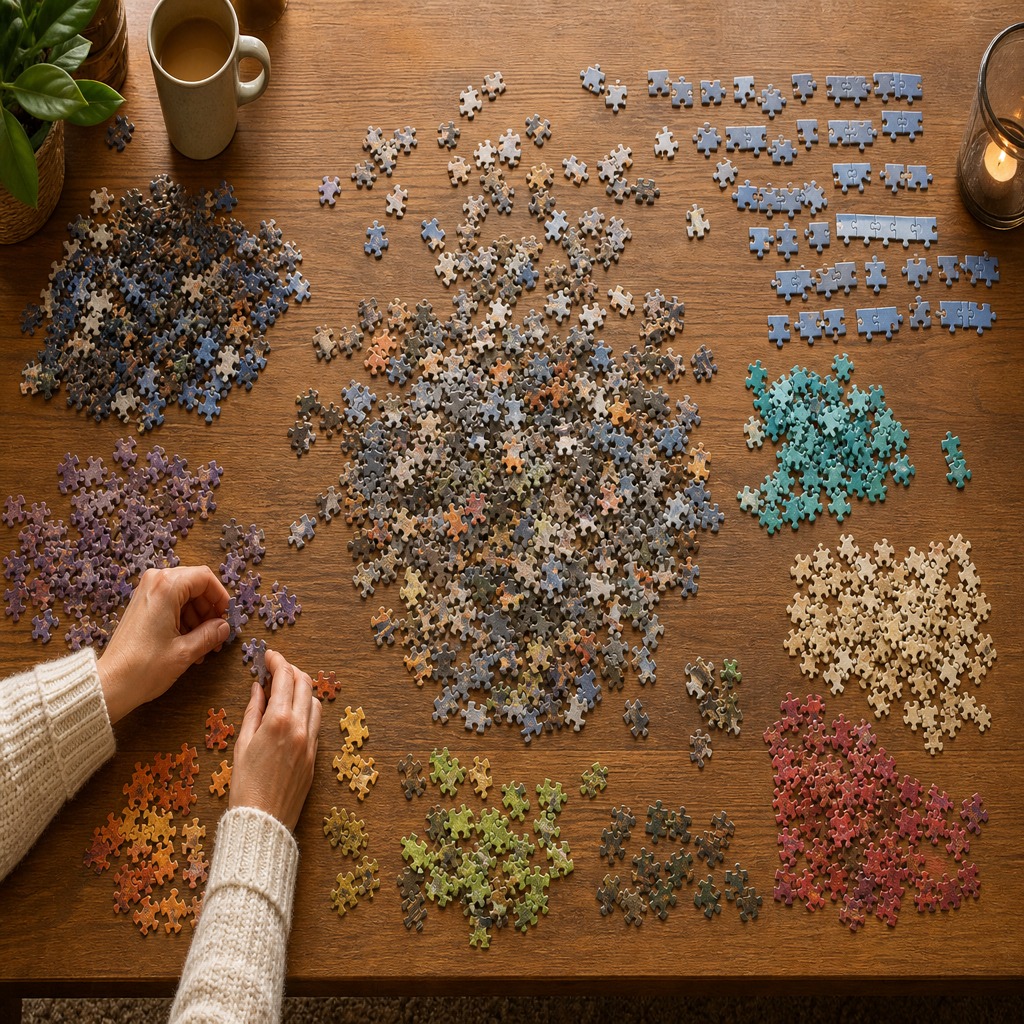
Many players start every jigsaw puzzle with the border. It is a good habit, especially for physical puzzles. Edges give the picture a container and help the table feel less chaotic.
But edge-first can become a trap.
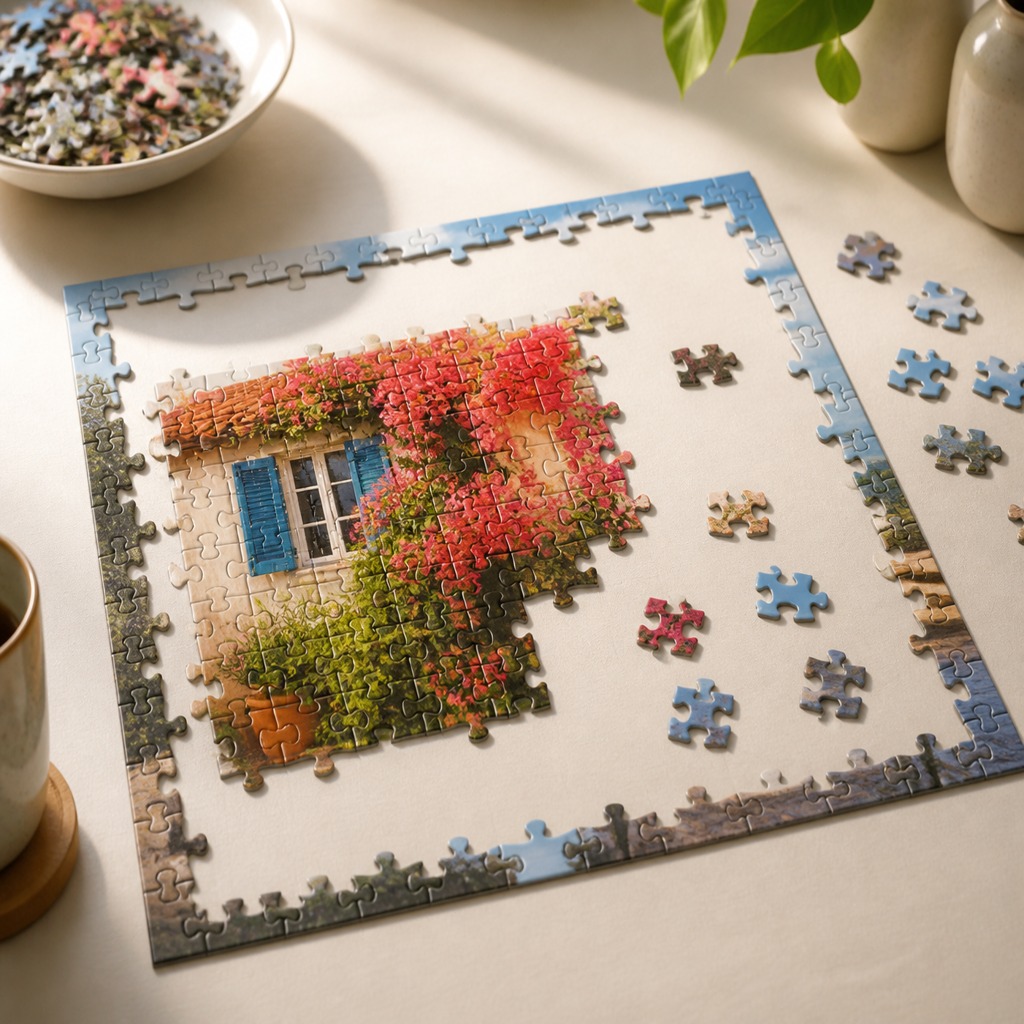
If the border has long stretches of identical sky, grass, sand, or water, forcing it too early wastes energy. The better move may be to build a high-information island first: a red roof, a face, a boat, a sign, a cluster of flowers, a bright window.
Once that island grows, it gives the border more clues.
This is one lesson from speed puzzling that transfers beautifully to relaxed play. The best next piece is not always an edge. The best next piece is the one that makes the picture easier to read.
In an online puzzle, that may mean zooming out before dragging another piece. It may mean rotating the view in your mind. It may mean leaving the border half-built while a stronger color anchor takes shape.
That is not cheating on the border. It is listening to the picture.
How to play a 500-piece jigsaw sprint without making it stressful
Set a soft timer if you like pressure, but do not make the clock the boss.
Try twenty minutes instead of ninety. Use the first five minutes only for sorting. Then build three islands before touching the hardest background. If you finish a section, pause long enough to ask what the next smartest section is.
This keeps the energy of a 500-piece jigsaw sprint without turning a pleasant break into homework.
You can also use a three-pass method:
First pass: find obvious pieces.
Second pass: build the strongest islands.
Third pass: connect islands and clean up the quiet background.
Simple. Annoyingly effective. The kind of method that feels too plain until it saves you from twenty minutes of poking at the same almost-blue piece.
What to remember before the first fit
A 500-piece puzzle is forgiving enough for casual play and sharp enough to teach better habits.
Do not rush the first fit. Rush the table into order.
Sort by what the eye can use: color, texture, line direction, text, faces, edges, corners. Keep uncertain pieces available. Build islands when the border stalls. Treat shape as one clue among several, not the whole case.
Then the puzzle starts to feel different. The board is still messy, but it is no longer anonymous.
That is the quiet trick behind a good 500-piece jigsaw sprint. Speed begins before the first satisfying click.