



Crossword black squares look like the parts of the puzzle where nothing happens. That is the first trick.
Open a crossword and your eyes naturally chase the white squares. The letters go there. The clues point there. The answer you are trying to remember sits there, half formed and slightly annoying. The black squares seem like blank wall. In practice, they are more like traffic signs. They tell you where a word starts, where a corner stops, which answers can rescue each other, and where the puzzle maker wants your eye to turn.
If you want a fresh grid after reading, start with the Easy Daily Puzzle home page or browse more crossword articles on Easy Daily Puzzle.
Crossword black squares were not always part of the look
The first widely recognized newspaper crossword did not look like the clean square grids most players know now.
Arthur Wynne's 1913 "Word-Cross" puzzle, shown on the American Crossword Puzzle Tournament history page, was diamond shaped and had no internal black squares. It already had the central pleasure of crossword solving: answers crossing other answers. But the modern blocky rhythm had not fully arrived.
That small historical detail matters because it shows how much the crossword grid evolved. The early puzzle was closer to a word shape. The modern grid became a designed route.
A modern guide to crossword grids from ClueGrid describes black squares as the cells that separate words, with entries running across and down through the white squares. That sounds simple, but it changes how a solver moves through the page.
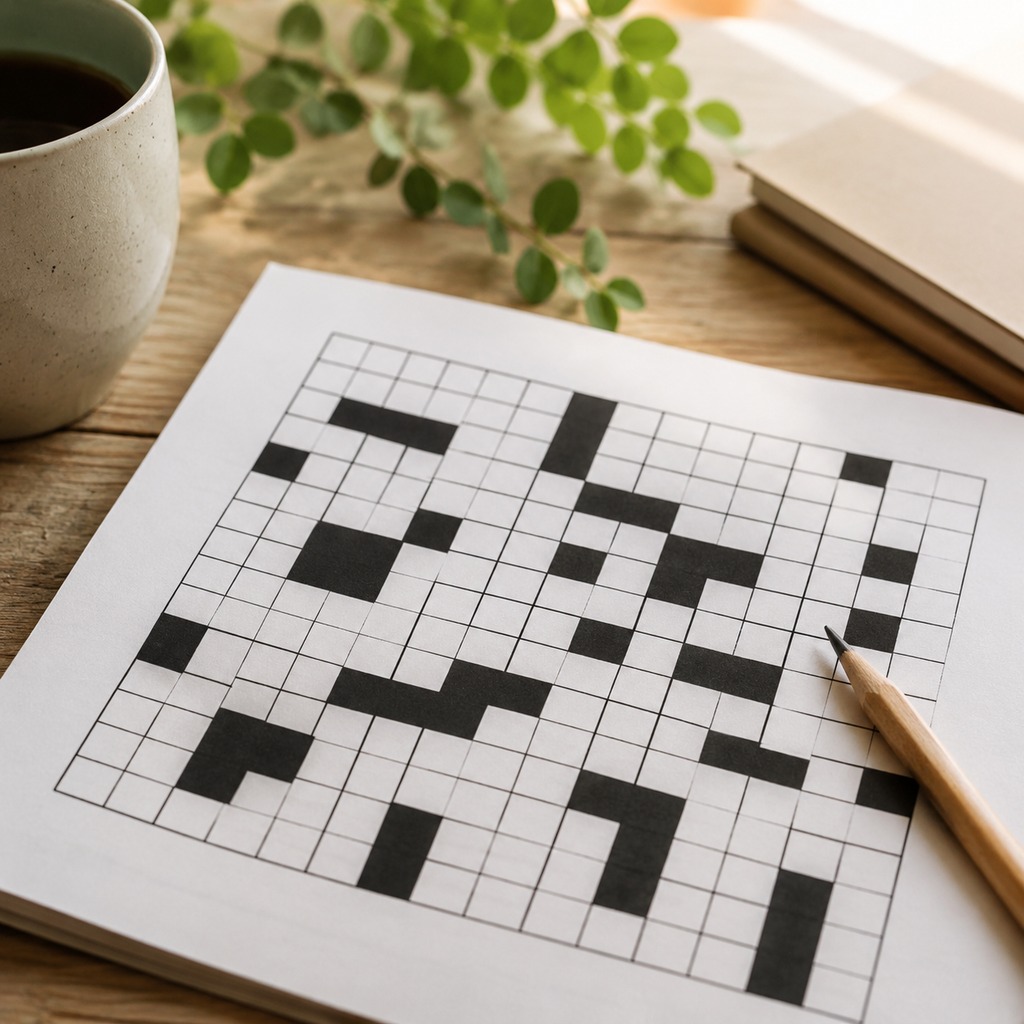
The black squares tell you where to start
A beginner often starts with the clue list. That is fine, but the grid itself is already giving hints before you read a single clue.
Look at a corner with three short entries stacked together. That area may be friendly because one answer can quickly give letters to two others. Look at a long open lane across the middle. That may be a theme answer, a phrase, or the spine of the puzzle. Look at a cluster of black squares that cuts off a tiny section. That corner may need careful crossing letters because it has fewer ways in.
Crossword black squares also show you where a word starts. In most standard grids, a white square starts an Across answer if it has a block or grid edge on its left and another white square on its right. It starts a Down answer if it has a block or edge above it and another white square below.
You do not need to think about that rule in formal language while solving. You can feel it. A black square says, "Stop here. Start there. Turn downward now."
That is why scanning the grid before the clues helps. Spend five seconds looking for long answers, boxed corners, open centers, and tight clusters. The grid is not solved yet, but it has already told you where the easy doors might be.
Why black squares change difficulty
Two crossword grids can have the same number of squares and feel completely different.
One reason is the placement of black squares. A grid with many small isolated corners may feel choppy. You solve one pocket, then get stuck because there are not many crossing letters leading into the next pocket. A grid with smoother connection lets letters travel.
Black squares also shape answer length. More blocks usually create more short entries. Fewer blocks create longer lanes. Long answers often carry theme material, jokes, phrases, or the puzzle's main personality. Short answers keep the grid flexible, but too many short answers can make a puzzle feel clipped or filled with abbreviations.
The best grids balance those pressures. They give the constructor enough structure to fit the theme and give the solver enough crossings to recover from mistakes.
For casual players, the takeaway is practical: when a corner feels stubborn, do not blame only the clues. Look at the walls. If black squares isolate that area, solve it from the outside in. Get one crossing letter from a neighboring answer, then test the short entries.
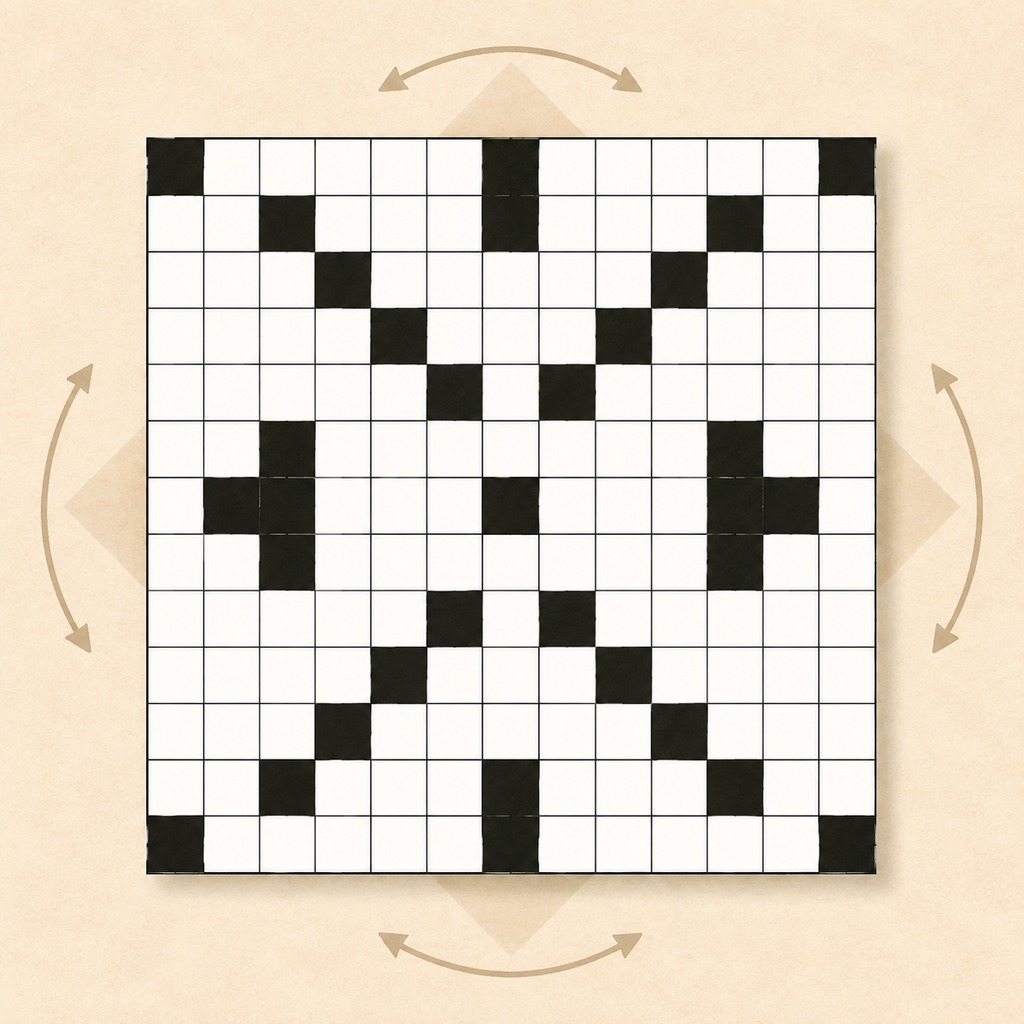
Symmetry makes the grid feel intentional
Many published crosswords use 180-degree rotational symmetry. If you turn the grid upside down, the pattern of black squares looks the same.
That is a tradition, not a law of nature. Still, it gives the page a calm feeling. A black square in the upper left often has a matching partner in the lower right. The grid feels built rather than scattered.
Symmetry also helps themes feel balanced. If one long theme answer sits near the top, another may sit near the bottom. If a block pattern opens space on one side, the matching pattern may do the same across the grid. The puzzle starts to feel like an object with weight, not a random collection of answers.
This is where crossword black squares become more than separators. They are part of the puzzle's style. A tight mini crossword may use them to create speed. A larger Sunday-style grid may use them to make room for longer phrases. A themed puzzle may shape them around a central idea.
You do not need to design crosswords to benefit from seeing this. When you notice symmetry, you can predict where long answers might sit. If the top left is stubborn, the matching lower right may give you a cleaner opening.
A better way to use the grid as a solver
Try this routine on your next crossword.
First, scan the long lanes. Long answers often give the biggest reward because one solved phrase drops letters into several crossing clues.
Second, mark the soft corners. A corner is soft if several answers cross each other tightly. One easy clue can unlock a group.
Third, watch isolated sections. If black squares form a narrow doorway into a corner, do not guess wildly inside it. Work toward it through the doorway.
Fourth, keep short entries humble. A three-letter answer may look obvious, but short answers have many lookalikes. Let crossings confirm them.
Fifth, use black squares as reset points. When one area feels muddy, move to another section divided by the grid. Crosswords are generous that way. You are allowed to leave a corner alone until the puzzle gives you a better angle.
This habit is especially useful for mini crosswords. In a small grid, every black square has a strong effect. One block can turn a quick puzzle into two little rooms.
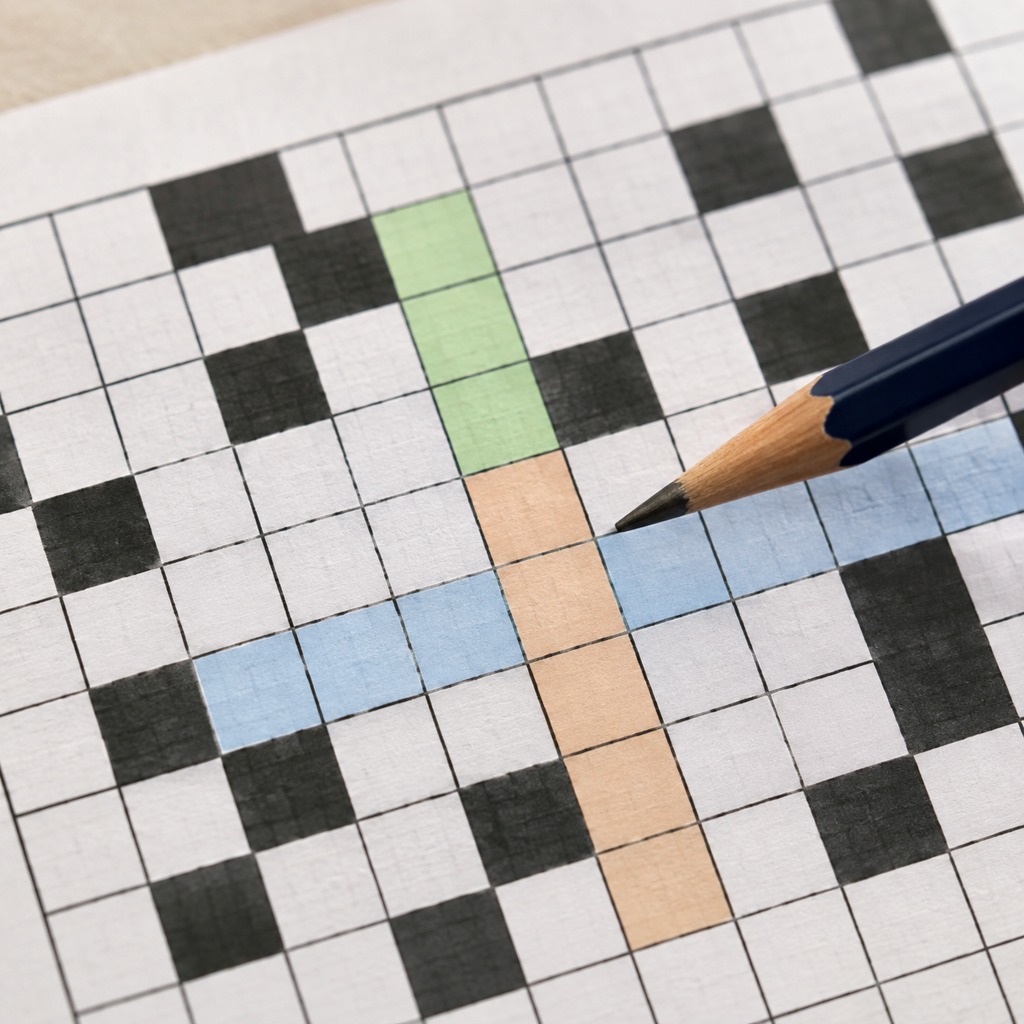
What black squares teach about good puzzle design
The best thing about crossword black squares is that they disappear when they are doing their job.
A fair grid does not make you think, "What a clever black square." It makes you feel that the puzzle has a path. You find a foothold, get a crossing letter, test a clue, erase something, and suddenly a sealed corner begins to breathe.
That is why black squares are worth noticing. They are quiet, but they are never empty. They hold the grid together by deciding where language can move.
Next time you open a crossword, pause before reading the first clue. Look at the black squares. Find the long lanes, the tight corners, the blocked rooms, and the open middle. The puzzle has already started talking. You just have to look at the map before you start walking through it.