



Crossword rebus squares usually announce themselves by making a good solver feel slightly foolish. You know the answer. The crossings agree. The clue is fair. The grid still refuses to fit.
One square is asking for more than one letter.
That is the little shock of a rebus crossword. The normal crossword contract says one letter per box. Crossword rebus squares bend that contract. A single box may hold two letters, three letters, a short word, a number, or even a symbol, depending on the puzzle.
For players who enjoy word games on Easy Daily Puzzle, this is one of the best small ideas to understand because it changes how a clue can be right. You can also browse more word-puzzle pieces through Easy Daily Puzzle crossword articles when you want another clue habit for a short daily solve.
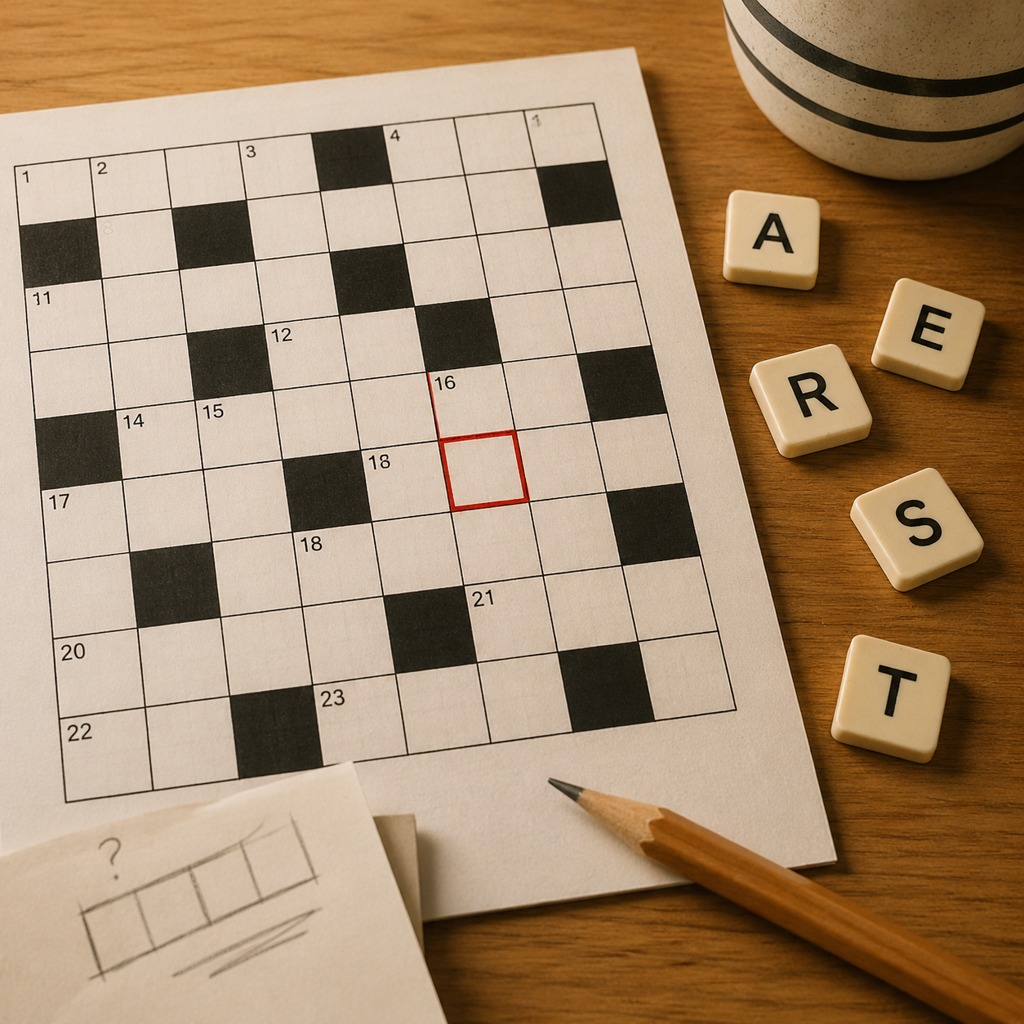
Crossword rebus squares begin when the grid will not fit
A rebus is an older wordplay idea, but in crosswords it has a specific grid meaning. Wikipedia's rebus entry describes crossword rebuses as answers that may require multiple letters, a word, a numeral, or another symbol in a single square. XWord Info's rebus page puts it in solver language: some puzzles require symbols or more than one letter to be crammed into one box.
That sounds strange until you meet the moment in the grid.
Imagine a clue answer that seems to be "STORMY," but the open space only has five boxes. A crossing clue also seems to need "OR" in the same square. If the puzzle has a theme built around weather, that box might not be wrong. It might be doing extra work.
The hard part is psychological. Most solvers are trained to assume they made a mistake. Usually, that is the right assumption. A wrong answer is far more common than a rebus.
So the skill is not "guess rebus whenever something feels weird." That way lies madness, and probably a very messy grid.
The skill is knowing when the weirdness repeats.
Crossword rebus squares need a pattern, not a panic
One crowded square is suspicious. Two crowded squares are evidence. Three can become the theme.
Crossword rebus squares rarely appear as a random prank. They usually belong to a puzzle-wide idea. The same chunk may appear several times. The same symbol may answer different crossings. The theme may make a phrase shorter than it looks because part of the answer has been compressed.
This is why crossings matter even more than usual.
A rebus square has to satisfy both directions. If the across answer wants "SUN" and the down answer also makes sense with "SUN" in that same square, the grid is asking you to accept one packed box. If only one direction works, keep looking. You may simply have a wrong answer.
XWord Info says rebus puzzles make up a small slice of modern daily crosswords, not the everyday norm. That tracks with how they feel. They are memorable because they are not routine.
How to spot crossword rebus squares without overthinking every clue
The first sign is length trouble.
You have an answer that fits the clue cleanly, but it is one or more letters too long for the available space. Before forcing a shorter synonym, check the crossings around the tight spot. Does one crossing also seem to want the same extra letters?
The second sign is repeated discomfort.
If one long answer will not fit, that may be your mistake. If three long answers seem one beat too long in a similar way, the puzzle may be teaching you its trick.
The third sign is theme pressure.
Some crossword themes announce themselves through repeated phrases, puns, hidden words, or altered spelling. A rebus square is one way to make that theme physically happen inside the grid. The theme is not only in the clue list. It is in the box.
A useful routine:
1. Write the answer lightly when it seems too long.
2. Check whether a specific chunk is causing the overflow.
3. Look at the crossing clue through that same square.
4. Search for the same chunk elsewhere in theme-length answers.
5. Only commit when both directions accept the packed square.
That last line saves a lot of embarrassment. A rebus is not permission to put anything anywhere. It is still a crossword answer, which means it has to be checked.
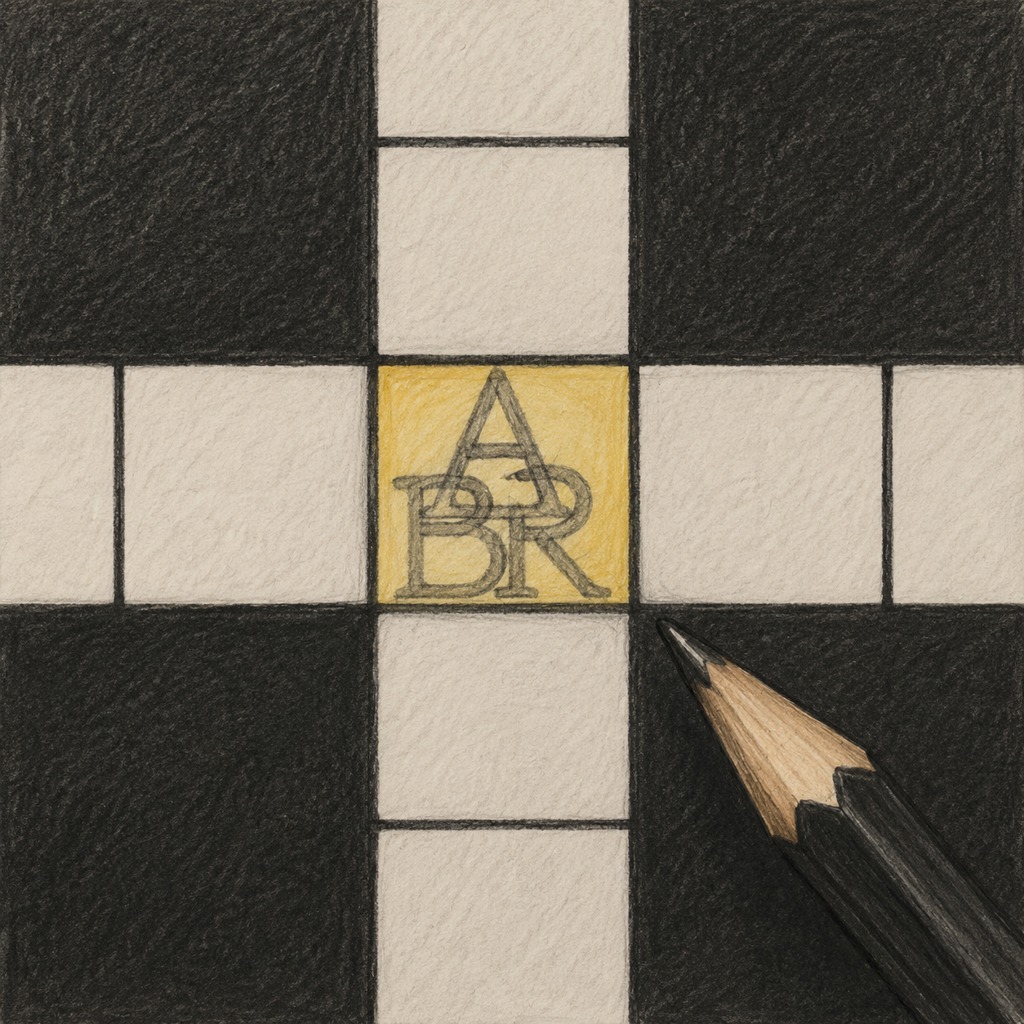
Why rebus puzzles feel unfair until they click
Rebus puzzles can annoy good solvers because they change the rules without asking first.
That annoyance is reasonable. The one-letter-per-square habit is deep. It is how most of us learned crosswords. It is also why the first rebus square can feel like the puzzle is cheating.
But a fair rebus leaves a trail.
The clue should still define or indicate the answer. The crossing should still work. The packed letters should repeat in a way that explains the theme. When those pieces line up, the frustration flips into a small grin. The grid was not broken. It was using a different container.
This connects back to crossword history in a funny way. The early newspaper crossword was already a spatial word game. The American Crossword Puzzle Tournament site keeps a short account of Arthur Wynne's 1913 Word-Cross, the famous early newspaper puzzle that helped lead toward the modern grid habit.
Crossword rebus squares push that spatial habit a little further. They remind solvers that a crossword is not only a list of definitions. It is a grid with rules, and once in a while the rule itself becomes the joke.
What to do in a digital crossword when one box needs more
On paper, a rebus square is easy to write badly. You squeeze the letters into the box and hope you can read them later.
On a screen, the problem is different. Many digital crossword interfaces have a special rebus entry option, but the exact button depends on the app or site. If the answer will not fit and the crossings support a packed square, look for a rebus, more, special entry, or multi-letter option in the puzzle controls.
Do not use that option too early.
If you enter a rebus before the puzzle has earned it, you may hide a simpler mistake. That is one reason new solvers sometimes get tangled. They learn that rebuses exist, then start seeing them everywhere. Most hard clues are still ordinary hard clues.
Treat the rebus button like a spare key. Useful when the lock is real. Silly when the door is already open.
The mistake is defending the first clever idea
The most common rebus mistake is falling in love with the trick before the grid confirms it.
You notice that a phrase could be shortened by packing "IN" into one square. Clever. Then you notice another answer that might also use "IN." Very clever. Then a crossing breaks, and instead of backing up, you start repairing the whole corner around your idea.
That is the trap.
A good crossword solver needs a little emotional discipline. Keep the possible rebus soft until it survives crossings. If the packed square breaks a down answer, erase it. If the same chunk does not appear anywhere else, be skeptical. If the theme answer works only after a paragraph of explanation in your head, it probably does not work.
Crossword rebus squares are satisfying because they are compact. The explanation should click into place quickly once you have enough evidence.
A better next grid with crossword rebus squares
Try this the next time a crossword feels one box too small.
Do not panic. Do not immediately accuse the puzzle. Do not invent a tiny private rule that applies only to your favorite answer.
Read the clue again. Count the boxes. Check the crossing at the cramped spot. Then ask whether the same little overflow appears somewhere else.
If it does, the puzzle may be offering you one of those rare moments when the grid changes shape without changing size.
Crossword rebus squares are strange at first because they break a rule most solvers did not know they were relying on. Once you see the pattern, the box stops feeling too small.
It starts feeling like the only place the answer could have gone.