



Spider Solitaire empty column ladder is a simple name for a move that changes the whole table. One empty column is not just a blank space. It is a temporary lane where cards can step aside, reveal what was hidden, and come back in a better order.
That sounds small until you waste the space.
Most Spider Solitaire mistakes do not look dramatic when they happen. You see an empty column, feel relieved, and fill it with the first legal stack. A few moves later, the board freezes. The hidden cards stay buried. Same-suit runs break apart. A king sits proudly in the only lane that could have saved the game.
The better habit is to treat the empty column like a ladder.
You do not climb it because it is pretty. You climb it to reach something.
If you want a relaxed practice table, start from Easy Daily Puzzle and play one round where every empty column must reveal a hidden card, repair a suit run, or create another useful empty column before you fill it permanently.
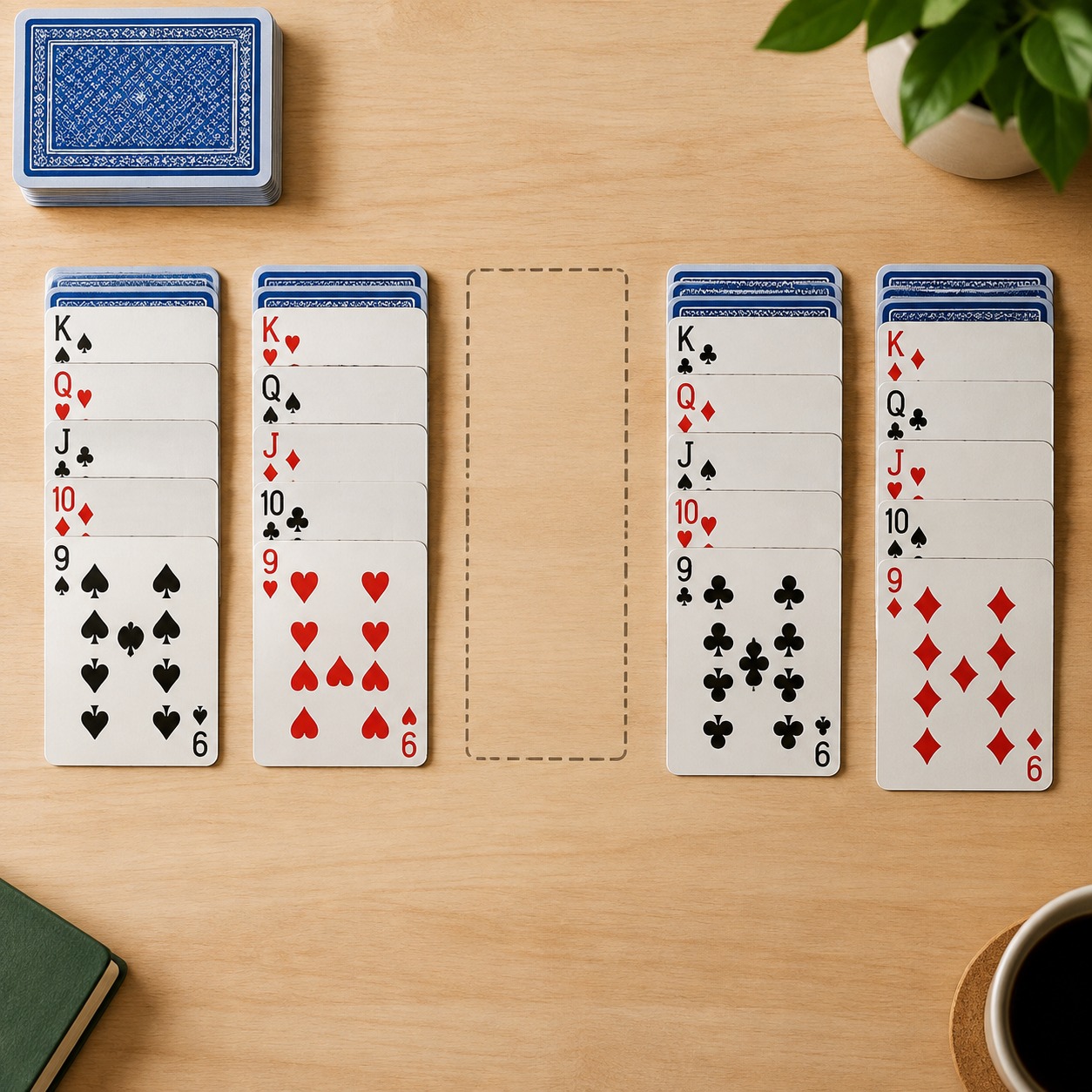
Spider Solitaire empty column ladder starts with one question
The question is not "what can I move here?"
The question is "what can this empty column help me uncover?"
That one change makes Spider Solitaire slower for a few seconds and stronger for the next several moves.
Standard Spider Solitaire rules, such as the rules explained by Bicycle Cards, revolve around building descending sequences and eventually removing complete same-suit runs from king to ace. Empty columns matter because they let you move cards around while you try to create those cleaner sequences.
But an empty column is fragile. Once you fill it with a king or a messy stack, you may not get it back soon.
That is why the Spider Solitaire empty column ladder works best as a temporary tool. Use the space to move one blocker. Reveal a face-down card. Shift another card into a better suit. Then ask whether the column should stay open for one more move.
The empty column is valuable because it creates choice.
Do not spend that choice too cheaply.
The empty column is not a storage drawer
Newer players often treat an empty column like extra storage. Something is in the way, so they dump it into the blank space.
Sometimes that is correct. Often, it is not.
A storage move says, "I need this card somewhere else."
A ladder move says, "I need this card out of the way so I can reach the card under it."
That difference matters.
Imagine a mixed stack has a black 9 sitting on a red 8, and below that 8 is a face-down card. If you have an empty column, you may be able to move the 9 away, move the 8 onto a 9 elsewhere, and flip the hidden card. The column acted like a ladder. It created a route down into the pile.
Now imagine you fill the empty column with a king stack just because it is legal. The column is no longer a ladder. It is a parked truck blocking the street.
Kings are not bad. Long stacks are not bad. Permanent parking is the problem.
Before filling a blank column, ask whether the move reveals anything. If it only makes the table look neat, wait.
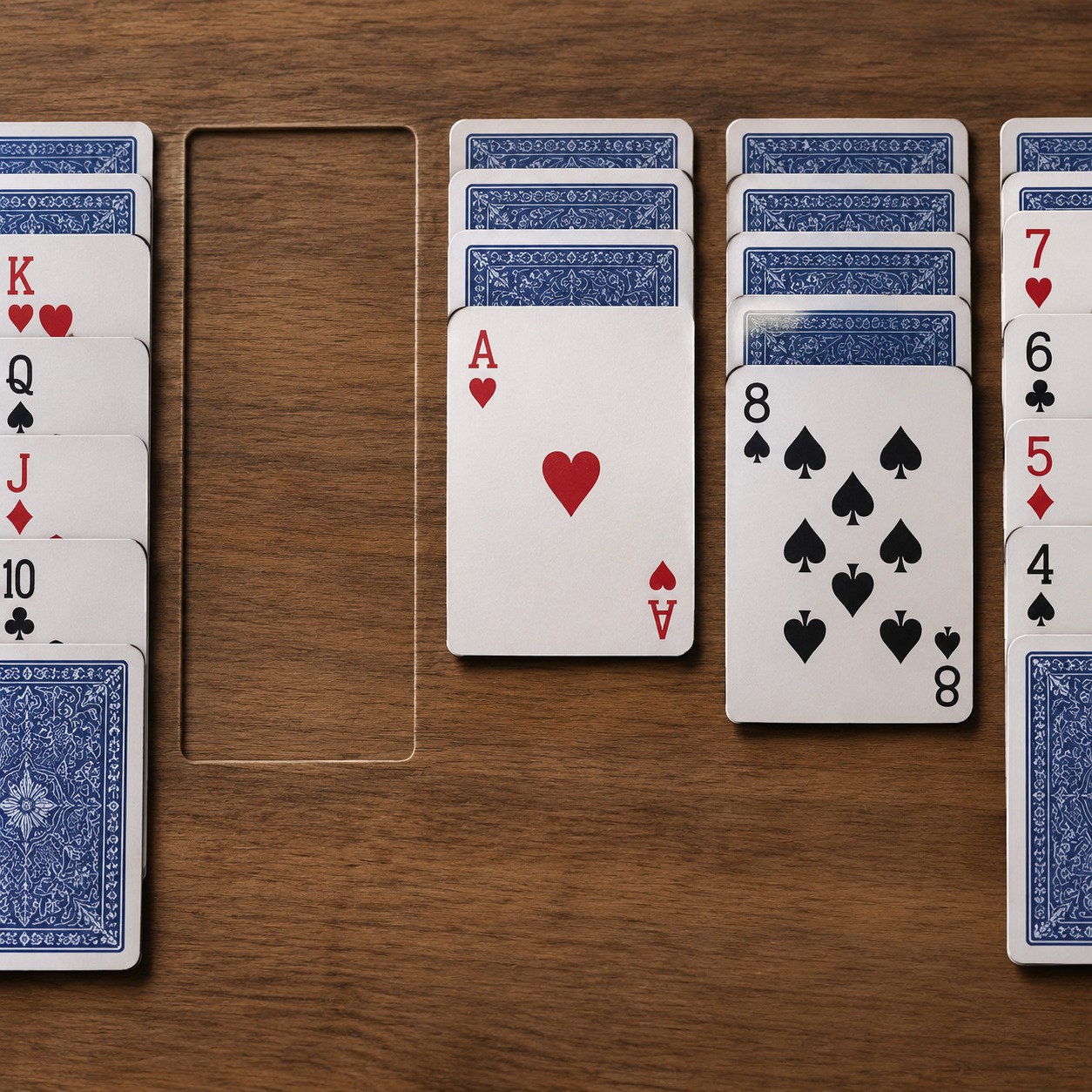
Build the ladder in three small moves
A Spider Solitaire empty column ladder usually has three parts.
First, lift the blocker.
Move a card or sequence into the empty column because it is covering something useful. The moved card should have a reason to leave its old pile.
Second, reveal or repair.
Flip a hidden card if possible. If no card can be flipped, use the space to repair a same-suit run. For example, move a mixed card aside so a 7 of spades can sit under an 8 of spades instead of under a mismatched 8.
Third, reopen the lane if you can.
The best ladder moves often return the column to empty, or turn one empty column into another. That does not always happen, but it should be the dream. An open lane that stays open gives you control over the next problem too.
This is why Spider Solitaire can feel less like luck than it first appears. You cannot control every deal, but you can control how quickly you give away your maneuvering room.
For more card-game strategy ideas, the Spider Solitaire articles on Easy Daily Puzzle are most useful when you read them this way: not as rigid rules, but as table habits you can test immediately.
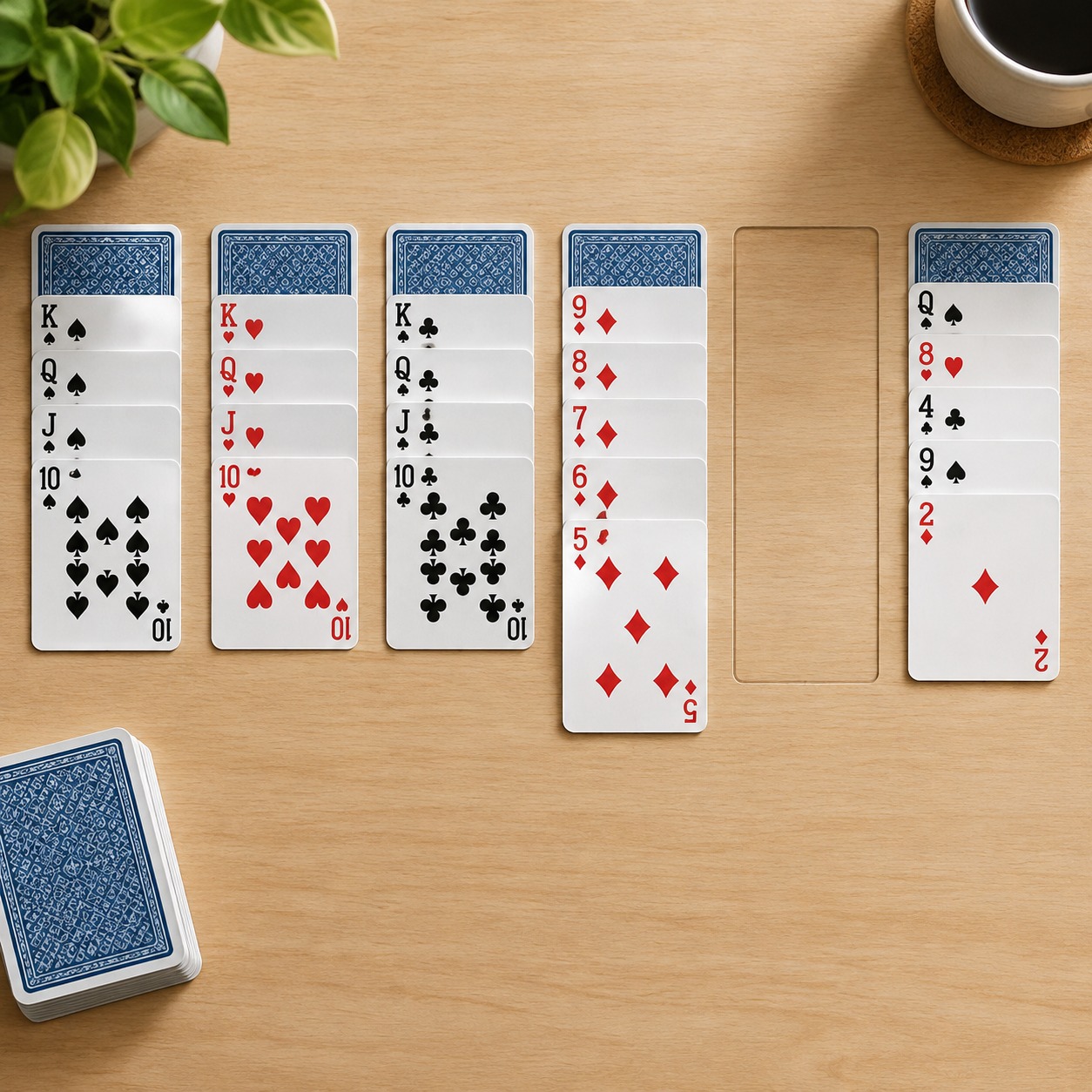
Do not park a king too early
The king is the biggest temptation.
In many Spider Solitaire positions, a king sequence can only move into an empty column. That makes the empty lane look like the king's natural home. Sometimes it is. If the king stack is clean, long, and helping you build toward a full same-suit run, placing it may be right.
But a king can also trap your freedom.
Once a king occupies an empty column, nothing can go above it. If the stack below the king is mixed or awkward, the whole column may become a wall. You gained order in one place and lost flexibility everywhere else.
Use a simple test.
Before moving a king into the empty column, ask what the move gives you immediately.
Does it reveal a hidden card?
Does it free another column?
Does it complete or nearly complete a same-suit run?
Does it unblock several smaller moves?
If the answer is no, the king may be demanding rent without paying anything back.
That sounds harsh, but Spider Solitaire rewards useful space, not pretty space.
Same-suit repair is a real reward
The empty column ladder is not only for flipping face-down cards.
It is also for repairing broken sequences.
In Spider Solitaire, same-suit order is much stronger than mixed order because clean descending runs can move together more easily, and full same-suit sequences can eventually leave the table. Mixed runs may be legal in some movements, but they often become heavy. They look long, yet they do not behave well.
Use the empty column to separate the helpful part from the messy part.
For example, a 10 of hearts, 9 of hearts, and 8 of clubs may look like progress because it descends. But the 8 of clubs is a problem if it blocks a cleaner hearts run. If an empty column lets you move the club away and place an 8 of hearts under the 9 of hearts, the table becomes lighter.
That is a ladder move even if no hidden card flips.
You climbed from a mixed stack to a cleaner run.
This is also where patience card games show their old charm. As David Parlett's history of [patience and solitaire](https://www.parlettgames.uk/histocs/patience.html) makes clear, the family of games has long been about arranging cards under tight limits. Spider Solitaire keeps that feeling alive. Every open space asks whether you can turn a tight limit into a temporary advantage.
The stock deal should wait until the ladder is done
The stock can feel like a rescue button when the table stops moving.
It is not.
A new deal adds one card to each column, which can bury problems under more problems. If you still have an empty-column ladder available, use it before dealing.
Make a short pre-deal pass.
Can the empty column reveal one more hidden card?
Can it repair one same-suit sequence?
Can it move a blocker so another pile opens?
Can it free a smaller card before the deal covers it?
If yes, do that first.
The stock is not going anywhere. The empty column might disappear the moment you stop paying attention.
This habit also makes losses feel clearer. Instead of wondering whether the game was impossible, you can ask whether you spent your ladder well. That is a better lesson than blaming the deal every time.
A 60-second drill for your next game
Try one round with this rule: when a column opens, pause for 60 seconds before filling it permanently.
During that pause, look for three targets.
Target one is a hidden card. If the empty column can reveal it, that is usually the strongest move.
Target two is a same-suit repair. If the empty column can make a clean sequence more mobile, consider it.
Target three is a second empty column. If a move can turn one open lane into another open lane, you may be building real control.
Only after those checks should you park a king, store a messy stack, or deal from the stock.
The Spider Solitaire empty column ladder is not a magic trick. It will not turn every deal into a win. What it does is give your best positions more time to breathe.
One empty column is a chance to ask the board a better question.
Not "where can this card go?"
Ask, "what can this space uncover before I give it away?"