



A crossword theme revealer is the moment when a grid stops feeling like a list of separate answers and starts acting like one small trick. You may have three long entries filled in, a corner that looks clean, and still no idea why the puzzle was built this way. Then one answer lands, usually near the bottom or across the middle, and the whole thing clicks.
That click is not decoration. It is a solving tool.
If you like quick word puzzles on Easy Daily Puzzle, learning how to read a crossword theme revealer makes daily grids more satisfying because it gives the puzzle a second layer. You are not only answering clues. You are listening for the puzzle's private joke. You can also browse more word-game ideas through Easy Daily Puzzle crossword article when you want a softer warmup before a tougher grid.
Crossword theme revealer starts as a delayed explanation
A normal crossword answer solves its own clue. A crossword theme revealer does something extra. It explains a pattern that has been hiding in other answers.
Sometimes the revealer names a phrase shared by the theme entries. Sometimes it tells you to add, remove, reverse, or reinterpret part of an answer. Sometimes it is simply the final wink that makes the title make sense. The point is not that every crossword has one. The point is that when a puzzle does have one, the revealer can change how you read the whole grid.
Crosswords have always had room for this kind of play. The early newspaper crossword tradition goes back to Arthur Wynne's 1913 "Word-Cross," a useful history doorway preserved by the American Crossword Puzzle Tournament site. That first grid looks strange beside modern crosswords, but it already shows why word placement matters. A crossword is not only a vocabulary quiz. It is a structure.
Modern tournaments make that structure feel even sharper. The 2026 American Crossword Puzzle Tournament lists speed, accuracy, divisions, pairs, and final results, but the casual lesson is simpler: a wrong assumption can cost more than a slow minute. A theme revealer is one place where patience pays.
Crossword theme revealer clues often arrive late
Many solvers want the theme early. That is natural. If you can identify the trick, you can use it to fill blanks faster. But chasing the theme too soon can make a crossword harder.
Imagine a puzzle where three long answers look unrelated. One is about cooking. One is about travel. One is about a movie title. A beginner may stare at those answers and try to invent a connection. Maybe they all contain colors. Maybe they all hide animals. Maybe the title is pointing to a sound. The danger is that a clever guess starts to feel like proof.
Then the crossword theme revealer appears. It may tell you the long answers all contain "hidden gems," or that each phrase loses a letter, or that the ends of the entries form a second phrase. Suddenly the earlier answers were not random at all. They were waiting for an instruction.
That is why the best first habit is restraint. Fill what the clues prove. Keep the long answers a little soft in your mind. Do not force a theme before the grid has earned it.
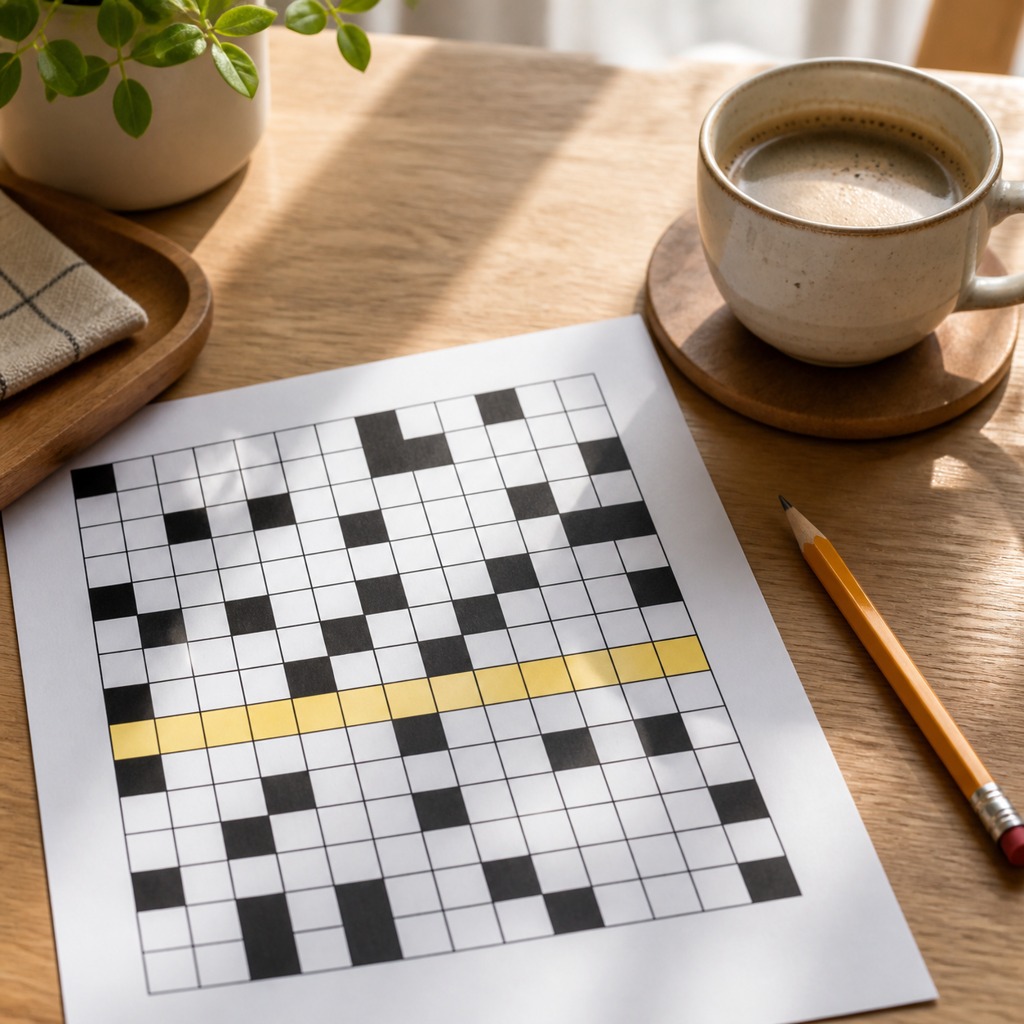
How to use a crossword theme revealer without overplaying it
The useful move is not to ignore the theme. The useful move is to time it.
In the first pass, solve the approachable clues. Grab fill-in-the-blank entries, common short answers, and crossings that feel solid. If a long answer lands cleanly, keep it. If it almost fits but feels slightly odd, leave it flexible.
In the middle of the solve, look for repeated behavior. Are several clues phrased in the same style? Do the long answers have matching lengths? Do they all contain a familiar word that seems unnecessary? Does the puzzle title nudge you toward a category?
Near the end, read the revealer carefully. This is where many solvers rush. A revealer clue may look like an ordinary clue, but the answer often has two jobs. It must fit its own clue and explain the other theme answers.
A practical routine looks like this:
1. Mark the longest answers, but do not assume they are all theme entries.
2. Notice repeated clue wording, strange phrases, or unusually specific answers.
3. Wait for a central or late long entry that sounds explanatory.
4. After the revealer lands, test it against every possible theme answer.
5. Use crossings to confirm the pattern instead of rewriting the grid around a hunch.
The fifth step matters most. A crossword theme revealer should make the grid clearer, not give you permission to guess wildly.
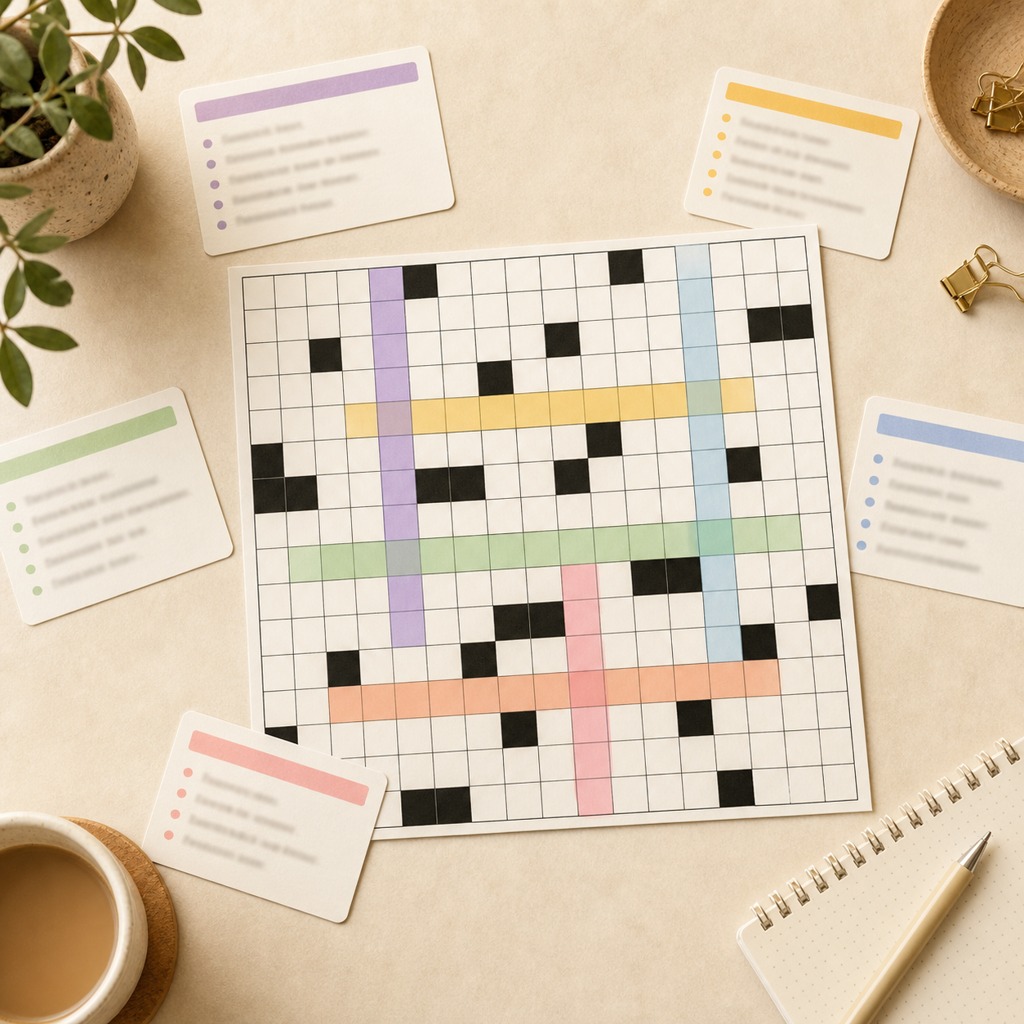
The mistake is treating the revealer like a spoiler
Some solvers avoid looking at the revealer clue because it feels like peeking at the ending. That can be fun if you want a challenge. But for everyday solving, the revealer is not cheating. It is part of the design.
Think of it like a caption under a clever photograph. You can understand part of the image without it. The caption helps you see the intended angle.
The opposite mistake is just as common. A solver finds the revealer early, then tries to force every open answer to obey it. That can damage the grid. Not every long answer is always thematic. Not every repeated word is a signal. Some entries are just fill.
The better posture is curious, not obedient. Let the revealer suggest. Then make the crossings prove.
This is especially helpful in mini and mid-size puzzles, where there may not be many theme entries. A tiny grid can still have a playful concept, but it may express that concept through one title, one central answer, or one repeated clue trick rather than a full Sunday-style theme set.
What a crossword theme revealer teaches casual players
A crossword theme revealer teaches a player to read at two speeds.
At the surface speed, you answer the clue in front of you. "Capital of France" wants PARIS. A fill-in-the-blank quote wants the missing word. A plural clue usually wants a plural answer. That layer keeps the solve moving.
At the pattern speed, you ask why certain answers are longer, stranger, or grouped in a certain way. You notice that three entries contain hidden months. You notice that the first words of several phrases can all follow the same adjective. You notice that a title suddenly sounds less decorative.
Good crossword solving moves between those speeds. Too much surface solving and you miss the joke. Too much pattern hunting and you start seeing ghosts.
That balance is what makes a themed crossword feel alive. It gives casual players a reason to keep going after the first easy clues are gone. It turns the grid from a checklist into a conversation.
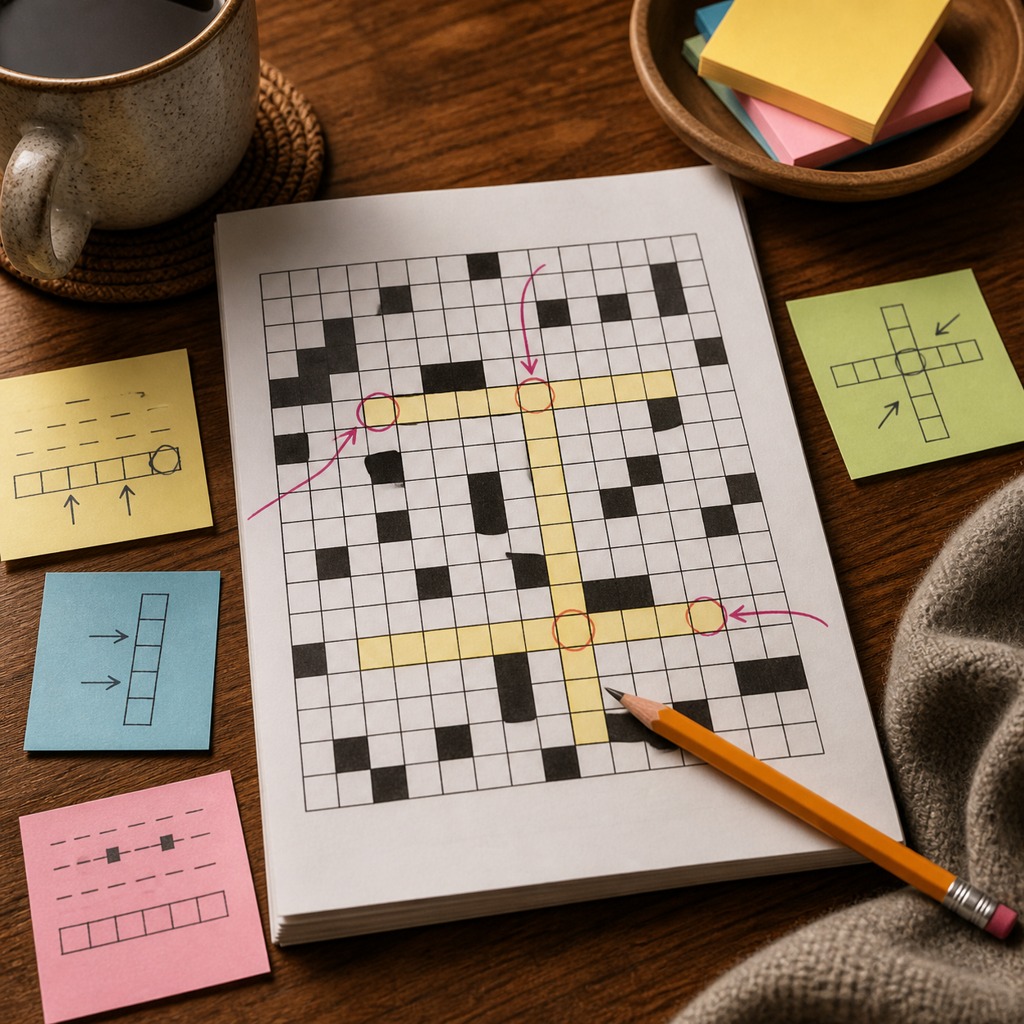
A better way to read the next themed grid
The next time a crossword feels oddly coordinated, do not panic and do not pounce. Let the grid show you a few facts first.
Fill the answers you can defend. Circle the long entries in your mind. Watch for repeated clue shapes. When the crossword theme revealer appears, read it slowly, then go back through the grid as if you are checking a small machine. Does the instruction explain more than one answer? Does it match the title? Do crossings support the changed reading?
If yes, the puzzle has given you one of the best little pleasures in daily solving: the delayed click.
That moment is why themed grids last. They let a solver feel smart twice. First for answering clues, then for realizing the puzzle had been telling one larger story the whole time.