


Crossword unchecked letters are the squares that can let a wrong answer sit there looking innocent.
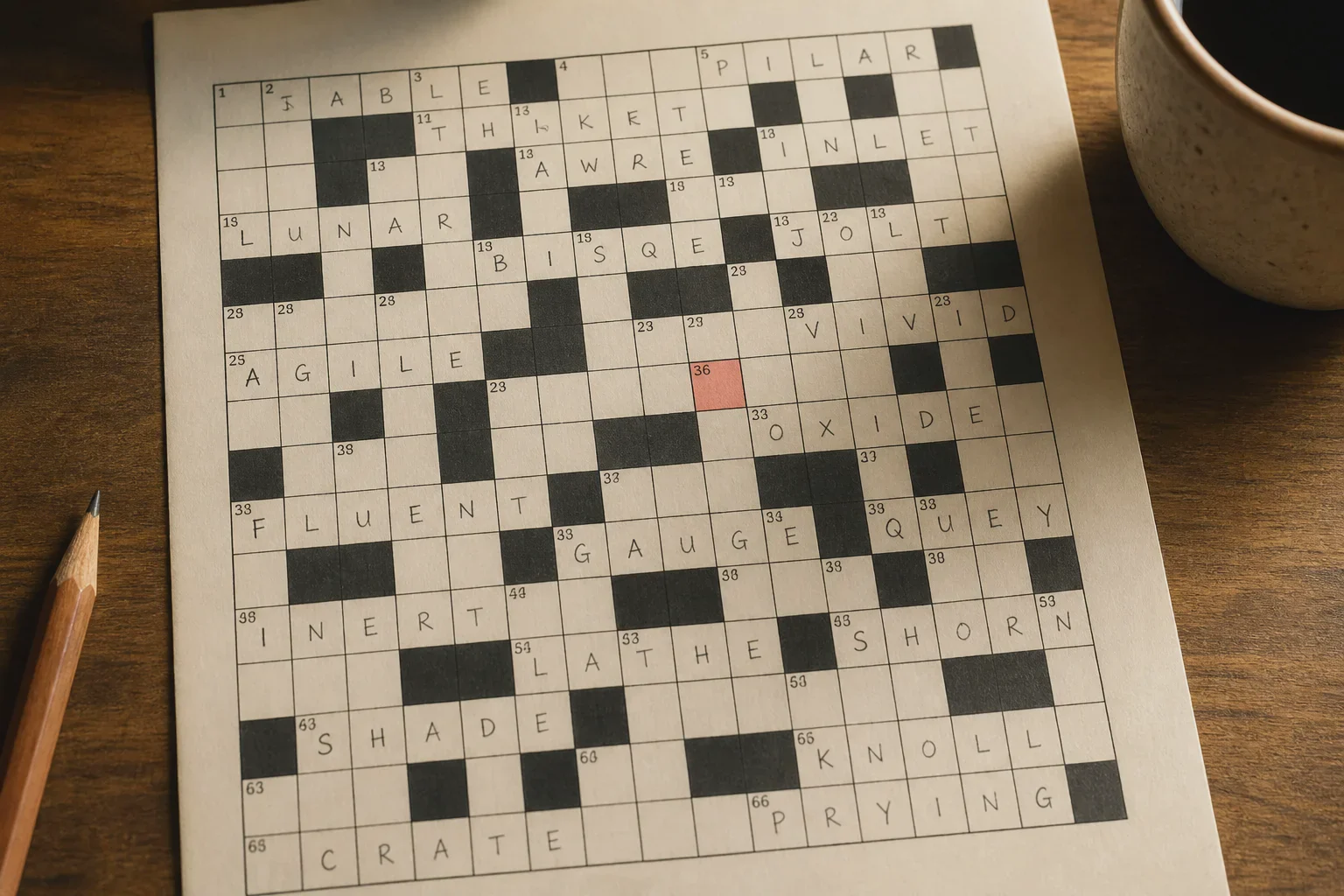
In a friendly American-style crossword, most letters get a second opinion. An across answer crosses a down answer. A guess that feels almost right gets tested by another clue. That little crossing letter is one of the great comforts of crossword solving.
Take the crossing away, and the square changes character. Now the clue has to carry more weight. So does your confidence.
If you want a fresh puzzle after reading, start from the Easy Daily Puzzle home page or browse more crossword articles on Easy Daily Puzzle.
Crossword unchecked letters change the bargain
Crossword unchecked letters are letters that belong to only one answer instead of being shared by both an across answer and a down answer.
If a letter is checked, the grid gives you two ways to test it. The across clue suggests one answer. The down clue confirms or challenges the same square.
If a letter is unchecked, the grid does not give you that second test.
This is why many American-style crosswords feel so fair to casual players. The grid is built as a network of small confirmations. The Crossword article on Wikipedia describes North American grids as generally using checked letters, meaning a square is part of both an across word and a down word. In practice, that structure lets solvers recover from uncertain clues.
Crossword unchecked letters are more common in some British-style and cryptic grids, where the clue itself may provide extra proof through wordplay. Crosshare's explanation of unches gives the plain definition: an unchecked letter is in only one word, so it cannot be checked against another entry.
That does not make unchecked letters bad. It makes them different. They ask for a stricter kind of trust.
Why solvers love crossings
Think about a clue like "PC key" in a three-letter slot.
The answer might be ESC. It might be ALT. It might be TAB. Without crossing letters, you are guessing from a set of plausible answers. With one crossing, the field narrows. With two crossings, the answer may become obvious.
That is the practical value of crossings. They do not just make a crossword easier. They make it feel fairer.
Crossword unchecked letters remove that safety rail. If the clue is slightly vague, obscure, or playful, the solver has fewer tools to catch an almost-right answer. The square can look finished while still being wrong.
Tournament solving makes this pressure visible. The [American Crossword Puzzle Tournament](https://www.crosswordtournament.com/) describes scoring as based on accuracy and speed, and its 2026 page records Erik Agard as the winner of the 48th ACPT. In that kind of room, every letter matters. A fast solve with one wrong square is not the same as a clean solve.
Casual players do not need tournament nerves at the kitchen table. But they can borrow one habit from serious solvers: do not let confidence replace checking.
How crossword unchecked letters feel during a solve
The danger is not always obvious.
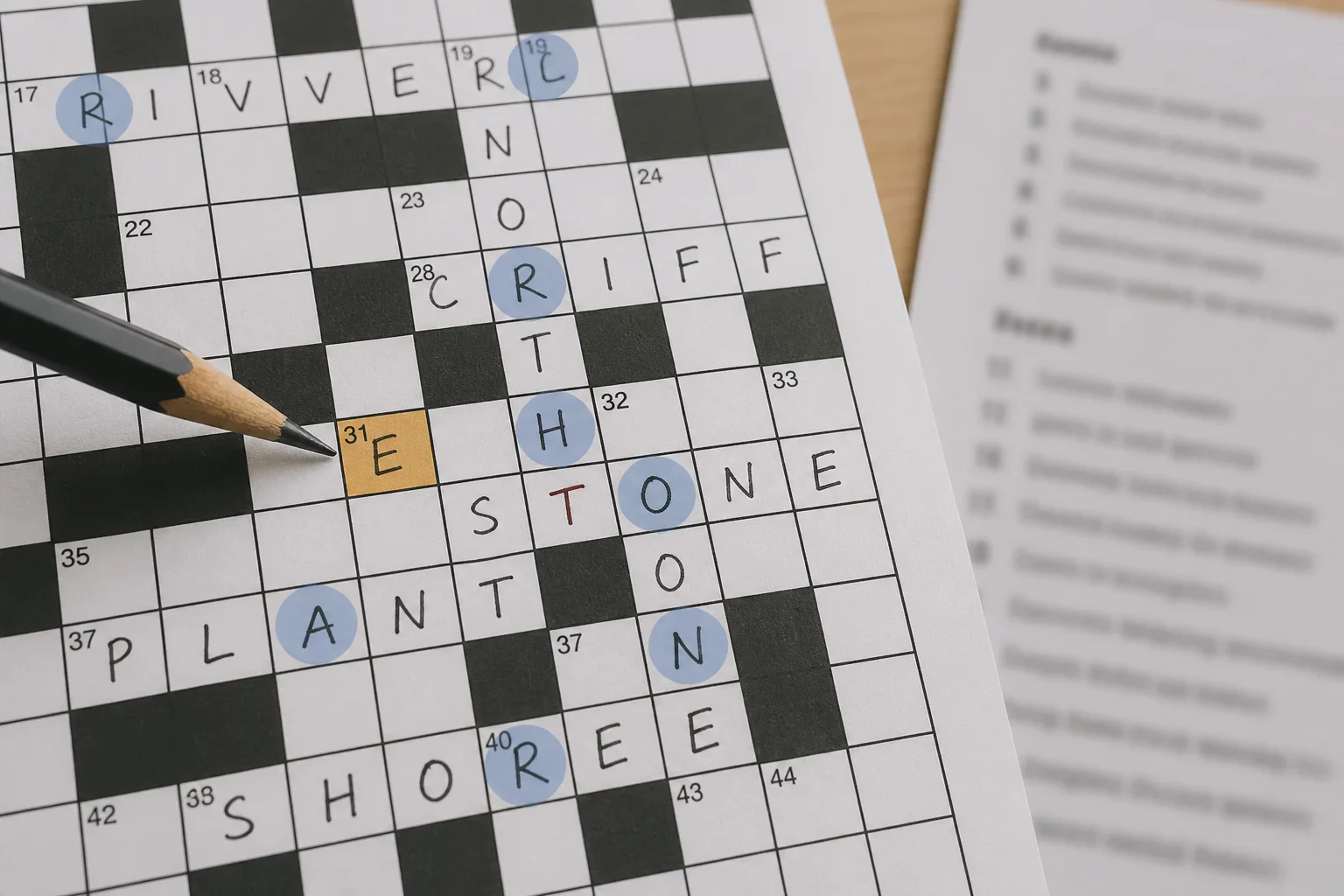
Sometimes crossword unchecked letters appear in a corner or a long entry where the surrounding answers do not touch every square. You may fill the answer because the clue feels good enough. Then you move on.
The problem is that "good enough" can be seductive.
A clue may have a natural answer that fits the length but not the exact clue grammar. A plural clue may tempt a singular answer. A past-tense clue may tempt a present-tense answer. A proper name may have two spellings. A pop-culture reference may look familiar but not quite right.
Crossings usually catch these mistakes. An unchecked square does not.
That is why unchecked letters deserve a little mark in your mind. When a square cannot be verified by another answer, slow down for one extra breath.
Ask whether the answer matches tense, number, part of speech, and clue tone. Ask whether the word could be replaced by a more exact synonym. Ask whether the clue has a question mark, abbreviation signal, or hidden wordplay that changes the reading.
Crossword unchecked letters are not a reason to panic. They are a reason to verify.
A simple routine for risky squares
Use this routine whenever crossword unchecked letters show up, or whenever a letter feels under-tested.
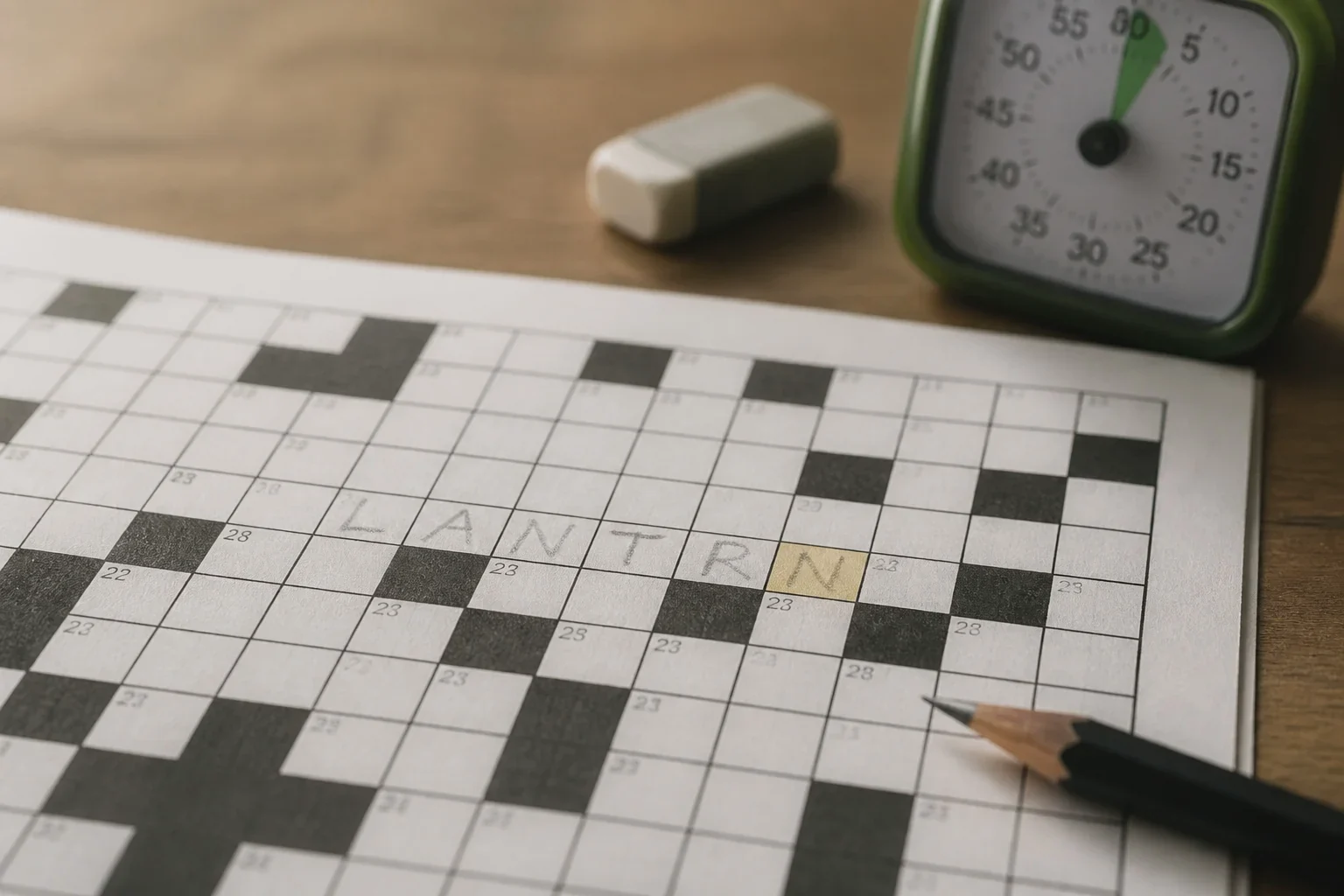
First, fill the answer lightly. If you are solving digitally, treat it as temporary. If you are solving on paper, keep the pressure soft.
Second, re-read the clue after the answer is in place. This sounds obvious, but it catches many mistakes. A candidate answer can hypnotize you into seeing a clue that is not actually there.
Third, test the grammar. If the clue is plural, the answer should usually be plural. If the clue is past tense, the answer should usually be past tense. If the clue asks for an abbreviation, do not force a full word.
Fourth, check neighboring structure. Even if the exact letter is unchecked, nearby checked letters may tell you whether the answer belongs. A wrong answer often makes the whole entry feel slightly stiff.
Fifth, leave the answer emotionally unlocked. The most expensive crossword mistake is the answer you start defending because you liked it first.
That last point matters. Crossword unchecked letters reward humility. They ask you to say, "This probably works, but I am not married to it."
Constructors use risk carefully
From the builder's side, crossword unchecked letters can give a grid more flexibility. They may allow livelier entries, cleaner themes, or a particular style of cryptic construction.
But flexibility has a cost. The more unchecked letters a grid uses, the more pressure shifts onto clue fairness. If a letter cannot be confirmed by a crossing, the clue should not be careless.
That is why the issue is less about whether unchecked letters should exist and more about how they are used. A fair unchecked letter can feel normal. An unfair one feels like a trapdoor.
For solvers, this is a helpful way to read the puzzle. If a grid gives you many crossings, use them. If it gives you fewer, pay closer attention to clue precision.
Crossword unchecked letters make you solve more from language and less from grid support.
What casual players can learn from unchecked letters
Most daily solvers do not need to analyze grid architecture while drinking coffee. Still, noticing crossword unchecked letters can improve your solve.
It teaches you to separate "fits the squares" from "answers the clue." Those are not the same thing.
It also teaches you to keep uncertain entries soft. A wrong answer becomes dangerous when it hardens too soon. If you leave it flexible, the puzzle can still correct you.
And it reminds you why crossings feel so satisfying. A crossword is not just a list of clues. It is a conversation between answers. Each solved word lends trust to another word. Each crossing letter says, quietly, "Yes, that seems right."
Unchecked letters are the places where that voice gets quieter.
So give those squares a little extra respect. Re-read the clue. Check the grammar. Do not cling to the first answer that feels clever. In a crossword, the most useful skill is not knowing every word. It is knowing when one letter still needs proof.