



Spider Solitaire, the classic single-player card game included in Microsoft Windows since 1998, has captivated millions with its intricate gameplay and strategic depth. A common question among enthusiasts is: Does every game of Spider Solitaire have a solution?
The Solvability Question
The short answer is no—not every deal in Spider Solitaire is theoretically winnable. Unlike some solitaire variants, Spider Solitaire involves a significant degree of randomness and complexity that can create unwinnable situations. Several factors contribute to this:
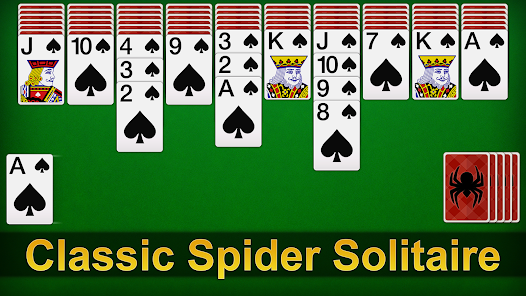
- Initial card distribution: The standard two-suit or four-suit Spider uses a 104-card deck dealt into 10 tableau piles. Some initial configurations simply cannot be fully sorted into the eight foundation piles due to inaccessible cards or unfavorable sequences.
- Mathematical complexity: Computer analyses have shown that a substantial percentage of random deals are not solvable with perfect play. Estimates vary, but approximately 10-30% of two-suit Spider games may be unwinnable from the start, with four-suit Spider having an even lower win rate.
- Player decisions: Unlike games with perfect information, Spider involves hidden cards, meaning players must make decisions without complete knowledge of what lies beneath. Even theoretically winnable games can become unwinnable through suboptimal moves.
That said, modern digital versions often include algorithms that ensure deals are at least potentially winnable, especially at lower difficulty levels. Microsoft's implementation, for instance, is programmed to deal games that have solutions.
Essential Spider Solitaire Strategies
While you can't win every game, these strategies will significantly improve your success rate:
1. Uncover Hidden Cards Early
Your primary objective in the early game should be to expose face-down cards. Empty tableau columns are valuable, but don't create them prematurely. Focus first on moves that reveal new cards, even if they don't immediately create empty columns.
2. Build in Suit When Possible
Whenever you have a choice, build descending sequences using cards of the same suit. This preserves flexibility since same-suit sequences can be moved as a unit, while mixed-suit sequences cannot.
3. Strategic Use of Empty Columns
Empty columns are your most powerful asset. Use them to:
- Access important cards buried in other columns
- Rearrange sequences to expose hidden cards
- Temporarily hold cards while reorganizing
Avoid filling empty columns with single cards or short sequences unless doing so reveals multiple hidden cards.
4. Plan Your Suit Stacks
In four-suit Spider, prioritize completing suits that have the fewest remaining cards or are closest to completion. This clears tableau space and provides more maneuvering room.
5. Avoid Premature Stack Completion
Don't complete a suit stack (removing it to the foundation) too early if those cards could help you uncover other cards. Sometimes it's better to keep a nearly complete suit in the tableau as a "reserve" for maneuvering.
6. Conserve Moves
Think several moves ahead. Sometimes a move that seems beneficial short-term blocks better options later. If you have multiple possible moves, consider which preserves the most future possibilities.
7. Position High-Value Cards
Try to keep kings and other high-value cards in positions where they won't block access to lower cards. Kings can only be placed in empty columns, so they can become problematic if positioned poorly.
Advanced Techniques
- The "Sure Thing" Principle: When you have a choice between two moves that expose hidden cards, choose the one where you know the value of the hidden card (because you've seen it earlier) over complete uncertainty.
- Sequencing for Mobility: Build sequences with mobility in mind. A mixed-suit sequence of 9-8-7 is less valuable than a same-suit 9-8, even though both contain three cards, because the latter can be moved as a unit.
- Sacrifice Strategy: Sometimes you must intentionally "break" a sequence to access crucial cards beneath. Weigh the cost against the potential benefit carefully.
Psychological Aspects
Patience is perhaps the most underrated skill in Spider Solitaire. The game rewards careful consideration over impulsive moves. Many "unwinnable" games become winnable with more thoughtful play, while seemingly good positions can be ruined by hasty decisions.
Conclusion
While not every Spider Solitaire game has a solution, the vast majority of deals in standard implementations are winnable with proper strategy. The game's enduring appeal lies in this balance between chance and skill—the knowledge that while some games are unwinnable, most losses result from suboptimal play rather than the deal itself.
By applying systematic strategies and developing patience, players can dramatically increase their win rates, transforming Spider from a casual pastime into a genuine test of strategic thinking and foresight. Whether you're playing the classic Windows version or a modern implementation, these principles will help you navigate the intricate web of Spider Solitaire with greater success and enjoyment.