



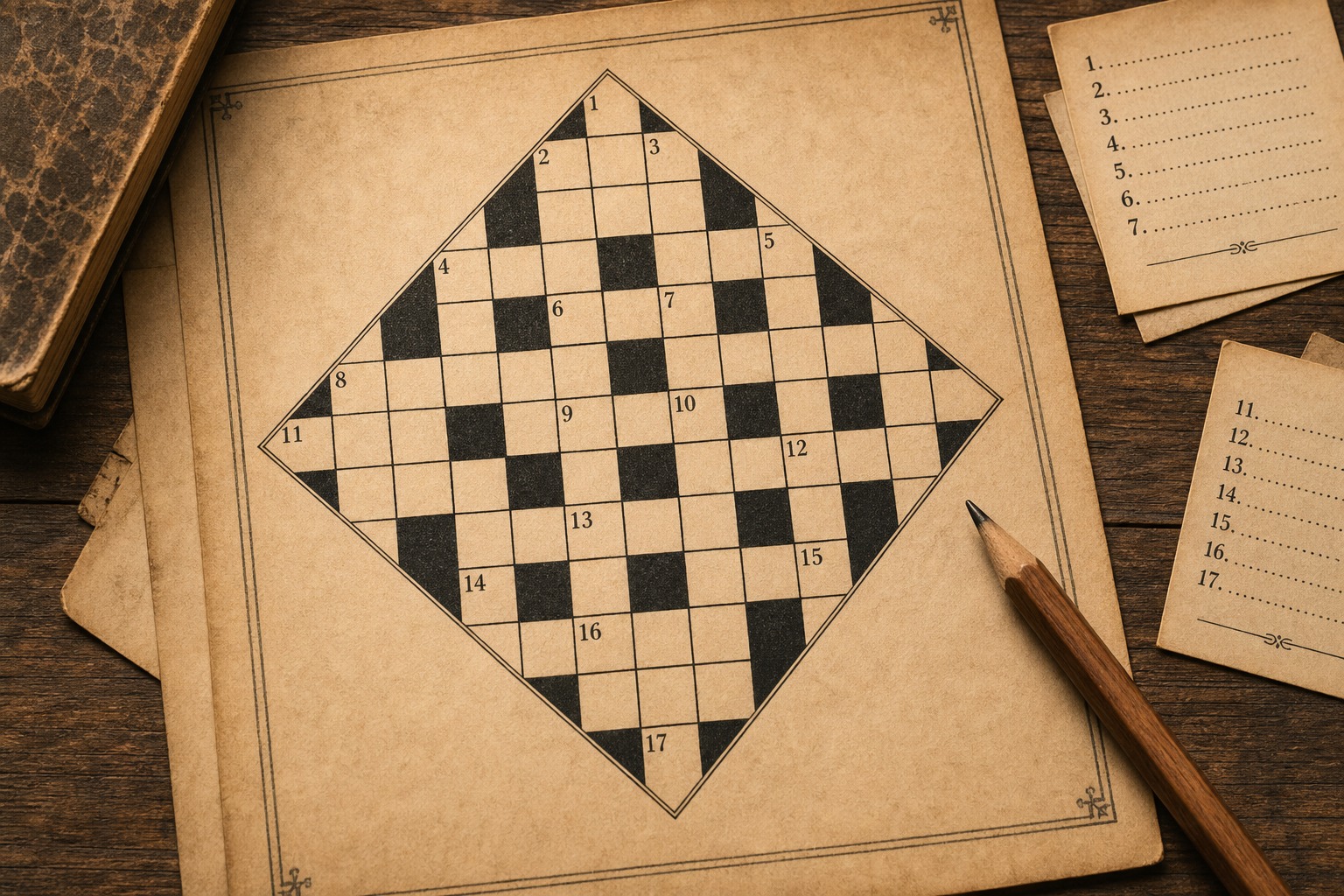
First crossword puzzle history begins with a grid that looks slightly wrong to modern eyes. It is not the neat black-and-white square most players expect. It is diamond shaped, a little awkward, and full of the energy of someone trying to make a newspaper page more fun.
That is why it is worth looking at closely. The first crossword puzzle was not born polished. It was born playable. For anyone who enjoys quick word games on Easy Daily Puzzle, that difference matters. A good puzzle does not need to look grand at first. It needs to make the next answer feel possible.
First crossword puzzle roots: a newspaper needed fun
Arthur Wynne, a journalist from Liverpool, created the puzzle for the New York World. The American Crossword Puzzle Tournament's history page notes that Wynne's puzzle appeared on December 21, 1913, in the paper's Sunday supplement, and that it was diamond shaped with no internal black squares. You can read that short origin note in the ACPT page on Arthur Wynne and the first crossword .
The Smithsonian gives the scene a little more texture. Wynne worked on the New York World's "Fun" supplement and needed a fresh challenge for readers. His answer was a word grid originally called "Word-Cross." According to the Smithsonian's history of how the crossword became an American pastime , the name later shifted to "Cross-Word," and that version stuck.
There is something charming about that accident. A tiny naming flip helped give a century-long puzzle habit its label.
The shape was strange, but the idea was sturdy. Clues pointed to words. Words crossed other words. One answer confirmed another. That loop is still the engine of the form.
Why the diamond grid still feels modern
Modern crosswords are cleaner. They use black squares, rotational symmetry, themed entries, polished clue style, and editorial standards that Wynne's early grid did not have.
But the first crossword puzzle already understood the addictive part.
It gave readers a way to start anywhere.
That matters more than it sounds. A trivia quiz usually asks one question at a time. If you do not know the answer, you stop. A crossword gives you side doors. If one clue is blank, another clue may cross it. If you know three letters, a word that felt impossible begins to lean into view.
This is the secret behind many casual puzzle games. They keep frustration from becoming a wall. Sudoku lets one digit unlock a box. Jigsaw puzzles let one color patch build into a corner. Solitaire lets one revealed card change the whole tableau. Crosswords do it with letters.
The first crossword puzzle may look old, but that design instinct is fresh: give the player more than one path back into motion.
The publishing boom came from habit, not hype
Crosswords spread because they fit newspapers beautifully. A grid could sit on a page. Readers could solve at breakfast, on a train, or at a desk. The format made people linger.
The ACPT history page says newspapers began picking up crosswords in the early 1920s, and that within a decade they were appearing in almost all American newspapers. It also notes early British adoption, including Pearson's Magazine in 1922 and The Times in 1930, where the British cryptic style later developed its own sharper personality.
The Smithsonian describes another important moment: the first crossword puzzle book appeared in 1924. Its first printing was only 3,600 copies, packaged with a pencil, but sales eventually passed 100,000 copies. That is the sort of detail that makes the craze feel human. Someone looked at a page game and thought, yes, people may want a whole book of this.
They did.
Crosswords became portable, repeatable, and social. People argued over clues. Editors built reputations. Solvers learned the language of abbreviations, puns, tense signals, and misdirection.
The grid became a daily appointment.
What today's solver can learn from the first crossword puzzle
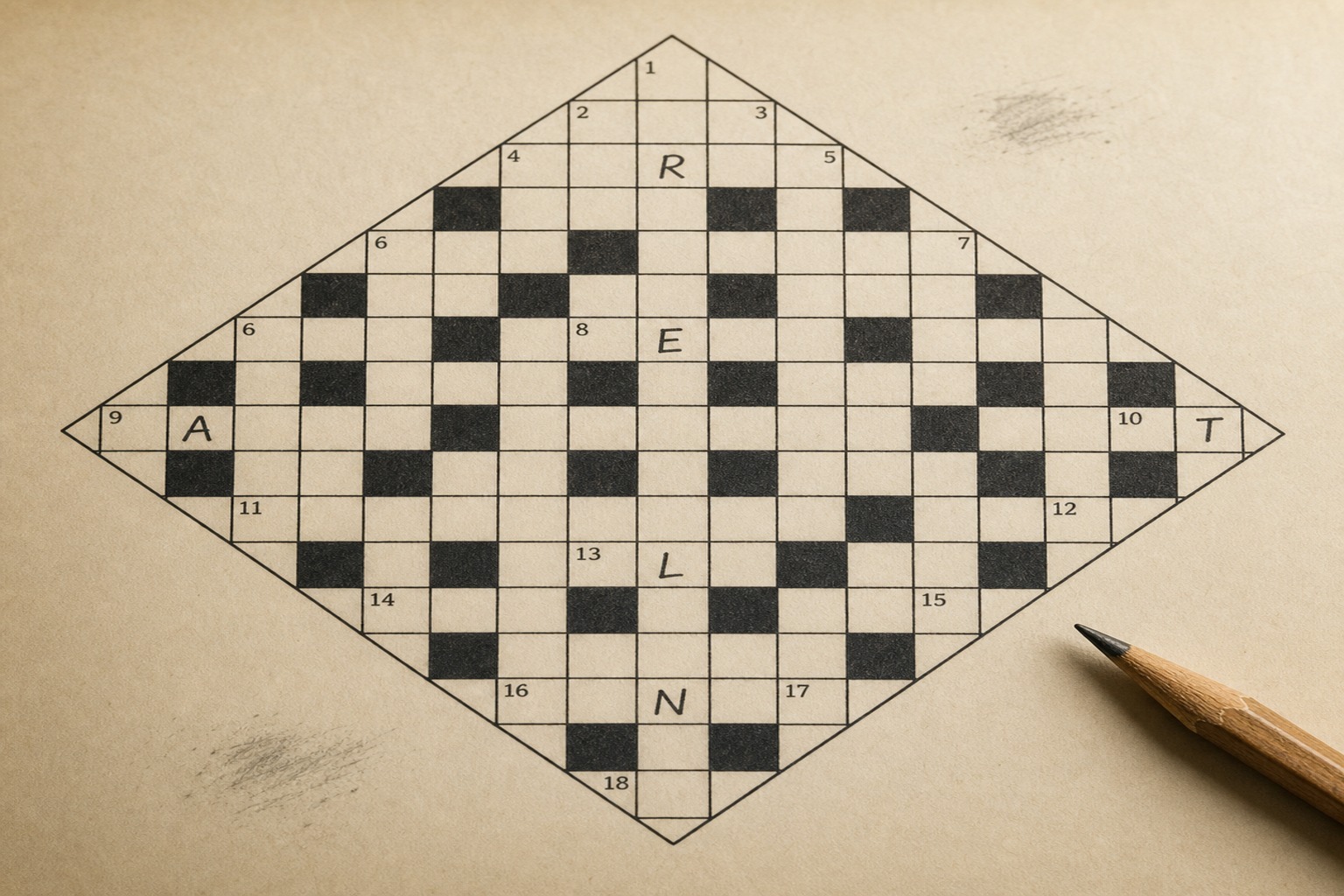
The oldest lesson is simple: do not attack the puzzle in order.
Start where the grid gives you a foothold. Short clues, fill-in-the-blank clues, names you recognize, plurals, obvious tenses. These are not "easy" in a dismissive way. They are anchors. The early answers give you crossing letters, and crossing letters turn vague clues into answer shapes.
If a clue says "walked," the answer may also be past tense. If it asks for "cats," expect a plural. If the clue has a question mark, the answer may be playful. If the clue feels too plain, look for a second meaning.
That is the same crossing logic Wynne's first grid offered readers in 1913. One solved word gives another word a shoulder to lean on.
A useful casual routine looks like this:
Fill the obvious short answers first.
Use crossings before guessing.
Check grammar before vocabulary.
Leave clever clues alone until the grid has helped you.
Return to stuck clues with new letters.
This routine makes crosswords feel less like a vocabulary test and more like a conversation with the grid.
Why crossword clues became sharper over time
The first crossword puzzle was built for accessibility. Later crosswords became more stylized. American-style crosswords leaned into clean interlock and cultural range. British cryptics developed a different pleasure, where the clue often contains both definition and wordplay.
That split is one reason crossword history stays interesting. The same basic act, filling letters into crossing answers, produced different cultures of solving.
In one setting, the fun is speed and recognition.
In another, it is decoding.
In another, it is theme discovery.
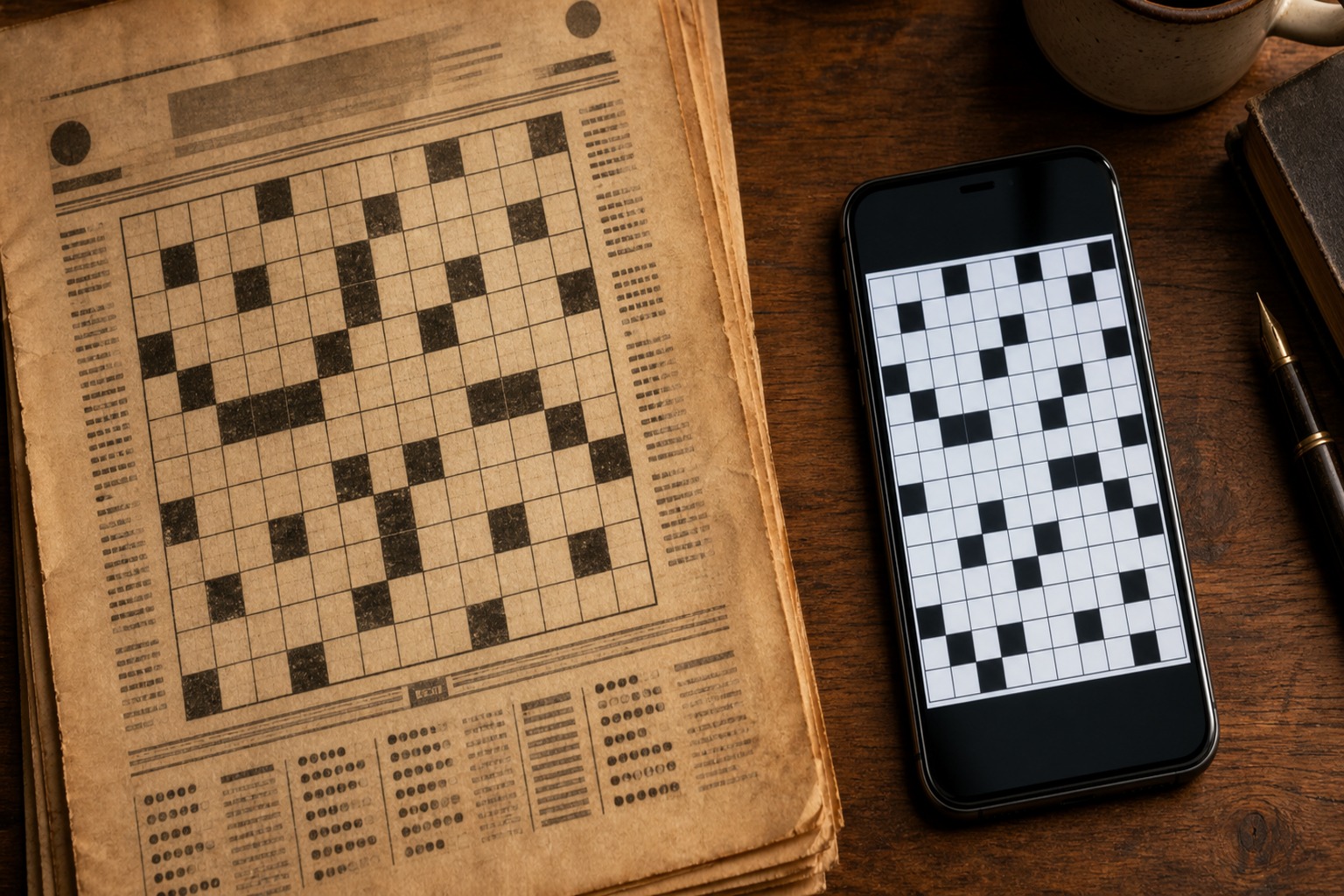
Online mini crosswords add a newer rhythm: short sessions, tight grids, and clue economy. A good mini clue has almost no room to waste. It must be fair, quick, and just slippery enough to make the answer satisfying.
If you want to browse more word-puzzle pieces, the crossword articles on Easy Daily Puzzle are a natural next stop. The best way to understand crossword history is still to solve a few clues and feel the crossing letters do their work.
The strange grid that kept its promise
The first crossword puzzle did not have to predict the whole future. It only had to make one page work.
That is the lovely thing about it. Wynne's grid was not a finished monument. It was a practical piece of newspaper play. It asked readers to move between clues and letters, between certainty and guesswork, between one answer and the next.
More than a hundred years later, the shape has changed, but the promise is still the same.
You may not know the answer yet.
But if you can find one crossing, you are not stuck for long.