


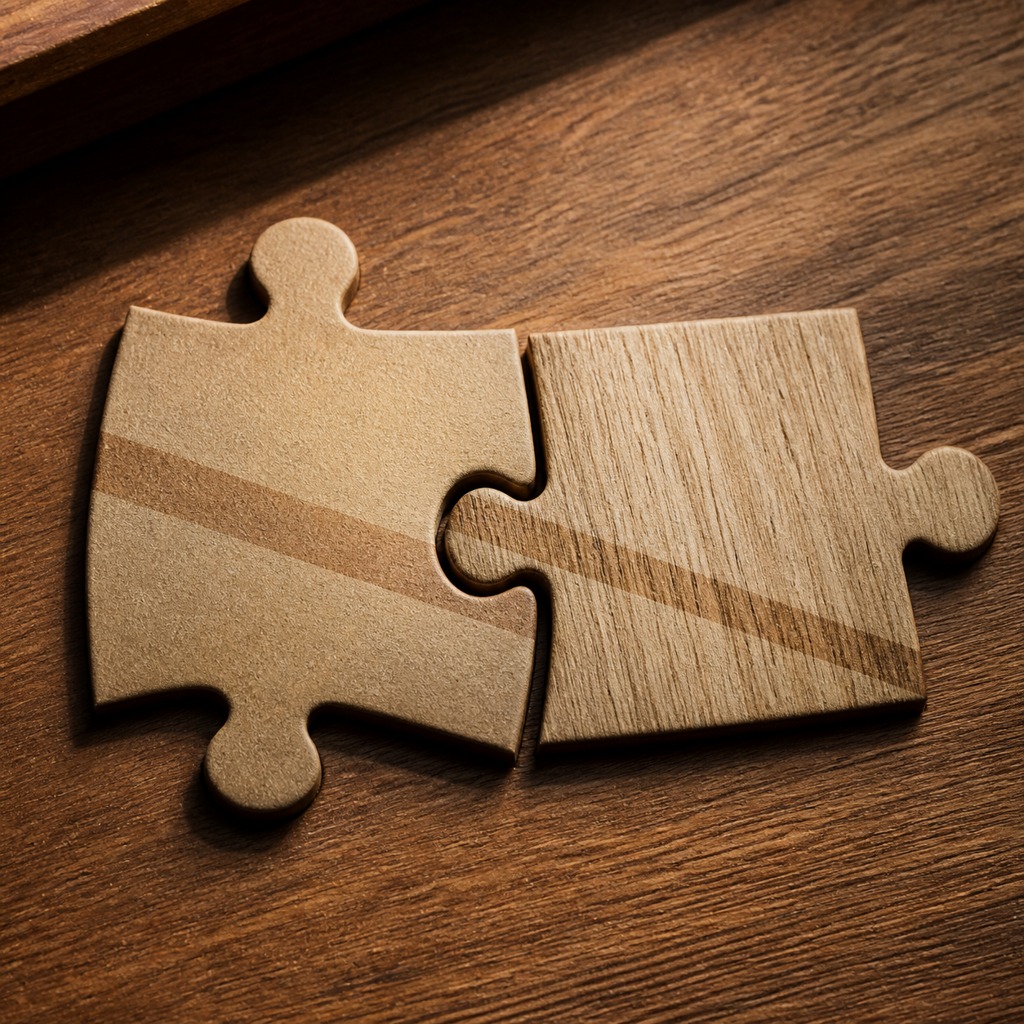
Jigsaw false fits are the little lies a puzzle tells when two pieces almost belong together. The color is close. The tab looks right. The line continues if you squint.
Then twenty minutes later, the whole section feels wrong.
That is the cost of one almost-fit piece. It does not only waste time where it sits. It changes how you read every piece around it. Suddenly the nearby sky refuses to line up. A tree branch bends strangely. A border that should be easy starts acting suspicious.
The good news is that false fits are not random bad luck. Most of them come from trusting shape too early.
If you want a calmer place to practice visual puzzle habits, start from Easy Daily Puzzle and browse more jigsaw puzzle articles and games when you want another picture after the first one.
Jigsaw false fits happen because shape is only one clue
A jigsaw piece has several kinds of information.
There is the cut shape: tabs, blanks, corners, knobs, holes, and the little uneven bends that make one piece feel possible. There is color: blue sky, green leaves, yellow light, gray stone. There is texture: fur, fabric, water, grass, paper, shadow. There is line direction: roof edges, horizon lines, window frames, branches, faces, folds.
False fits happen when one clue looks strong enough to silence the others.
Shape is usually the loudest clue because it feels physical. If the piece slides in, the hand wants to believe it. Online jigsaw play can make this even trickier because pieces may snap or sit close enough to look convincing on a screen.
But real jigsaw confidence comes from agreement. Shape should agree with color. Color should agree with texture. Texture should agree with the picture. If only one signal says yes, slow down.
The old map lesson still applies
Jigsaw puzzles did not begin as random picture fragments. The Strong National Museum of Play traces the early jigsaw puzzle to English mapmaker John Spilsbury, who mounted a map to board around 1760 and cut around borders. Google Arts & Culture also describes Spilsbury's dissected maps as educational playthings made from maps mounted on thin mahogany and cut along political boundaries.
That origin is useful because it reminds us of something modern players forget: early pieces carried meaning. A piece was not just a shape. It represented a country, a border, a place on a map.
Modern puzzles are different, but the lesson survives. A piece belongs where its meaning fits the picture.
If you are building a forest scene, a green piece with the right tab is not enough. Does the texture look like leaves or moss? Does the light match nearby pieces? Does the branch line continue, or does it jump?
The puzzle is not asking, "Can this piece fit?" It is asking, "Does this piece belong?"
The five-check test before forcing a piece
When a piece almost works, use a short test.
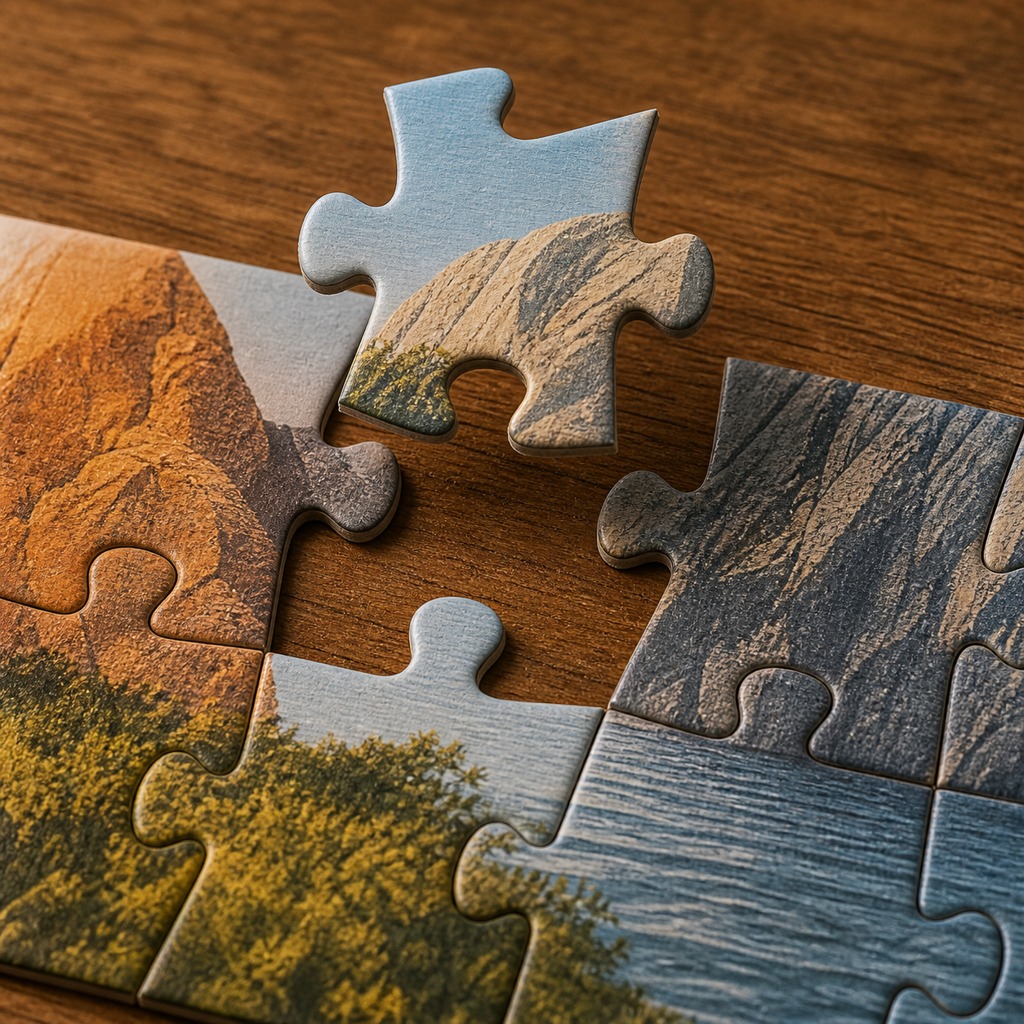
First, check color temperature. Is the blue the same kind of blue? Sky often shifts from pale to deep. Water can look blue, green, gray, or white depending on reflection. A close color can still belong to a different part of the picture.
Second, check texture. Smooth sky, rippled water, blurry background, and sharp foreground may share a color but not a surface.
Third, check line direction. If a roof edge, window frame, branch, or horizon line enters the piece, it should leave in a believable direction.
Fourth, check neighboring pieces. A correct piece usually explains more than one edge. A false fit often only explains the edge you wanted.
Fifth, check tension. This one sounds odd, but players know it. A wrong piece often feels slightly forced. It sits there with a little visual argument around it.
If two or more checks disagree, do not keep the piece just because the tab behaves.
Why speed puzzlers care about false fits
False fits are annoying in a casual puzzle. In timed puzzling, they are expensive.
The World Jigsaw Puzzle Championship 2026 schedule lists individual rounds in Valladolid with 500-piece puzzles and timed sessions. The event format is a good reminder that jigsaw speed is not only about fast hands. It is also about avoiding repairs.
A wrong piece in a speed round can poison a whole island of work. The player loses the time spent placing it, then loses more time discovering it, removing it, and rebuilding the section with less confidence.
Casual players do not need to solve like competitors. Still, the competitive lesson is useful: a clean no is faster than a messy yes.
If a piece almost fits, and you cannot prove it with color, texture, and line, leave it nearby. That keeps the idea alive without making it part of the structure.
Where jigsaw false fits show up most
False fits love low-information areas.
Sky is the obvious one. Big fields of blue can make pieces look related when they are several inches apart in the final picture. Grass does the same thing. So does ocean water, snowy ground, brick walls, sand, and dark shadow.
They also show up in repeated patterns: windows, roof tiles, flower petals, book spines, fence posts, tree bark.
In those areas, shape becomes tempting because color stops helping. But shape alone is risky exactly where the picture repeats.
Try sorting repeated areas into smaller groups. Put pale sky away from deep sky. Put sharp grass away from blurry grass. Put shadowed bricks away from sunlit bricks. This makes the false fit less persuasive because each group has a narrower visual language.
The more specific the pile, the less likely one random piece can pretend to belong.
Online jigsaw play makes this both easier and harder
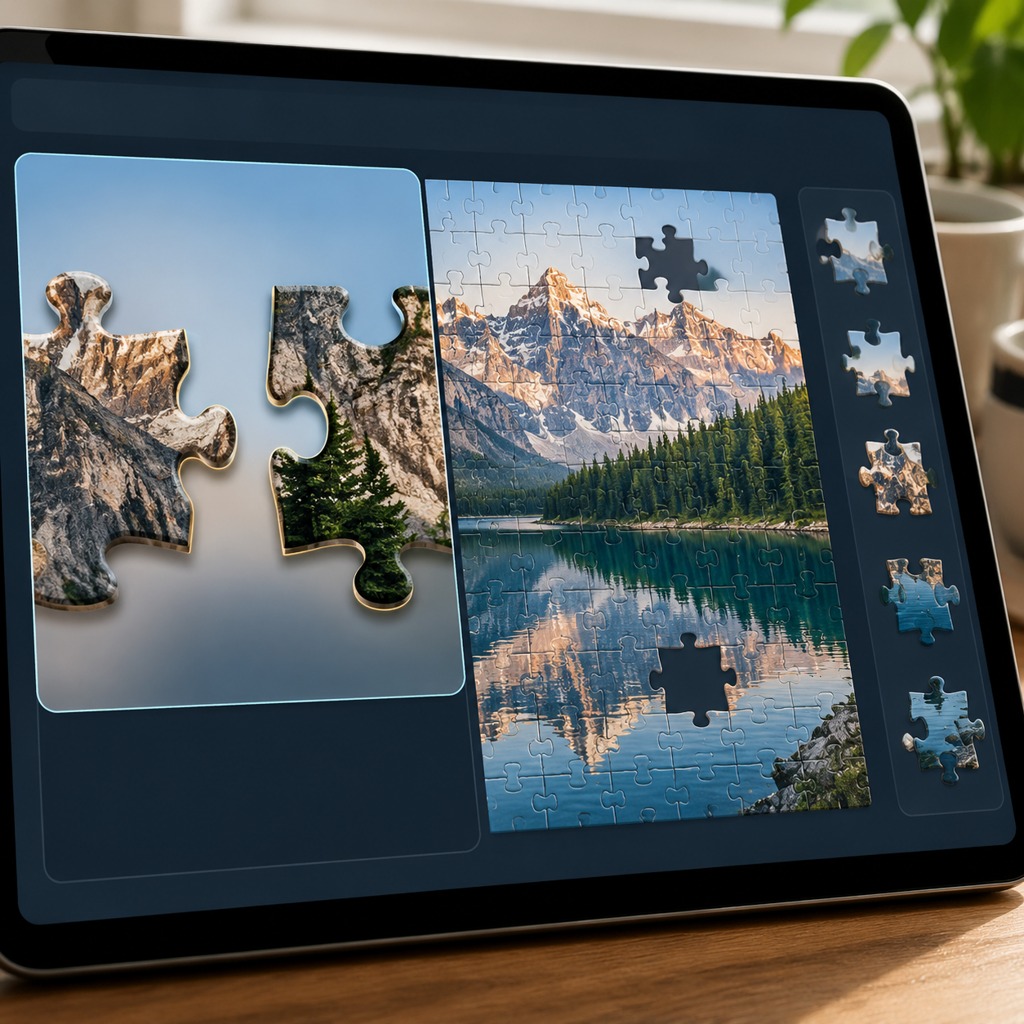
Online puzzles remove some old problems. Pieces do not fall on the floor. The table does not get bumped. You can zoom, reset, and move groups without leaning over cardboard.
But the screen can flatten detail. Two textures may look closer than they are. A piece may appear to fit because the image is scaled down. Your eye may miss a tiny mismatch in line direction until later.
Use zoom like a tool, not a place to live.
Zoom in when you need to check a line, a texture, or a strange edge. Pull back when you need to see whether the piece makes sense in the picture. A false fit often survives close inspection but fails when you view the whole section.
That is why the best online jigsaw habit is switching scale. Close. Wide. Close again. The piece has to pass both views.
A better way to hold uncertain pieces
Do not force uncertain pieces into the build. Park them.
Make a small holding area near the section. Put the almost-fit pieces there, face up, close enough to compare but not connected. This keeps your idea visible without letting it distort the puzzle.
As more pieces land, the answer usually becomes obvious. The piece that almost fit may suddenly have a better neighbor. Or the section may reveal a missing color shift that proves the piece was wrong all along.
Parking a piece is not indecision. It is respect for the picture.
The next time a piece almost works
The most dangerous jigsaw piece is not the one that clearly fails. That one goes back to the pile.
The dangerous piece is the one that almost works.
The color is close. The tab behaves. The hand wants to move on.
Pause for five seconds. Check texture. Check line. Check the neighboring edges. If the piece explains the picture, place it. If it only satisfies the shape, park it and keep building.
That small pause can save a whole section. It also makes the puzzle feel less like trial and error, and more like reading.
Jigsaw false fits are not there to ruin the game. They are there because many pieces share a family resemblance. The player who slows down just enough to spot the impostor gets the best kind of progress: a picture that keeps becoming clearer without needing to be repaired.