



Microsoft Solitaire history begins with a funny little design problem: how do you teach people to use a mouse without making it feel like a lesson?
The answer, somehow, was cards.
When Windows 3.0 arrived in 1990, many computer users still did not feel natural dragging things around a screen. Solitaire gave them a reason to practice. Click a card. Drag it. Drop it. Try again. Lose the deal. Start another.
Nobody needed a training manual to understand that.
That is why Microsoft Solitaire history is more than software trivia. It is a story about how a quiet card game became one of the most familiar digital breaks in the world. The Strong National Museum of Play notes that Microsoft chose a Klondike version for Windows 3.0, programmed initially by intern Wes Cherry, with card deck design by Susan Kare. It also points out the obvious magic of the choice: users already understood cards, so the computer felt less strange.
If you want the modern no-setup version, try Solitaire games on Easy Daily Puzzle or start from the Easy Daily Puzzle game library .
Microsoft Solitaire history started before Windows
Solitaire did not begin on a computer.
The broader family of patience card games is much older. Klondike, the version many people mean when they say "Solitaire," uses a tableau, stock, waste pile, and four foundations. The player tries to build ordered suits while uncovering hidden cards. The rules are simple enough to learn in one sitting and stubborn enough to keep producing lost deals.
That made the game perfect for a computer.
A physical card game needs table space, shuffling, setup, and cleanup. A digital game removes all of that friction. The deck is always ready. The cards never bend. The loss can disappear in one click, which is both a gift and a trap.
Microsoft did not invent Solitaire. It made Solitaire unavoidable.
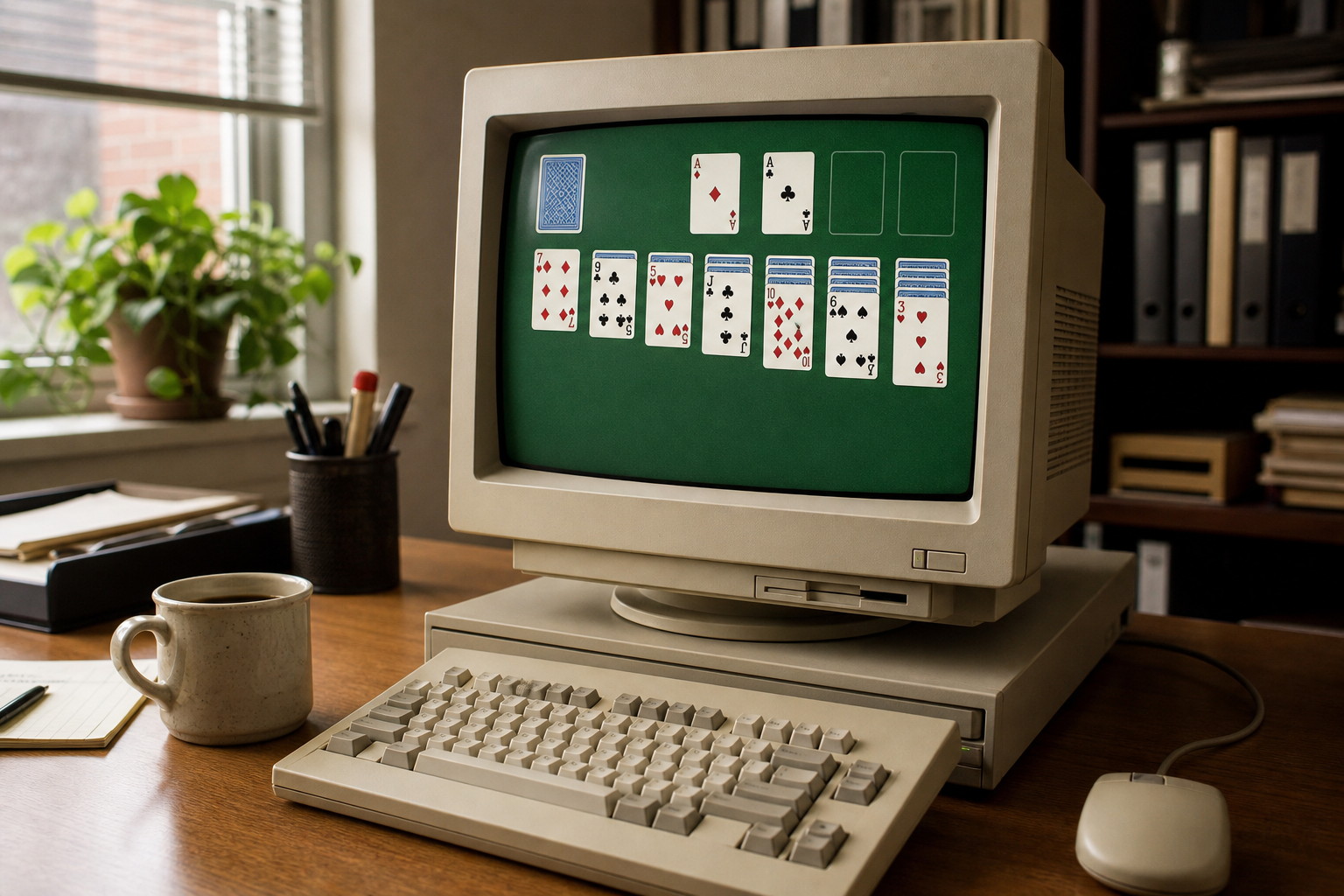
That distinction matters. The game was already familiar, but Windows put it inside a machine people used for work, school, and home computing. Suddenly a card table lived inside the operating system.
Why Windows Solitaire felt like play, not training
The clever part was that Solitaire taught mouse skills without announcing itself as a tutorial.
Dragging a card to a new pile is basic computer behavior disguised as a game move. Double-clicking, scanning the screen, recognizing active objects, and correcting mistakes all happen naturally during play. A user who might be nervous in a blank interface could relax because the card layout made sense.
The Strong says Microsoft Solitaire helped users learn the mouse by clicking on cards. Xbox Wire says the game helped people learn drag and drop on screen. Those are dry facts, but the human side is easy to imagine.
A new computer user sits down. The machine looks expensive and a little cold. Then the screen shows cards. Kings, queens, red, black, stacks, spaces. The user does not need to know what a graphical user interface is. They just need to move a black 7 onto a red 8.
That tiny comfort mattered.
It also explains why the game spread across offices. Solitaire could look like wasting time, and sometimes it was. But it also made people less afraid of the computer sitting on the desk.
The numbers behind the habit
The reach is hard to overstate, and here we can use official numbers rather than vague claims.
Xbox Wire wrote in 2020 that Microsoft Solitaire Collection had more than 35 million monthly players, reached more than 200 countries and territories, supported 65 languages, and saw more than 100 million hands played daily. Microsoft also said in 2019 that the game had entertained more than 500 million players over 29 years and had been distributed on more than a billion computers.
Those numbers explain why the game entered the World Video Game Hall of Fame in 2019.
Still, the more interesting question is not "How many people played it?" It is "Why did they keep playing?"
Part of the answer is length. A deal is short enough to fit between tasks. Part is familiarity. The rules do not ask for a new fantasy world, controller, character, or story. Part is the win condition. Every move either uncovers information or blocks it. A good player can feel the board tightening or opening.
That makes Solitaire a strangely readable game. Even when you lose, you can usually sense where the deal turned.
What Microsoft Solitaire history teaches today's players
The lesson for modern players is simple: Solitaire works best when it stays small.
The game became famous because it fit a short break. It did not need a long tutorial. It did not need a loud reward system. It only needed a deck, a few rules, and the promise that the next deal might be cleaner than the last.
That is still the best way to play.
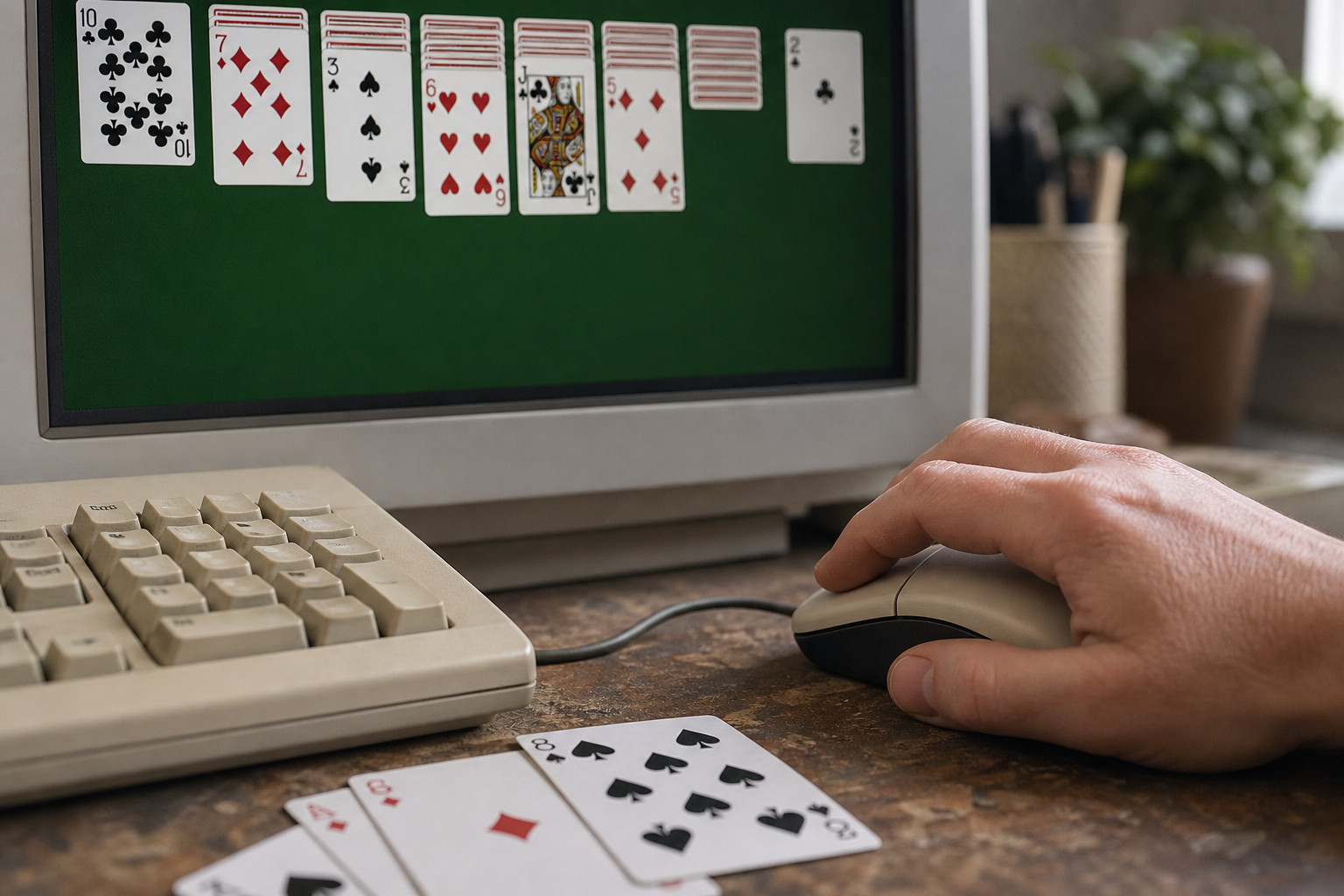
Open a deal. Look at the tableau before touching the foundation. Ask which move uncovers the most hidden information. Save empty spaces for kings that actually open cards. In draw-three games, watch the waste pile order instead of treating it like a random stream.
The old Windows lesson still applies: the best move is the one that teaches your hand and eye what the screen is doing.
Why Solitaire survived phones and browsers
A lot of early computer games feel like museum pieces now. Solitaire does not.
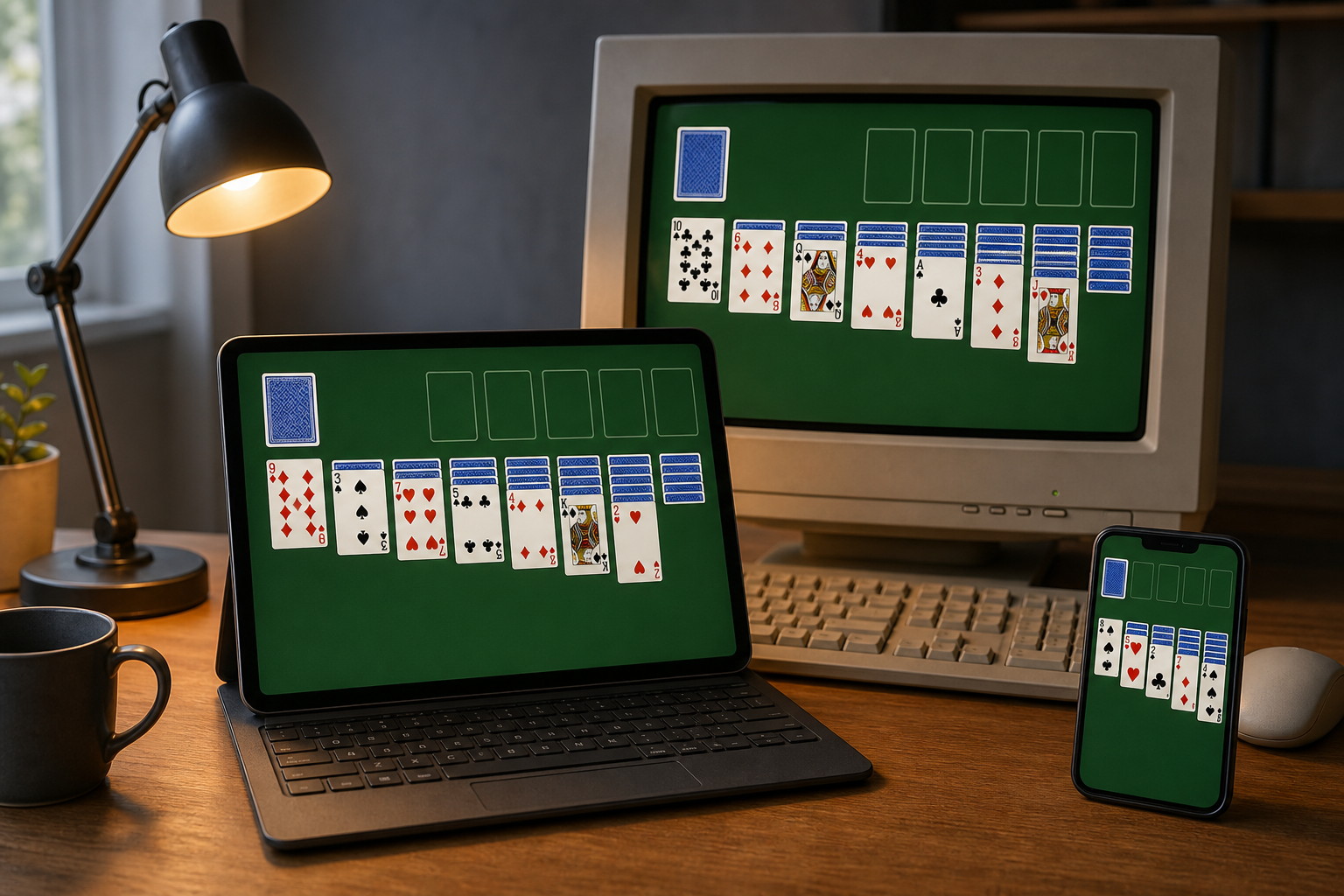
It survived because the format is flexible. It works with a mouse, a trackpad, or a finger. It works on a big monitor or a small phone. It can be played for score, for speed, for streaks, or for a five-minute reset before getting back to work.
That flexibility also explains why variants keep mattering. Draw-one Klondike feels different from draw-three. Spider Solitaire changes the pressure by adding suit difficulty. FreeCell gives more information up front and asks for planning instead of luck management. Pyramid and TriPeaks change the shape completely.
The family keeps expanding, but the appeal is old: arrange the mess, uncover the hidden card, make one decision cleaner than the last.
That is a pretty good description of a break.