



Mini crossword first pass solving sounds too simple to matter. You open a tiny grid, read the first clue, and start typing. That is what the puzzle seems to invite.
But a mini crossword is small enough that one bad answer can take over the whole grid. A full-size crossword gives you room to make a mess in one corner and recover somewhere else. A mini does not have much hallway space. Every letter touches something. Every guess spreads quickly.
That is why the first pass matters. Not because it is fancy. Because it keeps the grid from turning one unsure clue into five unsure clues.
If you want to practice on a light daily puzzle shelf, start from Easy Daily Puzzle and browse more crossword articles and games on Easy Daily Puzzle when you want a few rounds close together.
Mini crossword first pass is not about being fast
The first pass is the opening sweep through the clues. You are not trying to solve everything. You are trying to collect the answers that are already yours.
That means short names you know, plain fill-in phrases, obvious plurals, clue answers that your hands type before your pride wakes up. Take them. Do not apologize for easy letters.
Mini crossword culture often feels speed driven because the grids are short. The [Los Angeles Times Mini Crossword](https://www.latimes.com/games/mini-crossword), for example, frames the format as compact daily fun and tracks time and score. The New Yorker mini crossword page describes its puzzles as small and bite-size.
That does not mean the best first move is speed. It means the puzzle gives you a short space where good order matters more.
Tournament crosswords make this even clearer. The American Crossword Puzzle Tournament says scoring is based on accuracy and speed. Its scoring brochure gives correct words, early finish time, and complete accuracy separate weight. Casual mini crossword solvers do not need tournament math, but they can borrow the lesson: fast only helps if the letters are right.
The first pass protects that.
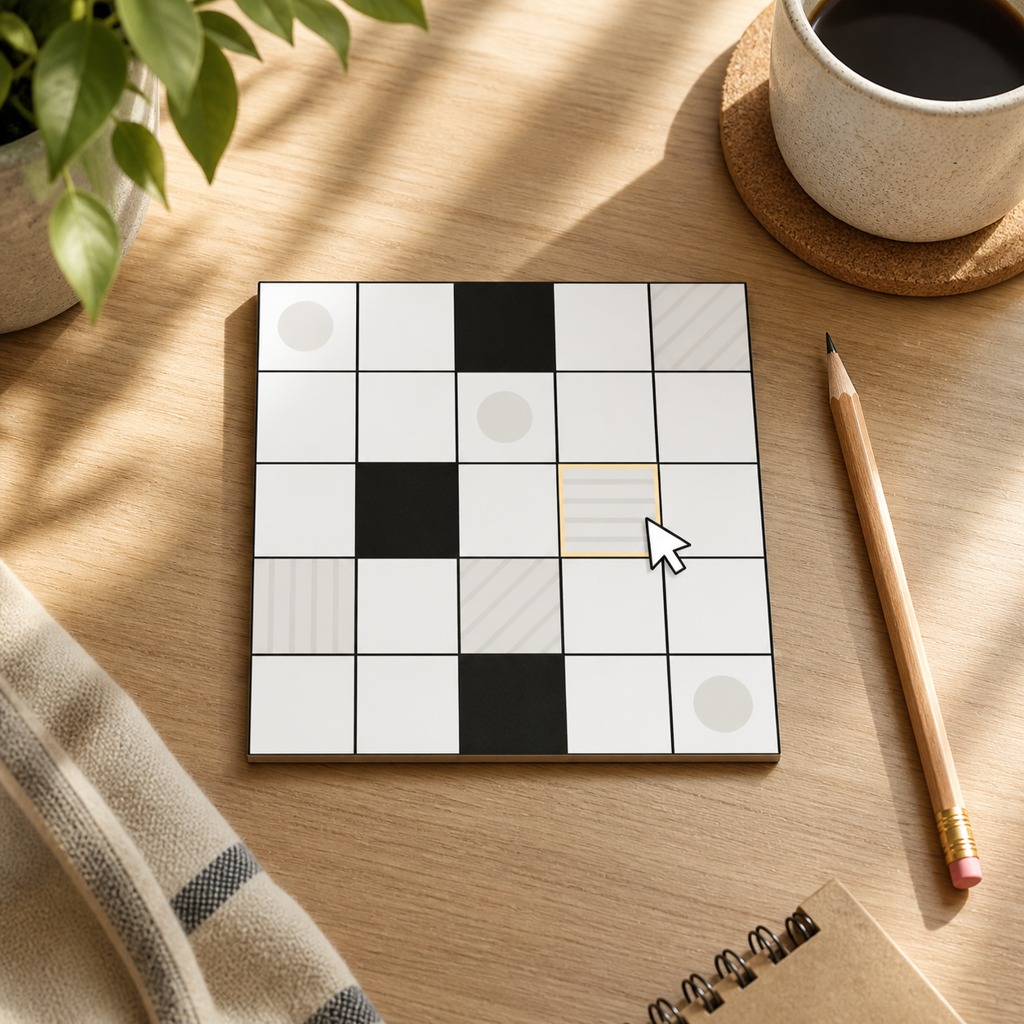
Start with the clues that feel almost boring
The strange thing about mini crosswords is that the boring clues do the heavy lifting.
A clue like "Opposite of yes" or "Morning drink" may not feel satisfying. It may even feel too easy to deserve attention. But in a mini grid, those answers are scaffolding. They create crossing letters, and crossing letters are what make the clever clues less slippery.
The mistake is starting with the clue that annoys you.
Every solver knows the feeling. One clue looks familiar but not quite. You stare at it because you are almost sure. You try one answer, then another. The clock keeps running. The rest of the grid waits like a patient dog.
That is not solving. That is bargaining.
On the first pass, give yourself permission to skip anything that needs arguing. If an answer does not arrive quickly, move on. You are not admitting defeat. You are buying letters.
The 60-second first pass routine
Try this for one week.
For the first 60 seconds, do not fight any clue.
Read each across clue once. Fill only what feels clean. Then read each down clue once. Fill only what feels clean. If the clue makes you pause, leave it blank.
That simple rule changes the whole solve. Instead of making the first clue the boss, you let the grid tell you where the open doors are.
Use this order:
- Fill instant answers first.
- Leave almost-right answers alone.
- Check clue tense before typing.
- Notice plural endings.
- Use crossing letters before returning to hard clues.
- Only guess when the guess can be tested quickly.
The last point matters. A guess is not always bad. An untestable guess is bad. If a three-letter answer gives you two crossings immediately, it may be worth trying. If it sits alone and infects a corner, wait.
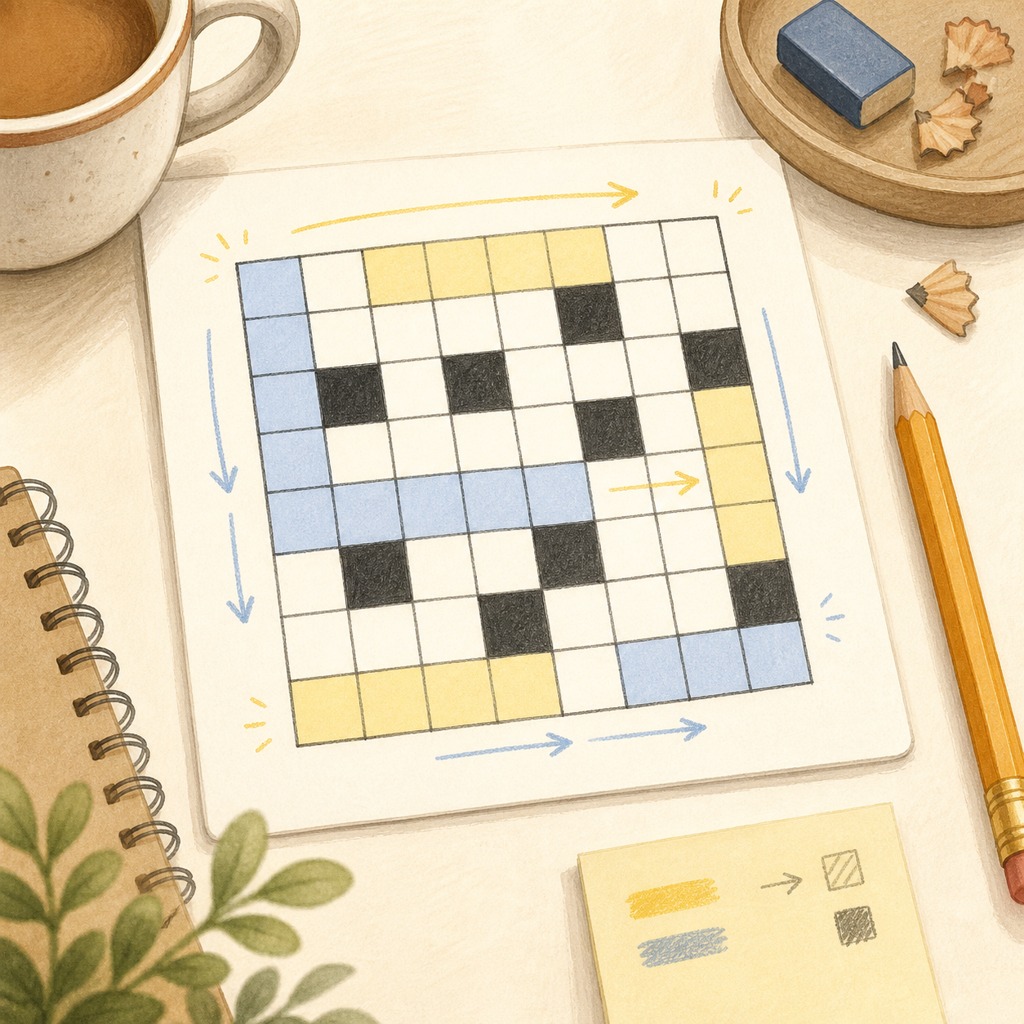
What mini crossword first pass teaches about clue grammar
Once you stop wrestling the first clue, clue grammar gets easier to see.
Tense matters. A clue written in past tense usually wants a past-tense answer. A plural clue usually wants a plural answer. An abbreviation in the clue often hints that the answer may be abbreviated too. A question mark can signal wordplay or a clue that should not be read literally.
None of this is advanced. It is ordinary crossword housekeeping.
But mini grids punish messy housekeeping faster than large grids do. If you write SANG where the answer needs SINGS, the crossing clue may look impossible. If you miss a plural S, the whole final square can feel unfair. If you read a playful clue too straight, the short answer may seem random.
The first pass gives you time to notice those signals before your first guess hardens.
It also keeps the solve emotionally cleaner. That sounds silly until you watch someone solve a mini crossword while irritated. They stop reading clues. They start defending their first answer. The puzzle becomes a tiny argument.
Better to stay loose.
Why small grids make crossings more powerful
In a full-size crossword, you may have several open sections at once. In a mini, one answer can change everything.
That is why crossings should feel like your main tool, not your backup plan.
If a clue wants a five-letter answer and you have the second and fourth letters, the answer space shrinks fast. If a clue has a common phrase shape, even one crossing can wake up memory. If the grid has a theme or repeated clue style, the long answer may tell you how the smaller answers are behaving.
The mini crossword first pass is mostly a crossing-letter machine. You run through the clues, collect sure letters, and return to the grid with more evidence than ego.
That is the whole trick.
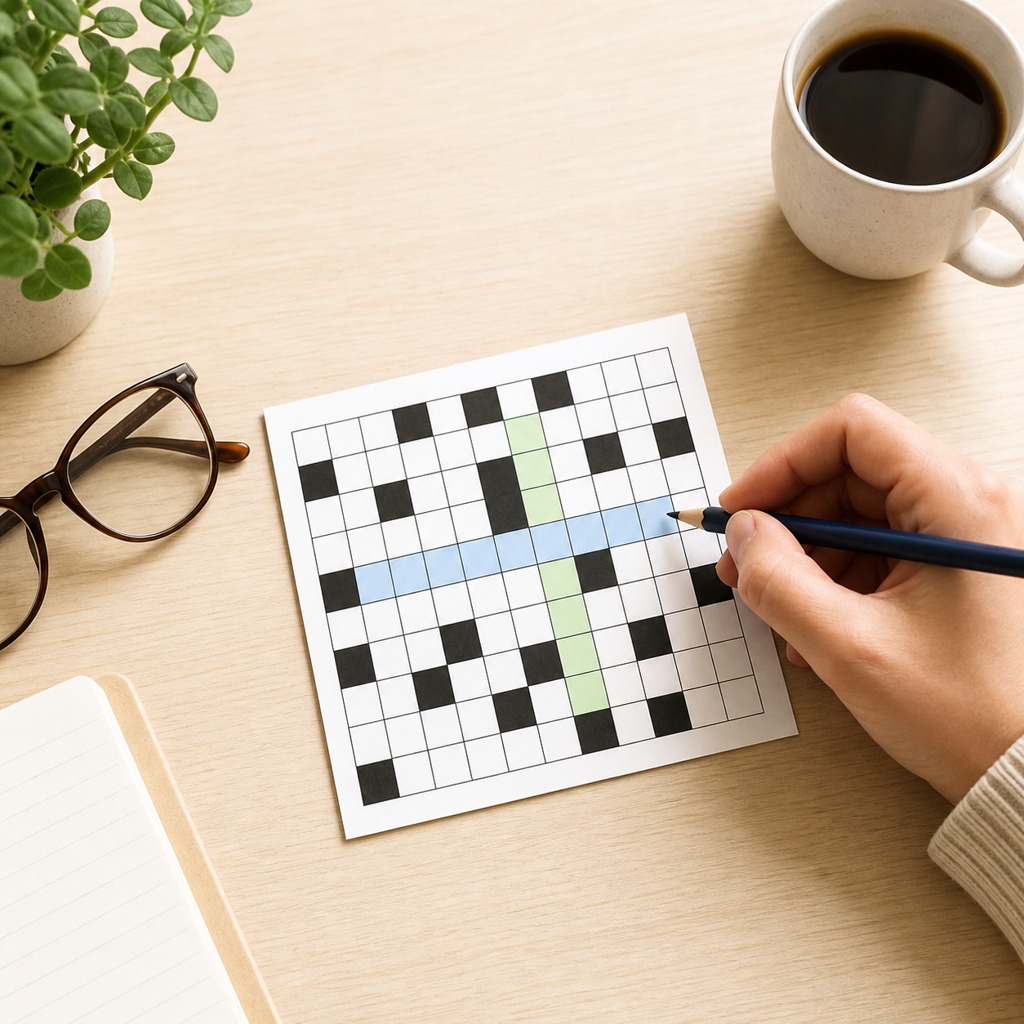
A mistake worth making once
Here is a useful experiment. The next time a mini crossword gives you a clue that feels 70 percent right, fill it in immediately. Then watch what happens.
Maybe it works. Good. You learned that the answer had enough support.
Maybe it breaks the corner. Also good. You will feel how much one uncertain answer costs in a small grid.
The point is not to become afraid of mistakes. The point is to notice which mistakes spread.
Most bad mini crossword solves do not collapse because the clues are too hard. They collapse because the first pass got personal. The solver wanted one answer to be right, then read every crossing through that answer.
Crosswords are kinder when you let letters disagree with you.
How to make the habit stick
Use one sentence before each mini: easy clues first.
That is enough.
Do not build a whole ritual. Do not track every category. Do not turn a quick puzzle into a notebook system. The first pass should stay light because the game is light.
If you solve on a phone, make the habit even simpler. Across sweep. Down sweep. Return. That little loop keeps your hands from outrunning your reading.
If you solve on desktop, resist the urge to stare at the clue list like a spreadsheet. Click through, take the easy entries, and let the grid fill from the inside.
Speed can come later. It usually does. Once you stop losing time to bad guesses, the clock improves on its own.
The next small grid
The next mini crossword you open will probably have one clue that feels too obvious, one clue that feels weird, and one clue that wants to trap you into arguing.
Take the obvious one. Skip the weird one. Refuse the argument.
After 60 seconds, the grid will look less like a test and more like a conversation. A few letters will be sitting there, quietly making the harder clues easier.
That is the point of the mini crossword first pass. It does not make you a genius solver. It just keeps the small grid small.