



Solitaire draw one vs draw three sounds like a tiny setting until the card you need is sitting second in the waste pile, visible but untouchable. The board is the same shape. The foundations still want aces through kings. The tableau still builds downward in alternating colors. Yet the whole deal suddenly has a different temper.
That small switch is one of the cleanest ways to feel how Klondike Solitaire works.
If you play casual card games on Easy Daily Puzzle, this is the kind of rule worth noticing. It does not require a new game. It changes the pressure inside a game you already know. You can also browse Solitaire articles on Easy Daily Puzzle when you want more card-table habits for a short break.
Solitaire draw one vs draw three starts with the same goal
The goal does not change. In standard Klondike Solitaire, you are trying to build the four foundations by suit from ace to king. Bicycle Cards' Solitaire rules describe the tableau, foundations, stock, and waste pile in a way that still fits most digital versions of the game. Seven tableau piles sit in front of you. Hidden cards wait under face-up cards. The stock feeds new cards into play.
The draw setting controls how the stock feeds the waste pile.
In draw-one Solitaire, you turn over one stock card at a time. If the card can move to a foundation or tableau pile, you can use it immediately. If it cannot, it goes to the waste pile and you move on.
In draw-three Solitaire, the stock turns over three cards at a time. Usually only the top accessible card can be played first. The next card may be visible, but it is covered in practical terms until the card above it is moved or the stock cycles again.
That is why Solitaire draw one vs draw three is not just a speed preference. It changes access.
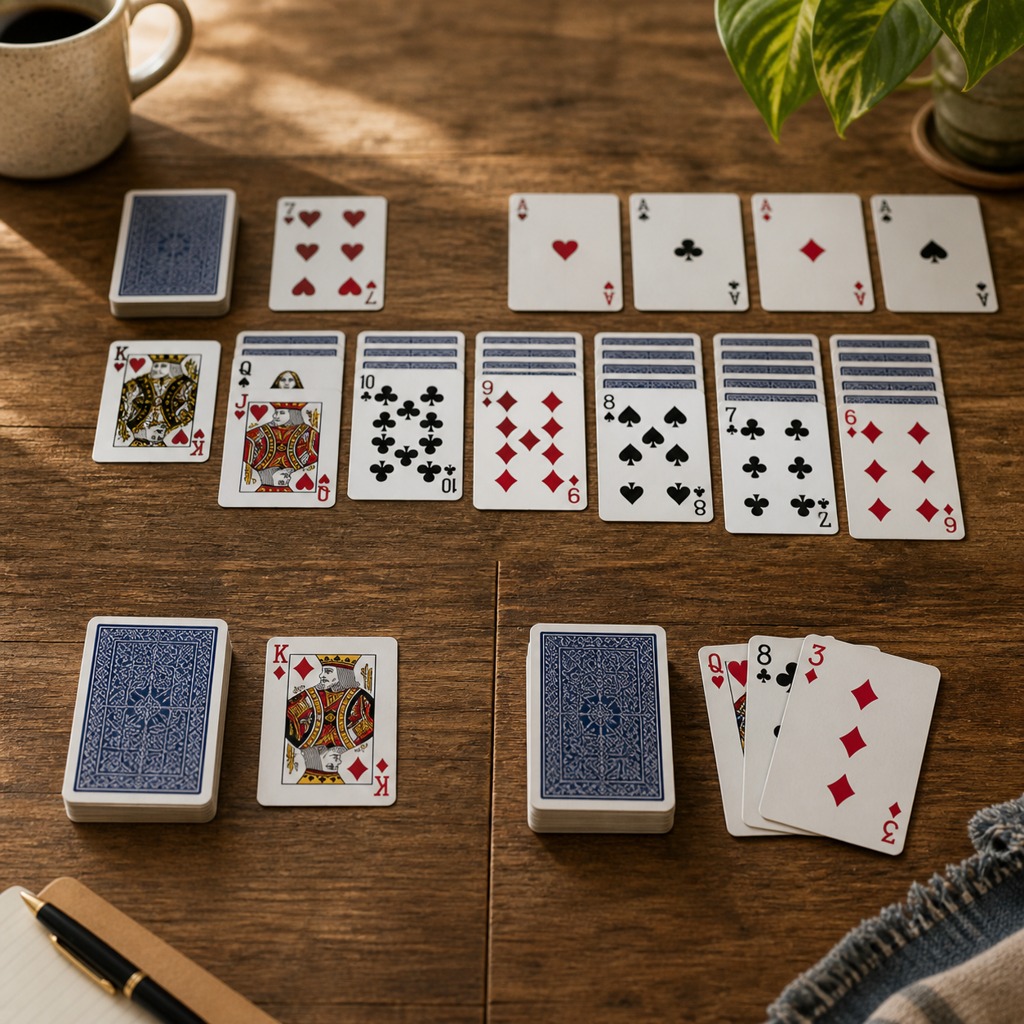
Solitaire draw one vs draw three changes what "available" means
A card can be visible and still unavailable. Draw-three teaches that lesson quickly.
Imagine the waste pile shows a black 8 on top, with a red 7 underneath it. Your tableau has a black 8 waiting for that red 7. In draw-one, that red 7 would have its own turn. In draw-three, it sits there like a promise you cannot touch yet.
This is where beginners get irritated, then start clicking quickly through the stock. The better habit is to read the stack.
Ask what has to happen before the covered waste card matters. Can the top waste card move somewhere useful? Would moving it expose the card underneath? Does the tableau need a hidden-card reveal more than it needs this visible stock card?
Solitaire draw one vs draw three turns the waste pile into a memory test. You are not memorizing the whole deck. You are remembering the next card under the current one, and sometimes the card under that.
That is enough.
Draw-one feels open, but it still has traps
Draw-one Solitaire is often treated as the friendlier mode, and that is fair. More cards are directly accessible. The stock gives you a steady stream of single decisions. When a needed card appears, you can usually use it.
But draw-one can make players sloppy.
Because access feels generous, it is easy to send cards to the foundation too early or move a tableau card because it looks neat. Bicycle's rules point out that uncovering face-down cards matters because those cards become newly playable. That should shape the whole session. A move that reveals a hidden card is usually more valuable than a move that only tidies a visible stack.
In draw-one, the mistake is speed without reading. The stock keeps offering cards, so the player stops asking whether the tableau is improving.
Before taking an easy stock card, check:
1. Does this move uncover a face-down card?
2. Does it create or protect a useful tableau space?
3. Does it free a card that another visible card needs?
4. Does it send a card to the foundation before the tableau is done using it?
Draw-one gives more access, but it still rewards timing.
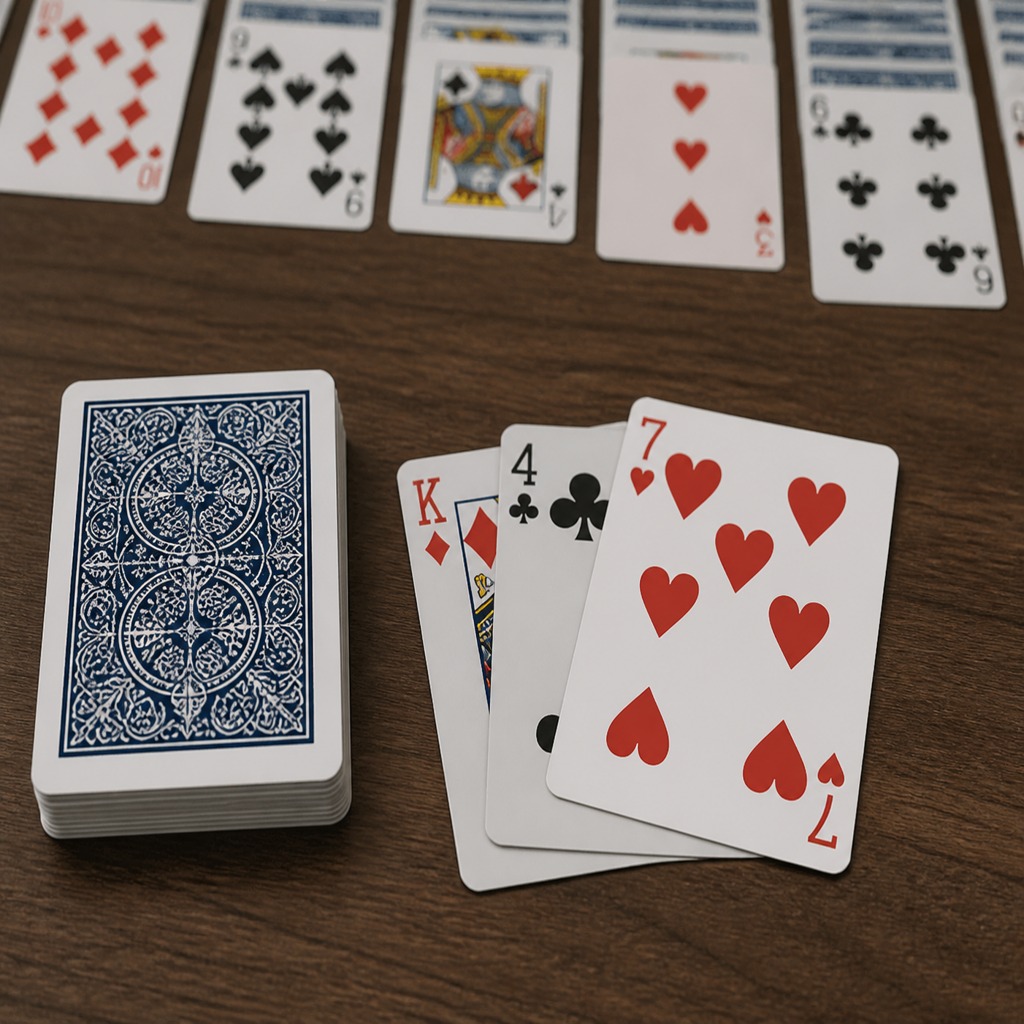
Draw-three makes patience visible
Draw-three Solitaire feels stricter because the stock has rhythm. You do not simply receive one card after another. You receive small packets, and the order inside those packets matters.
The Klondike Solitaire overview on Wikipedia lists several stock-to-waste variants, including turning three cards at a time and turning one card at a time. That one detail changes how a player experiences the same layout.
In draw-three, you can lose access by changing the waste order too casually. You can also gain access by planning one move ahead. If the visible card can move, the next card may become playable. If the visible card cannot move, the cards underneath may have to wait for another pass.
This makes tableau reveals more important. A hidden card in the tableau can open a place for a waste card. A waste card can open the card beneath it. One small reveal can make the stock feel less locked.
Draw-three also makes empty spaces more precious. A king space can absorb a useful sequence and expose a hidden card. If you fill that space with the first legal king, you may lose the flexibility needed to free the waste pile later.
Solitaire draw one vs draw three is really a lesson in information. Draw-one gives information in single steps. Draw-three gives information in layers.
The older patience idea behind the setting
David Parlett's history of patience games makes a useful distinction: these games are not only about chance. Many patience games depend on the balance of choice and information. That idea explains why draw settings matter so much.
Draw-one gives more immediate choice. Draw-three reduces immediate choice but gives the player more to remember. Neither setting is automatically better. They ask for different habits.
Draw-one asks: should I use this card now?
Draw-three asks: what happens if I wait, and what card is hiding behind this one?
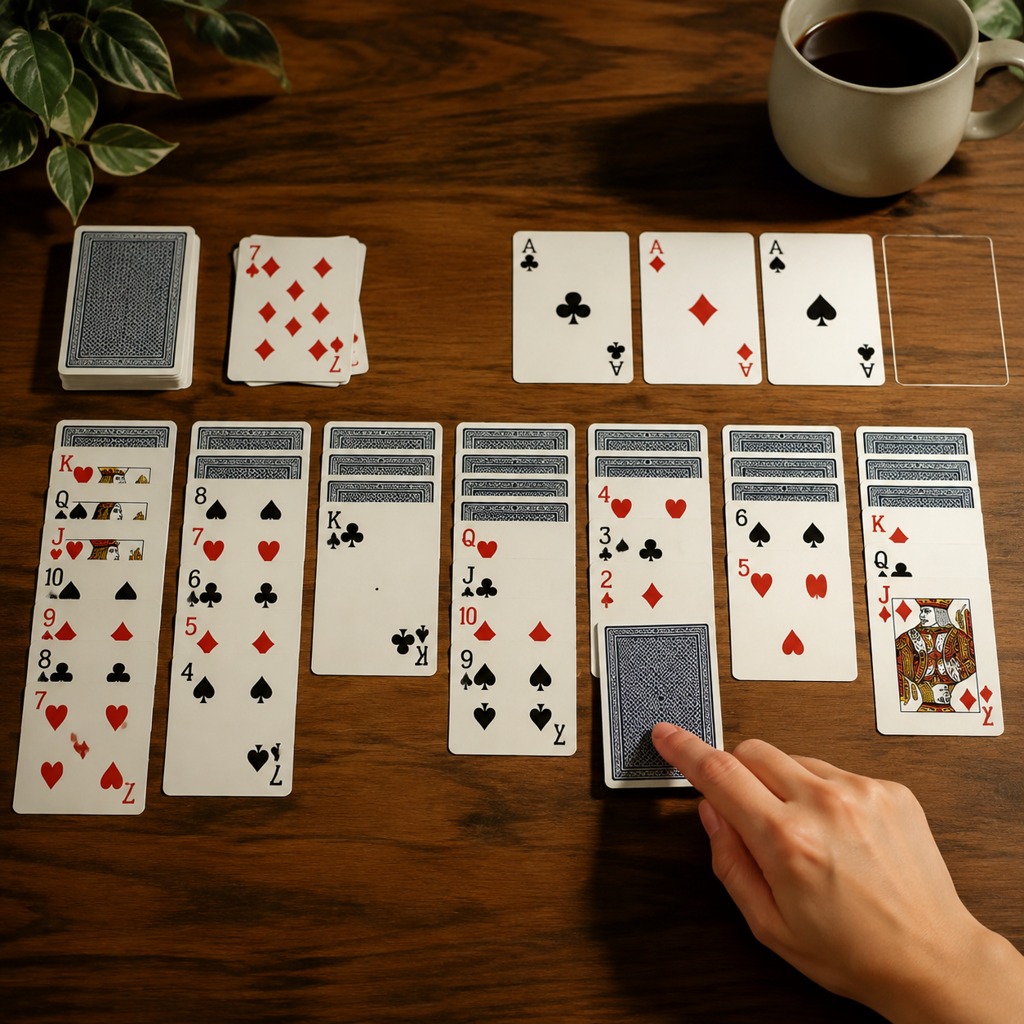
How to choose the right mode for today
Pick draw-one when you want a relaxed round, a cleaner learning session, or a quick reset between other puzzles. It is useful when you are practicing tableau basics: revealing hidden cards, building alternating colors, and deciding when to move aces and twos upstairs.
Pick draw-three when you want the stock to matter more. It suits players who already understand the tableau and want access to feel earned.
Try this simple rule for either setting: before using the stock, make one tableau pass. Look for face-down-card reveals, safe sequence moves, and empty-space decisions. Then use the stock.
A better way to read Solitaire draw one vs draw three
The setting is not a label for easy and hard. It is a question about access.
Draw-one says: you may inspect the deck one card at a time. Make clean decisions.
Draw-three says: you may see more than you can touch. Remember what is waiting.
That is why the mode changes the feeling of a short break. Draw-one feels like a steady walk through the deck. Draw-three feels like a small negotiation with the deck.
Neither version needs a dramatic strategy lecture. Watch the waste pile. Respect hidden tableau cards. Do not rush a foundation move just because it is legal. If a card is useful in the tableau, let it keep working there a little longer.
The next time a red 7 sits under a black 8 in the waste pile, do not call the deal unfair yet. Ask what would move the black 8, what the tableau needs, and whether one hidden-card reveal could change the pass. Same deck. Same goal. A different kind of patience.