



Solitaire red black rule mistakes usually happen when the move looks almost too easy. A black seven is open. A red six is waiting. Your hand wants to move it before your brain has asked the better question: what does that move uncover, block, or spend?
That little color rule is one reason Klondike Solitaire still feels alive after so many deals. The game is not only about moving cards downward. It is about moving them downward in alternating colors, while the face-down cards underneath sit there like locked doors.
If you want a fresh card break after reading, start from the Easy Daily Puzzle home page or browse more solitaire tips on Easy Daily Puzzle.
Solitaire red black rule turns color into information
In standard Klondike Solitaire, tableau cards build downward by rank. A six can go on a seven. A jack can go on a queen. The catch is color: red goes on black, black goes on red.
That is the solitaire red black rule in its most useful form. It is easy to learn, but it keeps creating small decisions.
Bicycle Cards' Solitaire rules describe the tableau as the seven piles that make up the main table, with foundations built by suit from ace through king. The same rule page also points out the deeper goal: moving cards among the tableau can unblock face-down cards and bring them into play.
That is where color becomes more than decoration. A red six is not just a red six. It may be a bridge to a black seven, a roadblock for another red card, or the only way to uncover the card under it.
The rule gives every card two identities at once. Rank tells you where it can sit. Color tells you which door it can open.
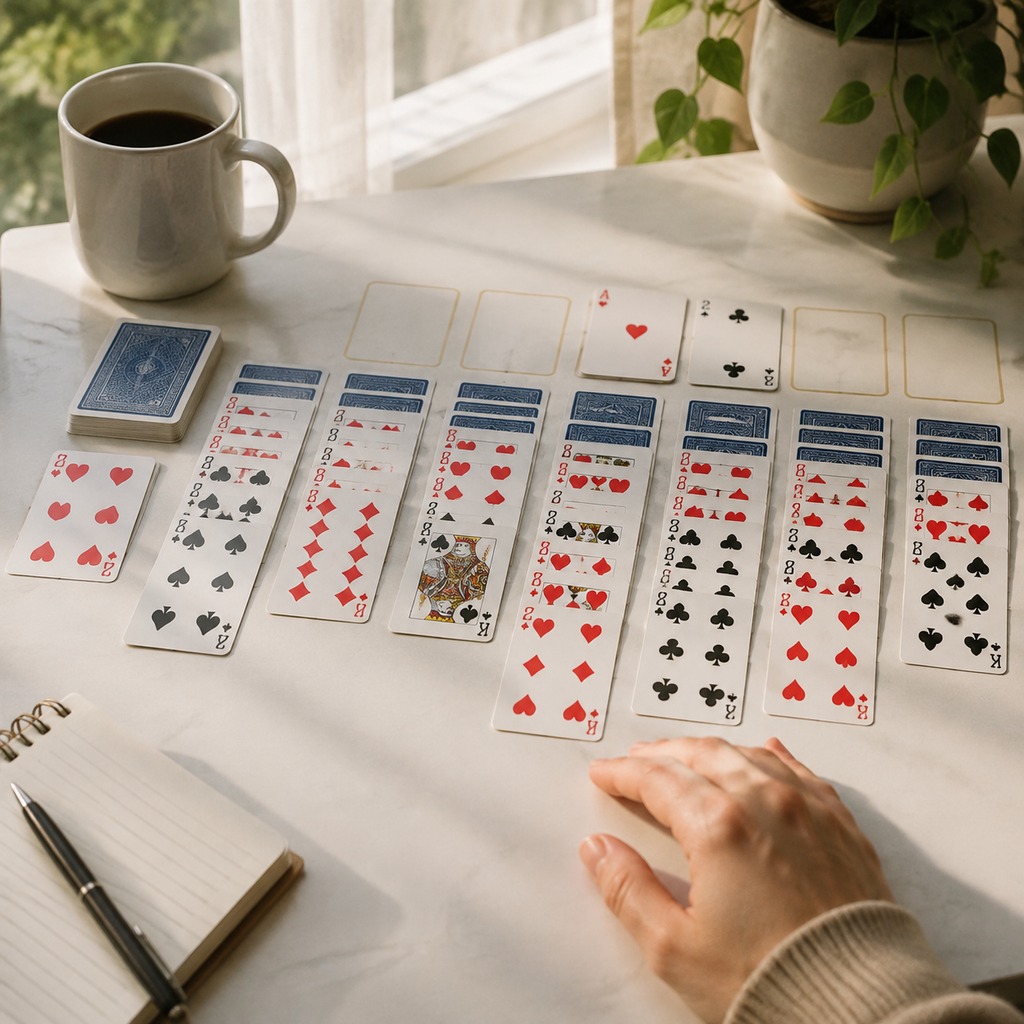
Why legal moves are not always good moves
The most common Solitaire trap is making a move because the rules allow it.
Suppose you can move a red nine onto a black ten. The move is legal. It may even look tidy. But if that red nine was sitting on a pile with no face-down card under it, and another red nine is blocking a hidden card elsewhere, the tidy move might not help. You spent a useful landing spot without revealing anything new.
Solitaire rewards information. A face-down card is unknown. Unknown cards are where the game changes. When the solitaire red black rule gives you two similar legal moves, the better move is often the one that reveals a hidden card first.
This is why strong casual players sometimes leave an obvious card alone. They are waiting because a better version of the same color move may appear.
The old name for Solitaire, "patience," fits here. David Parlett's history of patience games treats patience as a whole family of single-player card games. Klondike still has that family feeling. You win by noticing when a move should wait.
The color check before you move
Use this quick check before moving a card in the tableau.
First, ask what the move reveals. If moving a red six onto a black seven flips a hidden card, that move has a clear purpose. Revealing cards usually matters more than making a column look tidy.
Second, ask what color the target card will need next. If you build a black seven, it will want a red six. If you bury that red six too early, you may make the next move harder.
Third, check whether the move frees a space. Empty tableau spaces are powerful because only kings can fill them in standard Klondike. If a color move clears a column and gives you a king lane, it may be worth more than a simple rank sequence.
Fourth, compare duplicate ranks. If you have two red sixes, do not treat them as equal. One may uncover a hidden card. One may block nothing. The color is the same, but the board position is not.
Fifth, do not rush foundation moves. Sending a card up to the foundation can be correct, but it can also remove a color you still need in the tableau. A red five on the foundation cannot help a black six in the table anymore.
That routine sounds slow on paper. In play, it becomes a two-second habit.
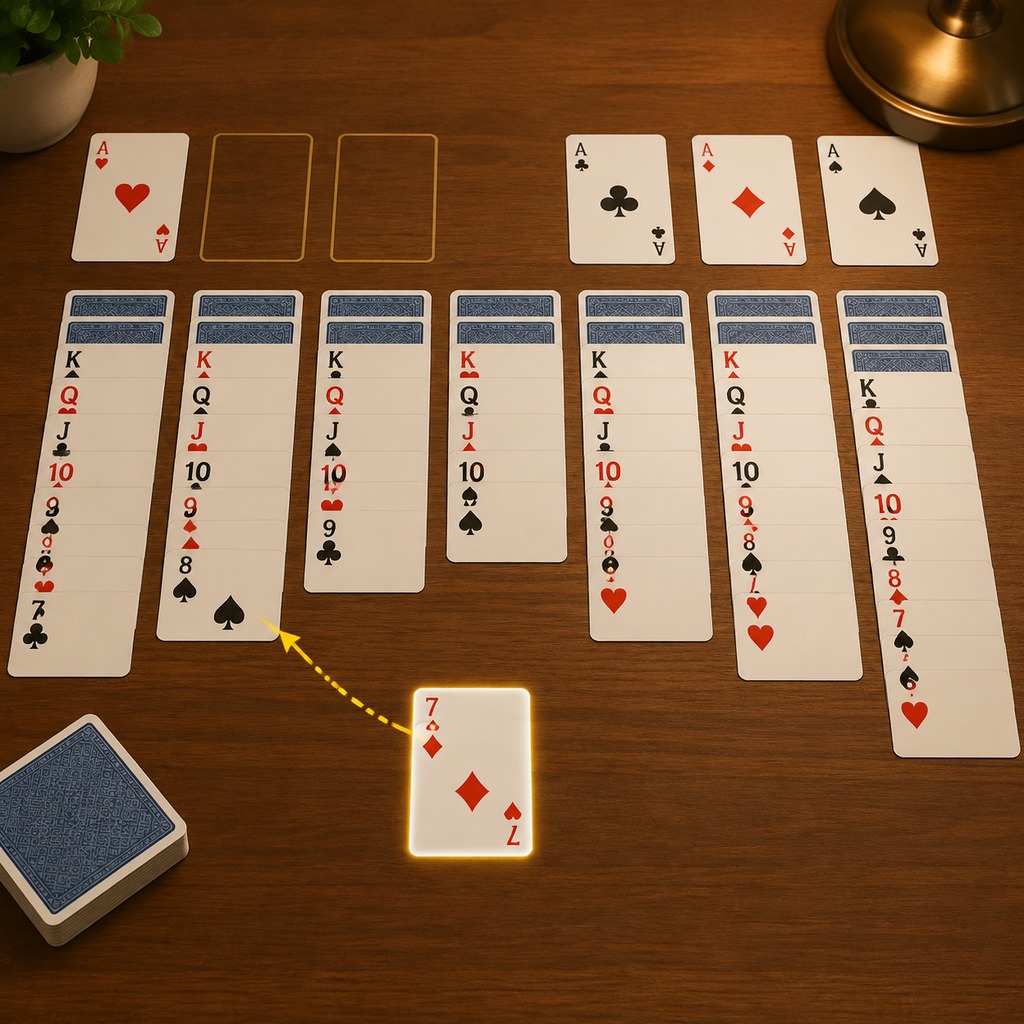
Draw-one and draw-three make the rule feel different
The solitaire red black rule stays the same, but the stock changes how risky each move feels.
In draw-one Solitaire, the next stock card is easier to access. If you pass a card now, you may see another chance soon. The game still punishes careless moves, but it gives you more chances to repair.
In draw-three Solitaire, timing is sharper. A useful card may sit under two other waste-pile cards. If you spend the only black seven that could receive a red six, you might wait a long time before the board gives you another target.
That is why draw-three often feels less forgiving. The color rule and the waste-pile order start working together. You are asking, "If I move it now, will the next stock cycle get better or worse?"
This is also why beginners sometimes feel that Solitaire is all luck. Some deals are rough, yes. But many losses come from spending color options too early. The board had a narrow path, and one legal move quietly closed it.
How the red black rule helps you read the tableau
After a few games, you can start reading the tableau by color pressure.
Look for ranks that have no opposite-color landing spot. A red eight with no black nine available is not useful yet. It may become useful later, so do not bury the black nines casually.
Look for columns where one color is overloaded. If several red cards are waiting for black targets, your next black card may be more valuable than it appears.
Look for kings by color too. A black king and a red king may lead to different sequence possibilities depending on which queens are available. Filling an empty space with the first king you see can block a better color chain.
Most of all, look under the face-up cards. If a legal red-black move uncovers a hidden card, it changes the game. If it only rearranges face-up cards, it needs a better reason.
That is the quiet pleasure of Solitaire. The rules are small enough to fit in your head, but the board keeps asking you to read the timing.
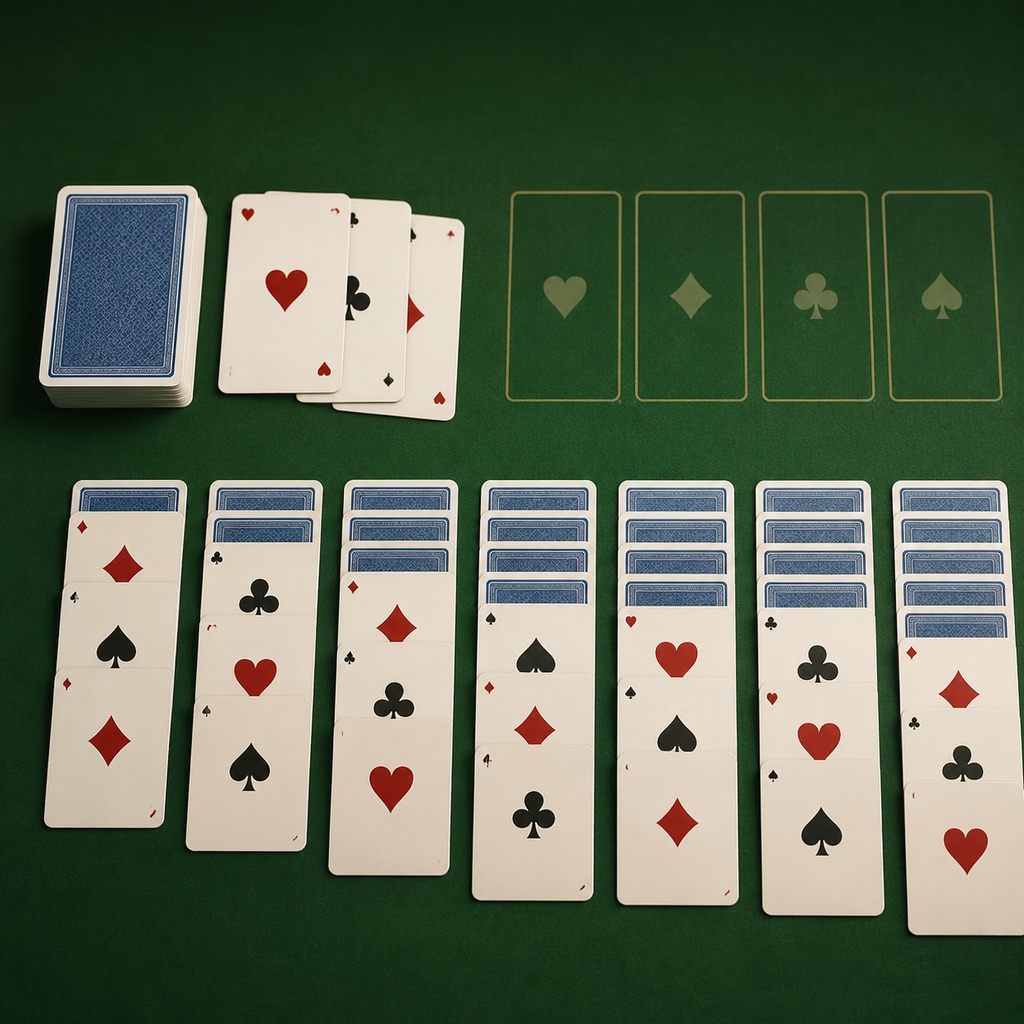
A simple practice drill
Try one game where you slow down only around color moves. Do not make the whole game serious. Just pause when a card can move onto the opposite color.
Ask three questions:
- Does this move reveal a hidden card?
- Does this move protect or spend an empty space?
- Does this move remove a color I may need in the tableau?
If the answer is unclear, leave the card for one more turn and check the stock. That tiny delay teaches more than replaying a lost deal and wondering where it went wrong.
The solitaire red black rule is not a complicated strategy. That is why it is easy to underestimate. It is a small rule with a long shadow. It decides which cards can meet, which piles can open, and which moves only look good because they are available right now.
The next time a red six fits neatly onto a black seven, let your hand wait half a second. The move may still be right. But the better player knows why before the card moves.