



Spider Solitaire four suits looks almost harmless when the cards first land. Ten columns, face-down cards, a stock pile waiting at the side. Then you try to move a neat run, notice the suits do not match, and the whole game changes its tone.
That is the jump from easy Spider to the version players remember. The rules are not complicated. The pressure is. If you already play solitaire games on Easy Daily Puzzle , four-suit Spider is the mode to try when you want the same table to feel more deliberate.
Spider solitaire four suits starts with the same goal
Bicycle Cards describes Spider Solitaire as a two-deck solitaire game where the goal is to assemble full suit sequences from king down to ace and remove all eight completed suits from the game. You can read the base rules on the Bicycle Cards Spider Solitaire page .
The deal creates ten tableau piles. Some cards are face down, the top cards are face up, and the stock deals a new row when play slows down. You can build downward by rank. A jack can sit on a queen. A ten can sit on a jack. Empty columns are valuable because they let you move cards around and reveal buried cards.
The four-suit version keeps that structure but removes the easy illusion that every descending sequence is equally useful.
In one-suit Spider, every descending run is naturally same-suit because all cards behave as one suit. In spider solitaire four suits, a mixed run may sit in descending order but still refuse to move as a group. To move a stack together, the sequence usually needs to be in order and in the same suit. That single rule makes the player care about texture, not just rank.
Spider Palace also treats four-suit Spider as a harder custom rule, noting that playing with four suits is more challenging than one or two suits. Its Spider Solitaire rules page is useful because it shows how suit difficulty changes the feel of the game.
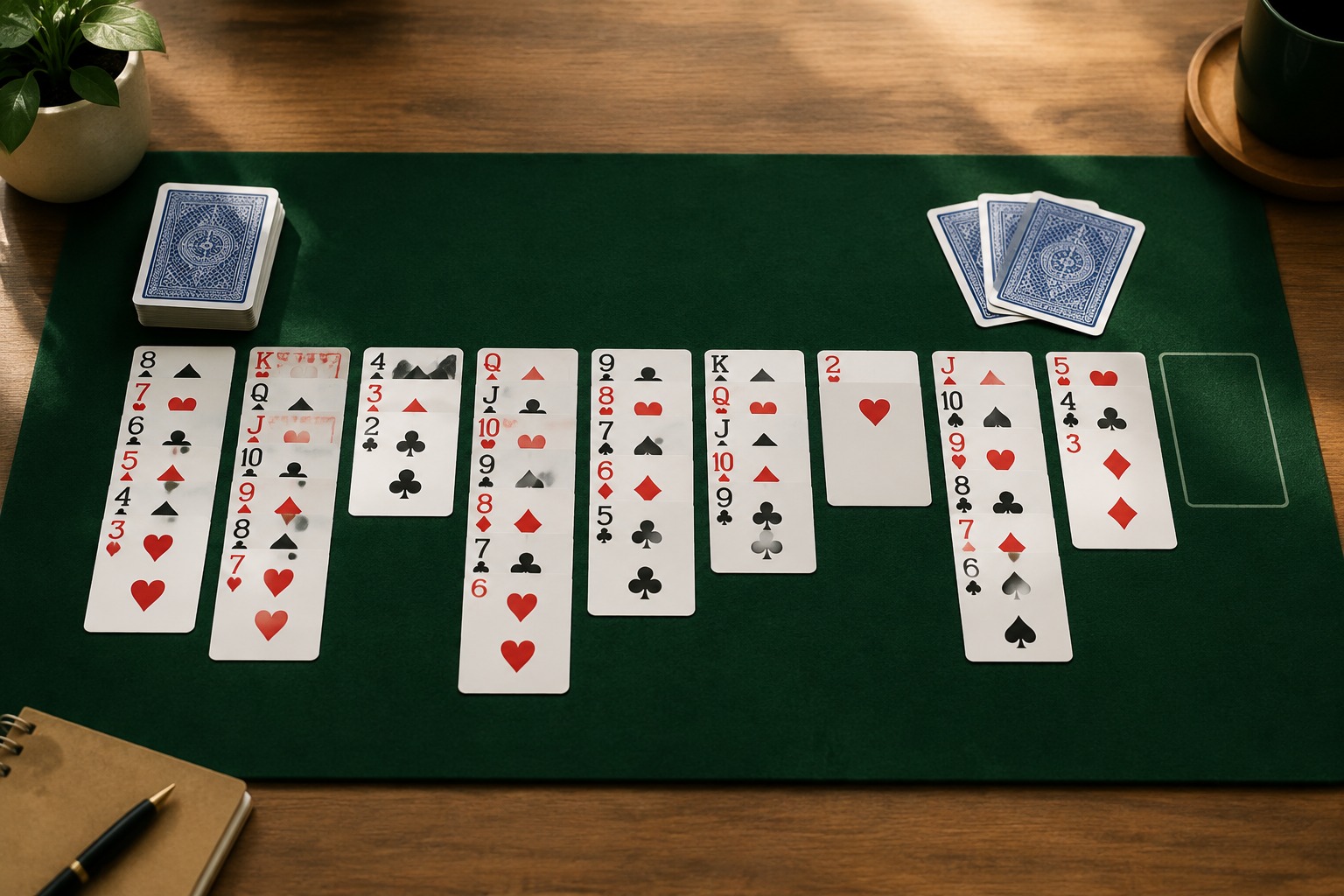
Why mixed sequences become the quiet trap
A beginner sees this column:
King of hearts, queen of clubs, jack of clubs, ten of diamonds.
It looks tidy because the ranks descend. It is not tidy. The queen and jack may travel together if the rules allow that same-suit section, but the full stack is broken by suit changes. If you later need to move the king or free the face-down card beneath it, that mixed run may behave like glue.
This is the heart of spider solitaire four suits. You are not only building downward. You are trying to build downward in ways that can move later.
That is why a sloppy legal move can still be a bad move. Placing any ten on any jack may be allowed, but it might bury a useful suit match or block an empty column. Four-suit Spider punishes moves that solve the next three seconds while damaging the next five minutes.
The game becomes less about finding a move and more about choosing which move leaves the table flexible.
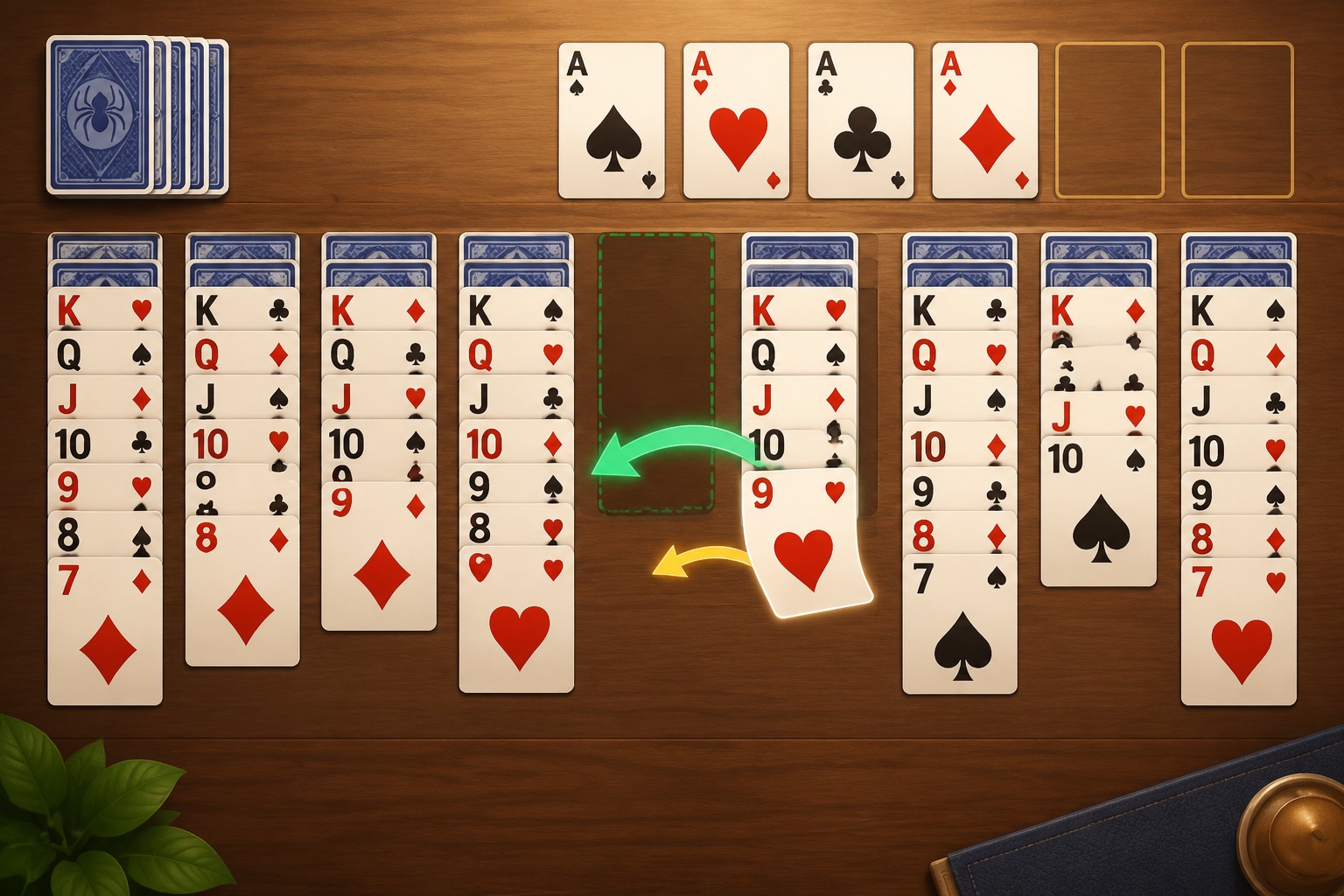
The empty column test
Empty columns are powerful in every Spider game, but they matter even more in the four-suit version. An empty column gives you a temporary parking space. That space lets you separate mixed stacks, reveal hidden cards, and rebuild a same-suit run.
The trap is filling the empty column too quickly.
Before you fill a column, ask three questions.
Can this move reveal a face-down card?
Can this move repair a mixed sequence into a same-suit sequence?
Can this move help build a full king-to-ace suit later?
If the answer is no, wait if you can. An empty column is not just a place to dump a king. It is a tool for surgery. Once you fill it, the table gets tighter.
This connects to a tip that applies across many solitaire games: useful space matters more than pretty order. If you want more short card-game strategy pieces, browse the Easy Daily Puzzle solitaire articles and compare how empty spaces, foundations, and waste piles change from one game to another.
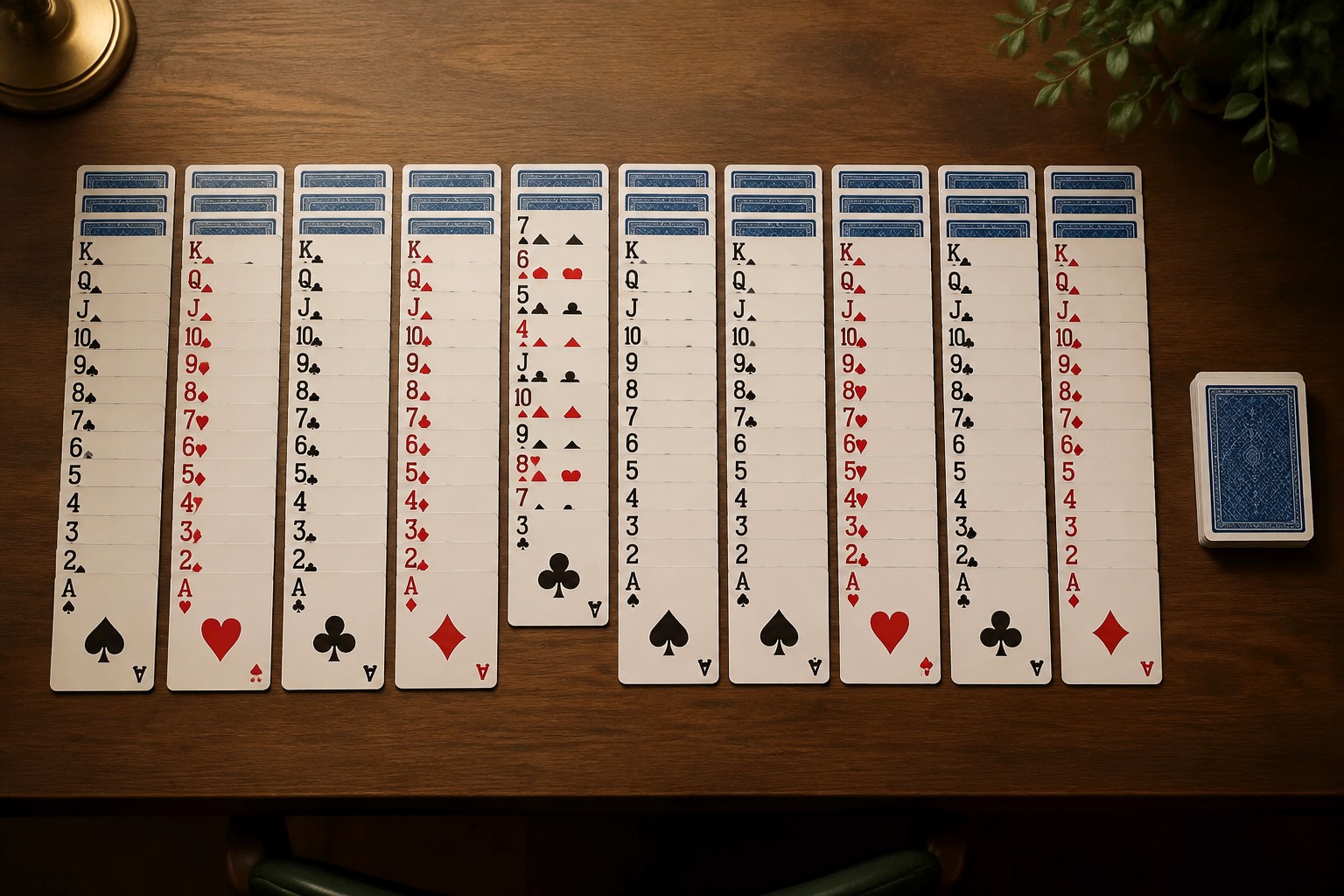
When to deal from the stock
The stock pile is tempting because it creates new cards and sometimes breaks a dead table open. It can also bury the progress you were about to make.
In many Spider rulesets, a new stock deal places one face-up card on each tableau column, and empty columns must be filled before a deal. Bicycle Cards notes that another row is dealt when possible or desired moves come to a standstill, with spaces filled before dealing. That rule is simple, but the timing is where players lose games.
In spider solitaire four suits, try to deal only after you have done three things.
First, reveal every safe face-down card you can.
Second, complete or strengthen any same-suit sequence that is already close.
Third, use empty columns to clean obvious mixed stacks.
The reason is practical. A stock deal adds ten new cards. If your current table is messy, those cards often make it messier. If your table has several clean same-suit runs, the new row has a better chance of attaching to something useful.
The stock is not an emergency button. It is a weather change. Prepare the table before it hits.
A small habit that makes four suits easier
Pick one suit to protect for a few moves.
That does not mean ignoring every other card. It means noticing when one suit is starting to gather naturally. If hearts are forming a queen-jack-ten run, avoid breaking that run for a small gain somewhere else. Same-suit structure is expensive in four-suit Spider. When the table gives you some, treat it like a resource.
This habit is especially helpful when two legal moves look equal. Suppose a black 8 can go on a 9 of clubs or a 9 of spades. If the 8 is a spade, the spade move is better because it creates a movable same-suit connection. The rank move is legal either way. The suit move is healthier.
Small choices like that slowly change the table. You reveal a little more. You keep one column cleaner. You finish one full suit before the last stock deal turns the layout into traffic.
How four suits changes the mood of the game
One-suit Spider is relaxing because most descending order is good enough. Two-suit Spider starts asking for better planning. Spider solitaire four suits is where the game becomes a proper puzzle.
It is still a casual game. You can play it with a cup of coffee and no tournament clock. But the decisions have more memory. A move you made twenty turns ago can decide whether a stack moves now.
That is what makes the mode satisfying. Winning does not feel like clicking through an obvious path. It feels like keeping the table breathable for long enough that one clean suit finally comes out.
If you are moving up from one suit, do not chase a perfect solve at first. Chase fewer careless mixed stacks. Chase one early empty column. Chase one same-suit run that survives long enough to matter. Those smaller goals make the hard version readable.
Then, when the final king-to-ace sequence slides away, the win feels earned in a way the easier modes rarely do.