



Spider Solitaire hidden-card reveal is the small reward that can save a board before the stock pile makes everything louder.
You know the moment. The tableau has gone quiet. A few columns are blocked. One clean run looks almost useful, but not quite. The stock button sits there like a polite invitation. Press it and ten new cards arrive.
That click feels like progress. Sometimes it is. Sometimes it buries the one column that still had a chance to open.
Before you deal, give the hidden cards one last look. If you want a fresh card-game session after reading, start from the Easy Daily Puzzle home page or browse more Spider Solitaire articles on Easy Daily Puzzle.
Spider Solitaire hidden-card reveal starts under the stack
Spider Solitaire hidden-card reveal means clearing enough face-up cards from a column to turn over the next face-down card underneath.
That sounds minor until you notice how many games turn on one newly revealed card.
The Bicycle Cards Spider Solitaire rules explain the standard rhythm clearly. Spider uses two standard decks. Cards are dealt into ten piles, with face-down cards under the top face-up layer. When all face-up cards are removed from a pile, the next card below is turned face up and becomes available.
That last sentence is the heart of the habit.
A face-down card is not just unknown material. It is trapped material. It cannot help you build a sequence, fill a gap, or start a repair until you uncover it. The stock gives you ten new face-up cards, but it also places a new card on every column. If you deal too soon, you may cover a column that was one move away from showing you something useful.
In other words, the question is not only "Do I have moves left?"
The better question is "Can I reveal one more hidden card before I deal?"
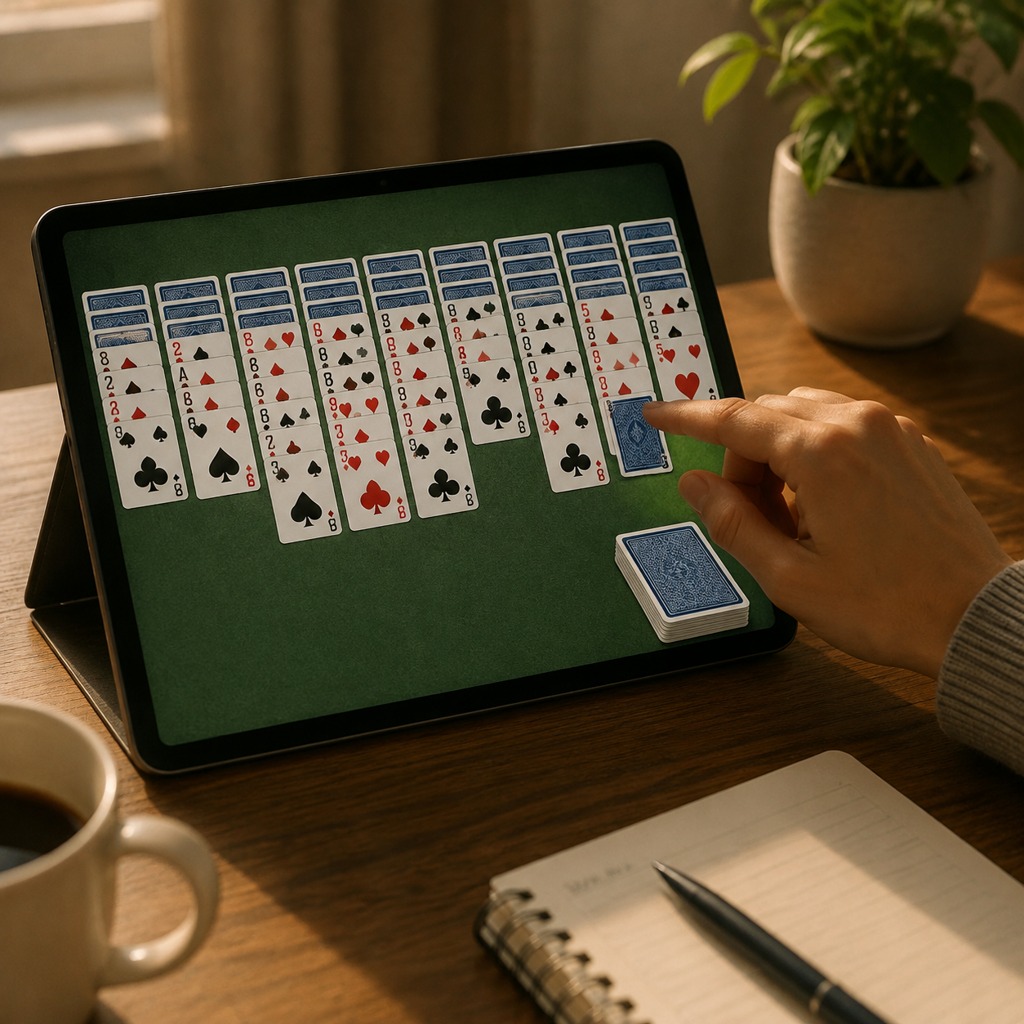
Why the stock should wait
Spider Solitaire is generous and rude at the same time.
It gives you more cards when the board stalls. Then it drops those cards across every column, including the columns you were carefully cleaning.
Bicycle's rules also note that when play comes to a standstill, the player deals another row of ten cards, but all spaces must be filled before that deal. That rule can create a bad little bargain. You may fill an empty column with a weak stack just to unlock the stock, then immediately deal over the whole tableau.
The board changes, but it may not improve.
This is why Spider Solitaire hidden-card reveal matters most right before the stock. A newly turned card can give you a move that the stock would have hidden. It may complete a descending link. It may give you a missing queen or jack. It may give you a safe stack to move into an empty column. It may simply tell you that a column is worse than you hoped, which is still information.
David Parlett's history of Patience and Solitaire describes patience games as ordering games shaped by choice and information. Spider is exactly that kind of puzzle. The more hidden cards you reveal, the more information you have. The more information you have, the less you are clicking out of frustration.
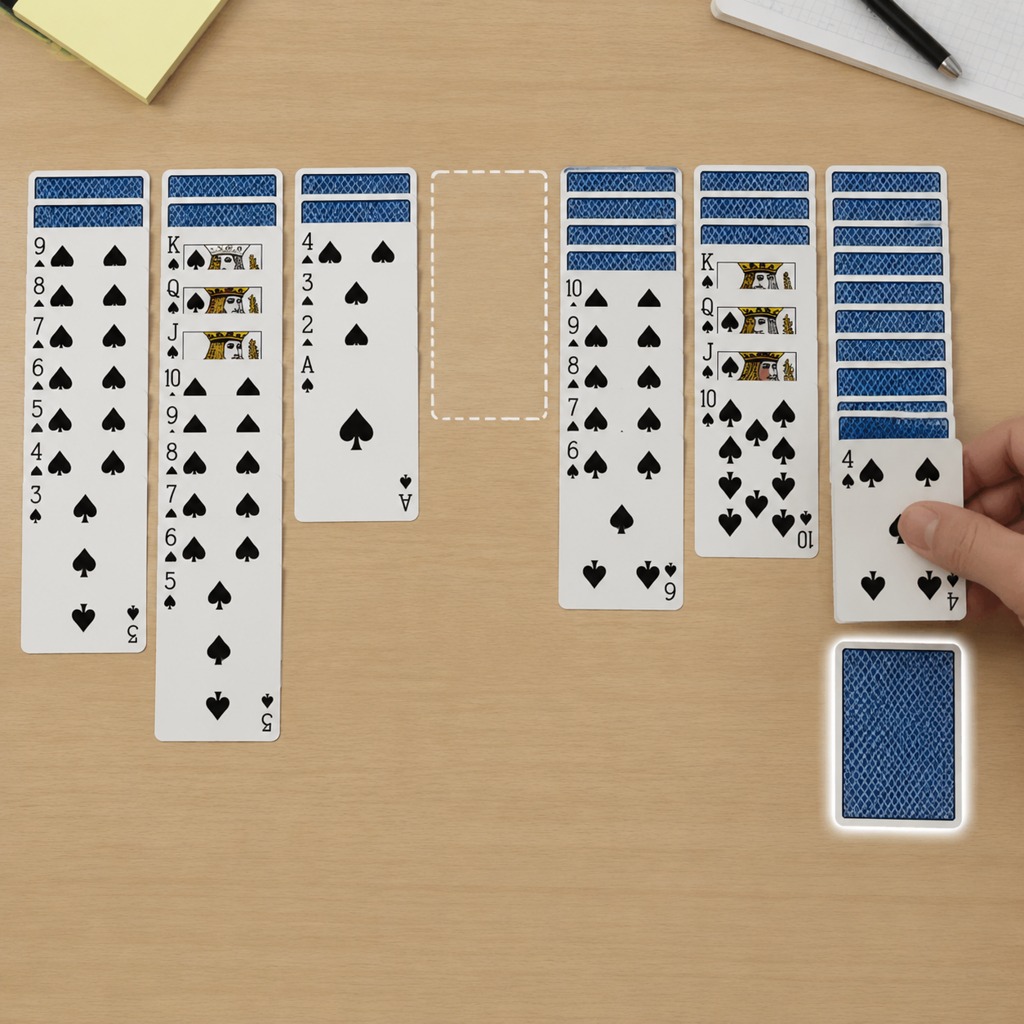
A 20-second Spider Solitaire hidden-card reveal scan
Use this quick scan before any stock deal.
First, look for columns with only one or two face-up cards sitting above a face-down card. These are your closest reveals. If a small stack can move away, even temporarily, that column deserves attention.
Second, check every empty column. An empty column is not storage. It is a lever. Use it to lift a stack, expose a hidden card, then put the stack back or move it somewhere better.
Third, look for clean same-suit runs. A same-suit run moves as one stronger unit and is easier to repair after a stock deal. If moving it uncovers a card, do that before adding new cards to the board.
Fourth, inspect mixed stacks. Mixed stacks are not always bad. Sometimes they are scaffolding. But if a mixed stack is sitting on top of a face-down card and cannot move as a unit, ask whether one small repair can free it.
Fifth, identify the column you least want to cover. If a column is nearly open, nearly clean, or protecting an empty space, do not deal over it casually.
This scan is short enough to become automatic. It is not a full board analysis. It is a pause to see whether the board still has information to give.
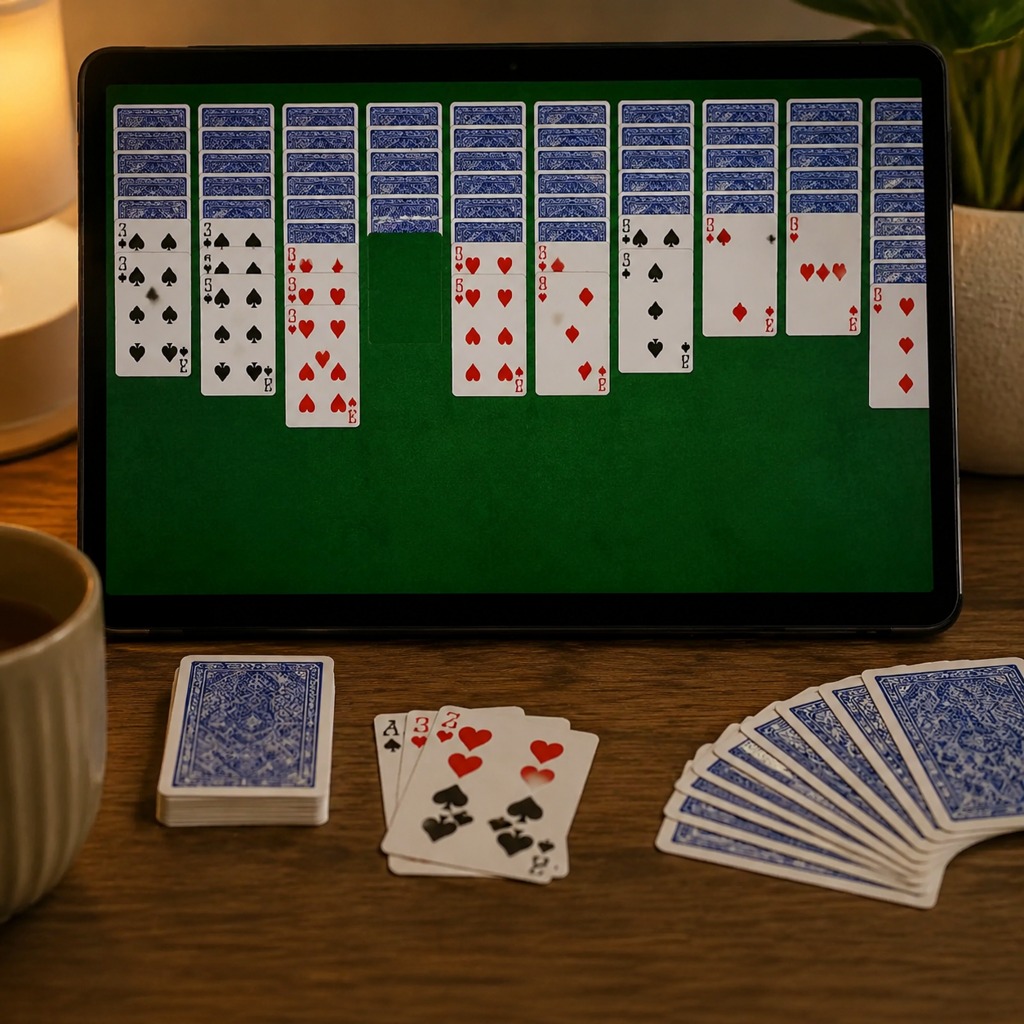
One-suit, two-suit, and four-suit boards read differently
Spider Solitaire hidden-card reveal is useful in every version, but the pressure changes by suit count.
In one-suit Spider, most descending sequences can be moved together. Hidden-card reveals happen more often because the board repairs easily. The danger is laziness. Since almost every stack feels movable, players deal too soon and cover simple reveals they could have taken first.
In two-suit Spider, the habit becomes more important. A red queen under a black king may look fine for one move, then suddenly refuse to move as part of a clean run. Before dealing, check whether a small suit repair can reveal a card or free a column.
In four-suit Spider, every reveal matters. You cannot assume that a descending stack will stay movable. Clean suit runs are precious. Empty columns are precious. A single face-down card may be the difference between a board that opens and a board that becomes a museum of trapped kings.
The stock does not care which version you are playing. It deals across the board anyway. Your scan has to become stricter as the suits multiply.
The reveal is often better than the clever move
Casual players often look for the impressive move first.
Can I build a long run? Can I move this whole stack? Can I set up a complete suit?
Those moves feel good, and sometimes they are right. But Spider often rewards the plain move that reveals a card. A newly visible card gives you options. A fancy stack that keeps every hidden card covered may only make the board look organized.
Here is a useful test: if two moves both look legal, prefer the one that uncovers information unless it destroys an empty column or breaks a strong same-suit run.
That does not mean every reveal is automatically correct. Sometimes uncovering a card costs too much. If the only way to reveal one card is to ruin a nearly complete suit, wait. If the reveal forces you to fill your only empty column with a dead king, think twice.
But when the cost is small, take the reveal before the stock.
Spider Solitaire is easier to read when the unknown cards slowly become known. The stock pile can help later. The hidden card under your next movable stack may help now.
When it is finally time to deal
Deal when the board has stopped giving you useful information.
That means you have checked near-reveal columns. You have used empty spaces if they can safely expose a card. You have repaired obvious mixed stacks. You have protected the clean runs worth protecting.
Then press the stock without guilt.
A good deal is not a panic click. It is a reset after you have taken the quiet value from the tableau.
The next time the button looks tempting, let your finger hover for a second. Look under the stacks. Ask which hidden card is closest to daylight. If one more reveal is available, take it.
The stock will still be there.