



Spider Solitaire mixed suit stacks are the little messes that keep a game alive. You know the moment: a black 8 can move onto a red 9, the move uncovers a face-down card, and the table suddenly has air again. It feels wrong because the stack is no longer clean. It may still be the right move.
The hard part is knowing the difference between useful mess and permanent clutter.
Spider Solitaire is built around descending sequences. In most digital versions, you can place a lower card on the next higher rank, but complete runs usually have to be in one suit before they can be removed. MobilityWare's beginner rules explain that a full descending single-suit group, such as King to Ace, can be removed from play. That one rule is why mixed stacks matter so much. They help you survive, but they rarely finish the job by themselves.
If you want to play a few hands while this idea is fresh, start from the Easy Daily Puzzle game hub or look for more Spider Solitaire articles on Easy Daily Puzzle).
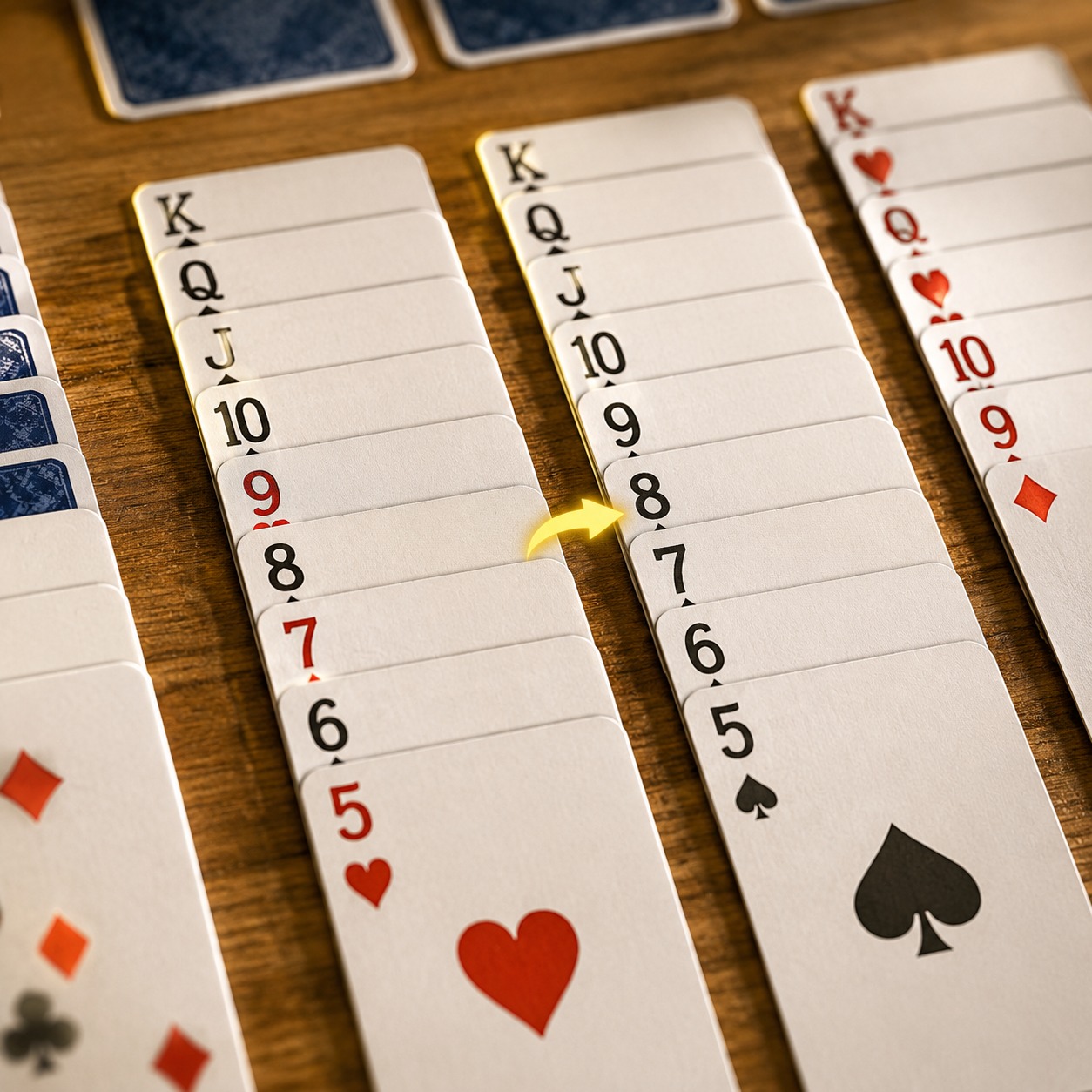
Spider Solitaire mixed suit stacks are scaffolding
Think of a mixed suit stack as scaffolding, not furniture. It helps you reach something. It should not become the thing you build around forever.
A clean same-suit sequence is valuable because it can move as a block and eventually leave the tableau. A mixed sequence can also create movement, but it has a catch: the cards may stop traveling together when you need them to.
This is why "always keep suits together" is too simple. It is good advice when you have the choice. But Spider Solitaire often gives you a worse choice: mix suits now and reveal a hidden card, or stay tidy and stare at the same frozen tableau for three more turns.
The better question is: what does this mixed stack buy me?
If it reveals a face-down card, opens a column, repairs a broken run, or sets up a same-suit build next turn, it may be worth the mess. If it only makes the tableau look neater for a moment, be suspicious.
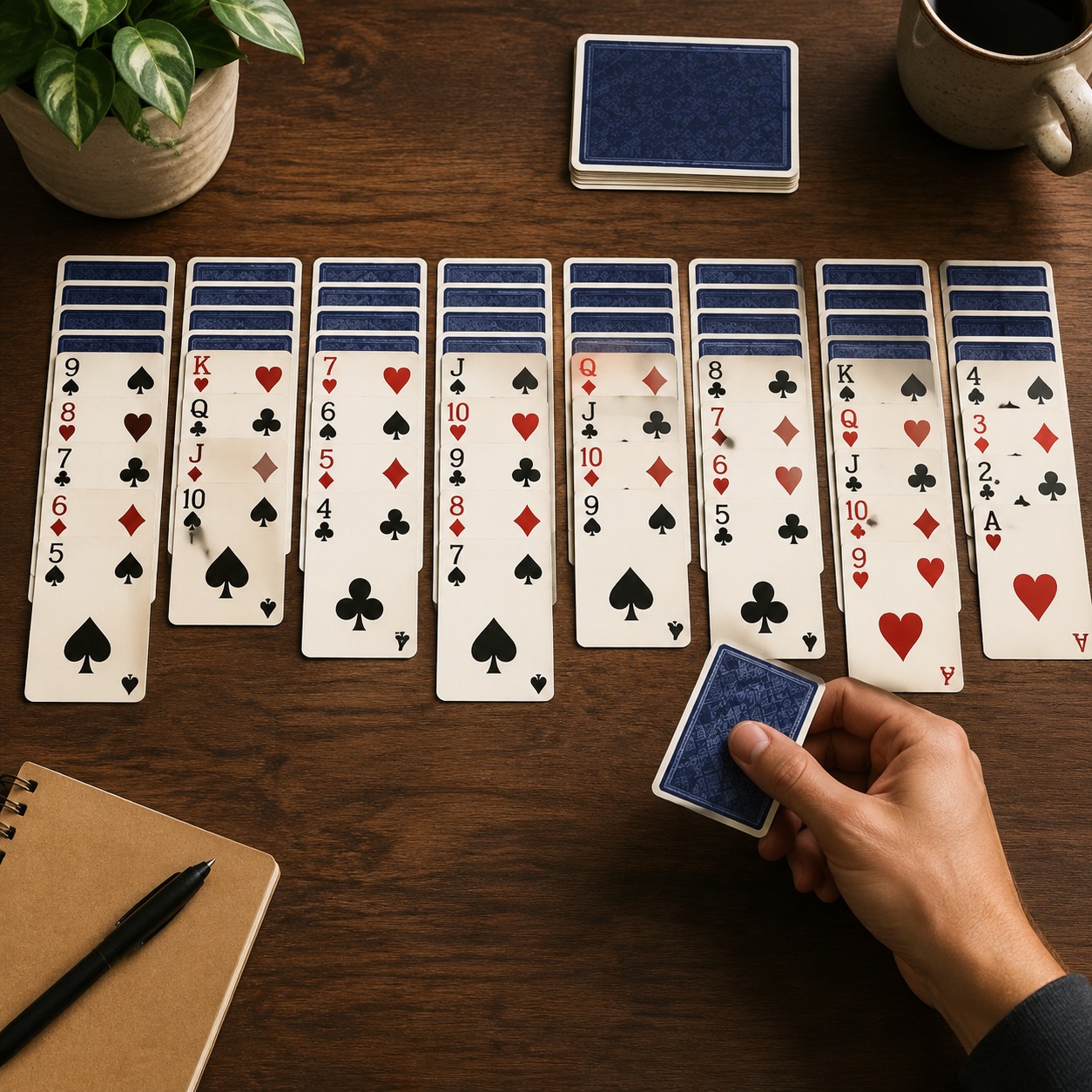
The reveal test
Before making Spider Solitaire mixed suit stacks, run the reveal test.
Ask one question: will this move uncover a hidden card or create a path to uncover one?
Face-down cards are the real locked doors in Spider Solitaire. Every hidden card keeps information away from you. It might be the missing 10 that connects your Jack-10-9 run. It might be the Queen that lets a King stack finally move. It might be another awkward card, but at least you know.
A mixed stack that reveals a card has done a job. It may need repair later, but it has increased your information. A mixed stack that reveals nothing needs a stronger reason.
Here is a simple example. You have a 7 of hearts sitting on top of a face-down card. An 8 of clubs is open in another column. Moving the 7 onto the 8 creates a mixed stack, but it flips the hidden card below. That is often a reasonable trade. You gained a new card and possibly a new move.
Now change the example. The 7 is already on a face-up run, and moving it onto the 8 reveals nothing. The only benefit is that one column looks shorter. That move might still be useful, but it deserves more doubt.
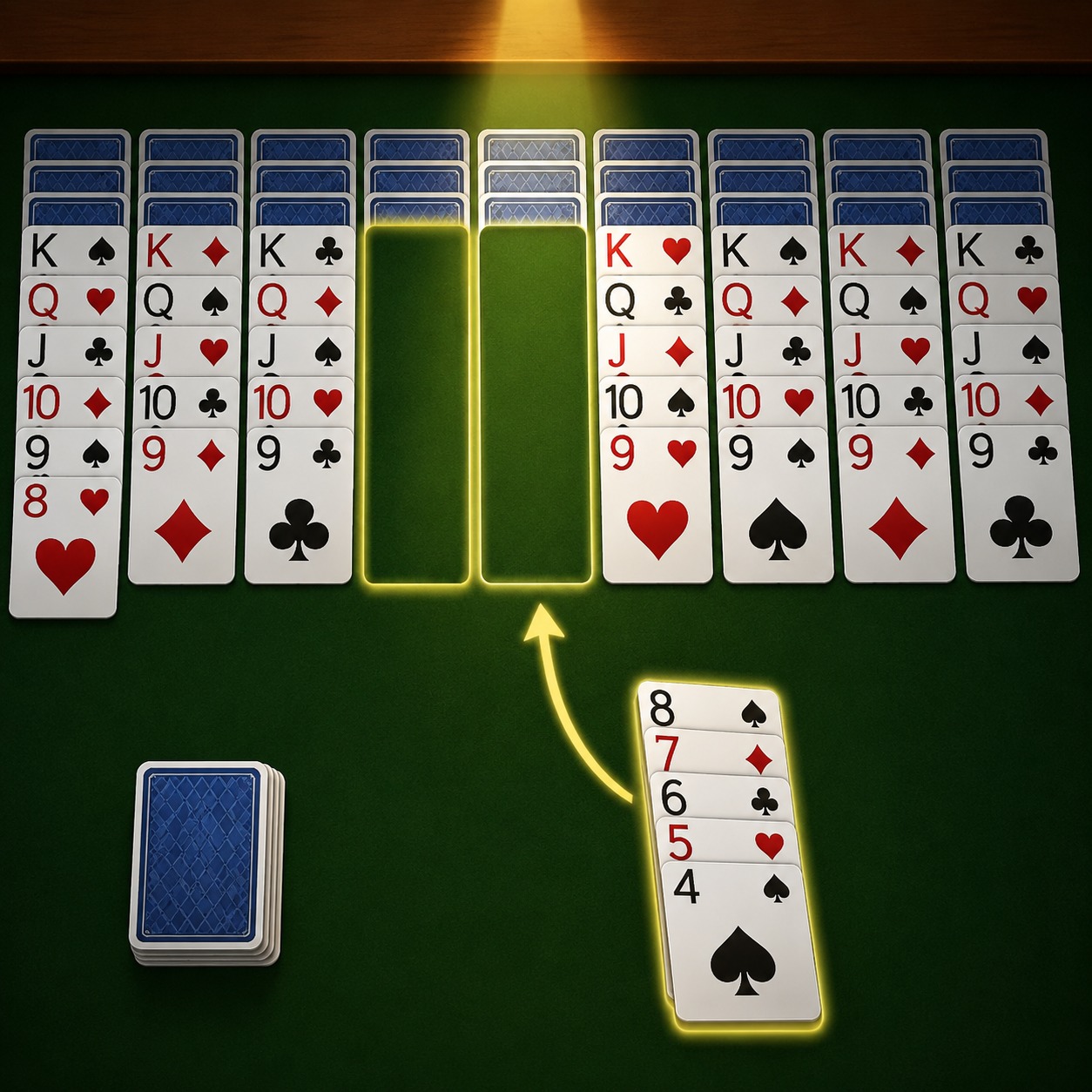
Empty columns change the answer
Empty columns make mixed stacks safer because they give you a repair space.
An empty column lets you lift cards out of the way, rebuild suits, and move temporary stacks without locking the table. MobilityWare's rules note that players can place a single card or group into an open empty column. That freedom is one of the biggest strategic tools in the game.
If you have an empty column, a mixed stack can become a short-term bridge. If you have no empty column, the same stack becomes heavier. So before you mix, look at the parking situation. Do you have an empty lane? Can you create one soon? Is the mixed stack short enough to repair?
The three-card limit
One practical habit: keep most mixed stacks short. There is no official three-card law. It is just a useful ceiling for casual play. A mixed stack of two or three cards is often repairable. A mixed stack of seven cards can become a junk drawer with suits buried in the wrong order.
Short mixed stacks are flexible. Long mixed stacks demand rent. If you are about to place the fourth or fifth mixed card on a stack, pause and ask what it opens. If the answer is "nothing yet," wait.
Suit count changes the risk
Spider Solitaire mixed suit stacks feel different depending on difficulty.
In one-suit Spider, mixing is almost invisible because every card behaves like it belongs together. In two-suit Spider, mixed stacks start to matter because red and black grouping still needs future repair. In four-suit Spider, every mismatch is a small debt. You can take the debt, but you need a reason and a repayment plan.
This is where the older patience tradition is useful. [David Parlett's history of patience games](https://www.parlettgames.uk/histocs/patience.html) shows how these card puzzles grew from layouts where chance and choice sit close together. Spider Solitaire keeps that feeling. You cannot control the hidden cards, but you can control whether your visible cards stay useful.
How to repair a mixed stack
Repairing Spider Solitaire mixed suit stacks starts before the stack becomes a problem.
First, remember the suit break. If you put a 7 of hearts under an 8 of clubs, mentally mark that seam. Second, create or protect an empty column because a mixed stack without a work space is harder to fix. Third, rebuild from the top down when a same-suit repair is cheap. Finally, avoid burying a clean run under a mixed stack. If you already have 10-9-8 of spades, think carefully before dropping a 7 of hearts on it.
A better rule than "never mix suits"
"Never mix suits" sounds disciplined, but it is not how most real Spider Solitaire games are won. The better rule is: mix only when the move gives you information, space, or repair.
Information means a face-down card turns over. Space means an empty column appears or becomes easier to create. Repair means a clean sequence becomes possible within the next move or two.
If a mixed move gives you none of those, it is probably just cosmetic. It makes the tableau feel active without making it healthier.
On your next hand, try treating every mixed stack as temporary. Let it work for you. Make it reveal something. Make it open a lane. Then look for the first chance to clean it up.
That is the quiet skill in Spider Solitaire. Winning does not always mean keeping the table neat. It means knowing which mess has a purpose.