



Spider Solitaire stock deal is the move that feels like relief when the board gets tight. One click, ten new cards, a fresh row of possibilities.
That is exactly why it gets people into trouble.
In Spider Solitaire, the stock is not a rescue button. It is a pressure button. It gives the tableau more cards, but it also covers every column with a new face-up card. If the board still has a hidden-card reveal, an empty-column repair, or a same-suit connection waiting to happen, the stock can bury that chance under a new layer of noise.
That makes the Spider Solitaire stock deal a small but serious decision. The rule is simple enough for a quick break, but the timing is where the game starts to bite.
If you like short card puzzles on Easy Daily Puzzle, this is a useful habit to carry into the next deal. You can also browse more solitaire topics on Easy Daily Puzzle when you want another card-game angle for a quiet session.
Spider Solitaire stock deal should wait until the board is squeezed
Bicycle Cards' Spider Solitaire rules describe the stock moment clearly: when possible or desired moves come to a standstill, the player deals another row of ten cards face up. The same rule also says spaces must be filled before that deal can be made.
That wording matters. "Standstill" is not the same as "I feel stuck."
Most casual players hit the stock when the board looks unpleasant. The better question is narrower: has the tableau really stopped giving information?
Before dealing, look for one covered card that can still be uncovered. Look for a movable stack that can briefly sit in an empty column. Look for a mixed run that can be cleaned enough to move as a unit. Look for a king or queen that is blocking a column but could be shifted with one setup move.
The stock should come after that scan, not before it.
There is a small emotional trick here. A stock deal feels active. A scan feels passive. But in Spider Solitaire, scanning is often the move that saves the game.
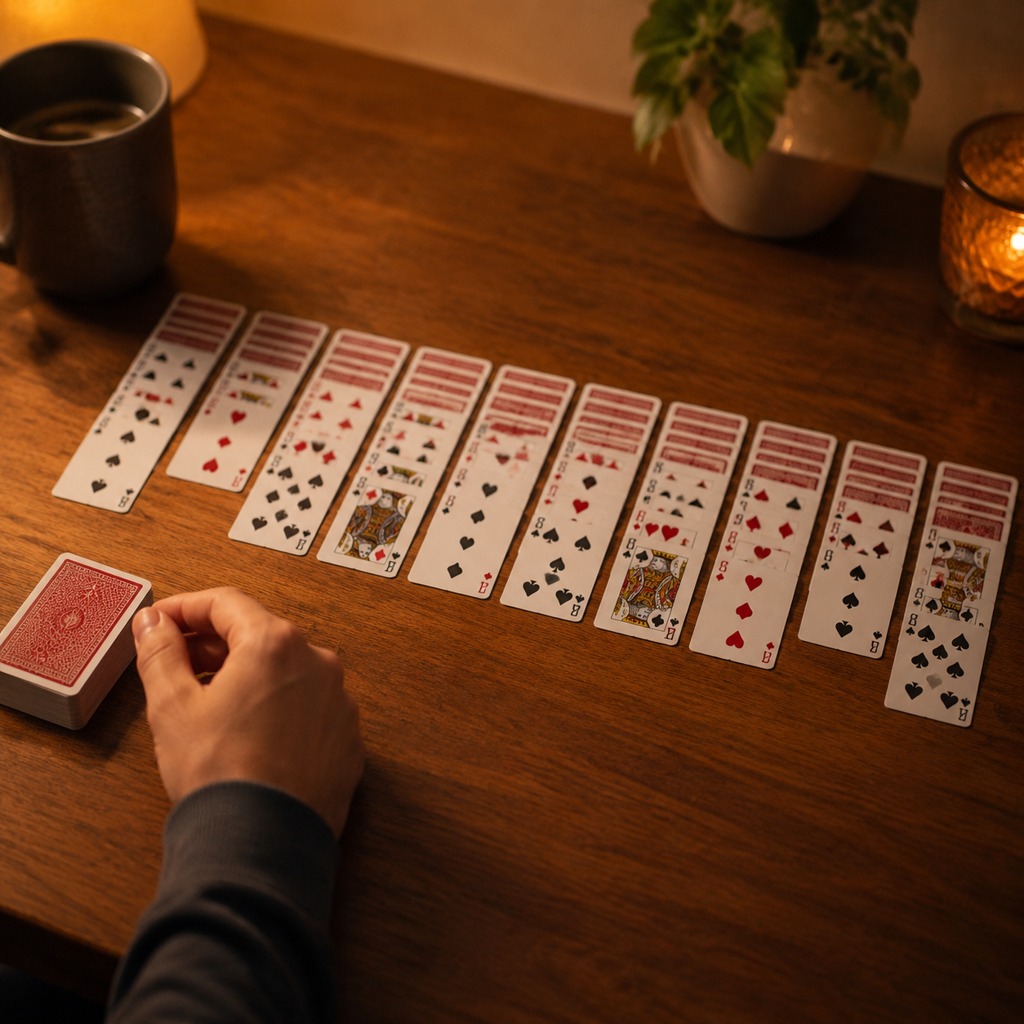
What the Spider Solitaire stock deal really changes
A new stock row changes every column at once. That can help, of course. A fresh card might land exactly where it belongs. A queen may appear under a king. A nine may land on a ten. The board can open.
It can also close.
The problem is that each new card sits on top of whatever progress you had. A nearly movable same-suit run may become pinned. A mixed stack that needed one empty lane may lose the space it depended on. A hidden card that was one move away may now require three moves and a little luck.
This is why the Spider Solitaire stock deal should feel expensive. It does not cost points in the way a scoring system might show immediately. It costs clarity.
David Parlett's history of patience and solitaire games makes a useful distinction between choice and information. A good patience game gives enough choice to matter, but not so much that the game solves itself. Spider lives right in that tension. The stock gives more cards, but the tableau asks whether you used the information already available.
That is the whole little drama of the stock pile.
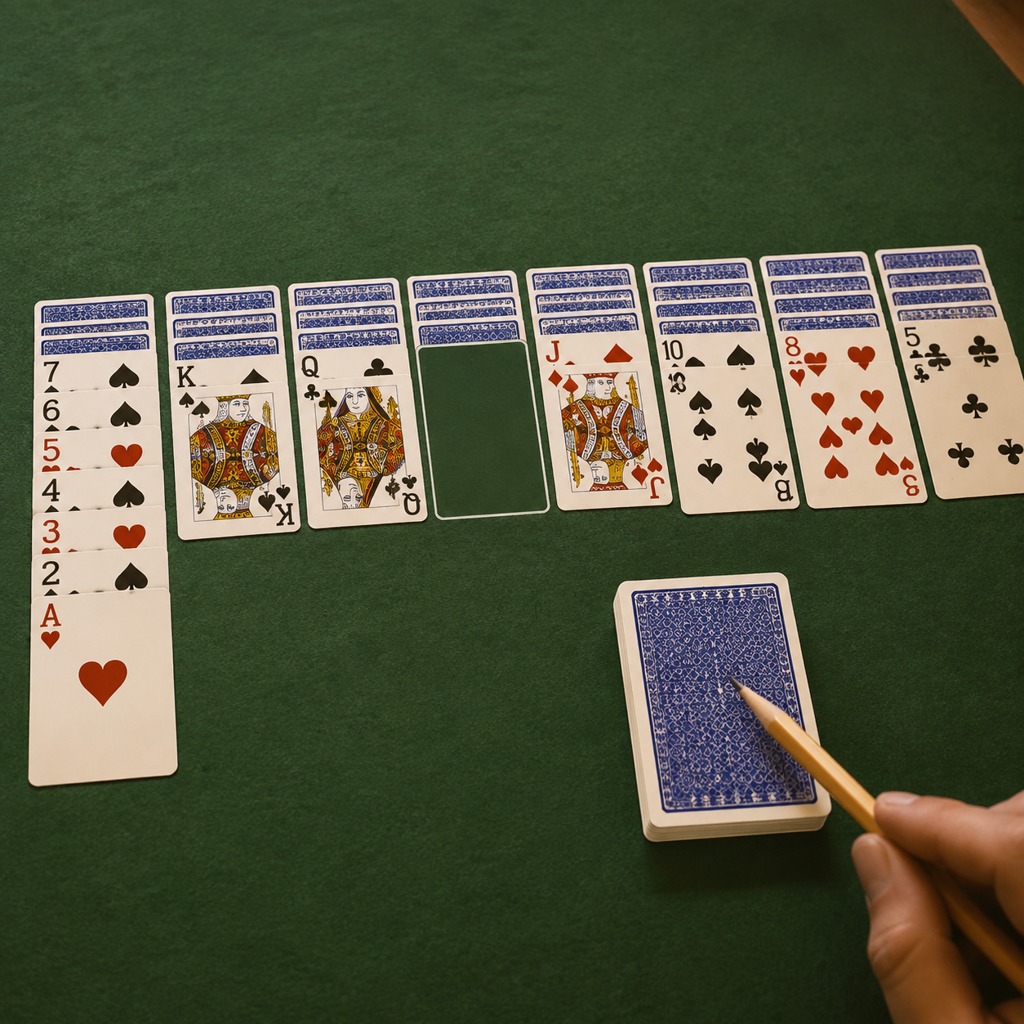
A pre-deal routine for the Spider Solitaire stock deal
Use this routine before every stock click. It takes less than a minute once it becomes familiar.
First, check covered cards. Any move that turns a face-down card over is worth serious attention. Hidden cards are the board's locked doors. Opening one often matters more than making a visible stack look neat.
Second, check empty columns. If you have an empty column, do not spend it automatically. Ask whether it can lift a stack, uncover a card, or repair a suit. An empty column is a workbench, not a storage closet.
Third, check same-suit runs. A mixed sequence can be useful for a while, but same-suit runs are the ones that move cleanly. If one small transfer can turn a messy run into a movable unit, do that before the stock deal covers the board again.
Fourth, check kings and blocked high cards. A king can only move into an empty space, which makes timing awkward. If a king is trapping useful cards below it, think before filling every space and dealing.
Fifth, ask the plain question: what will the stock deal interrupt?
If the answer is "nothing important," deal. If the answer is "the one useful repair I still have," wait.
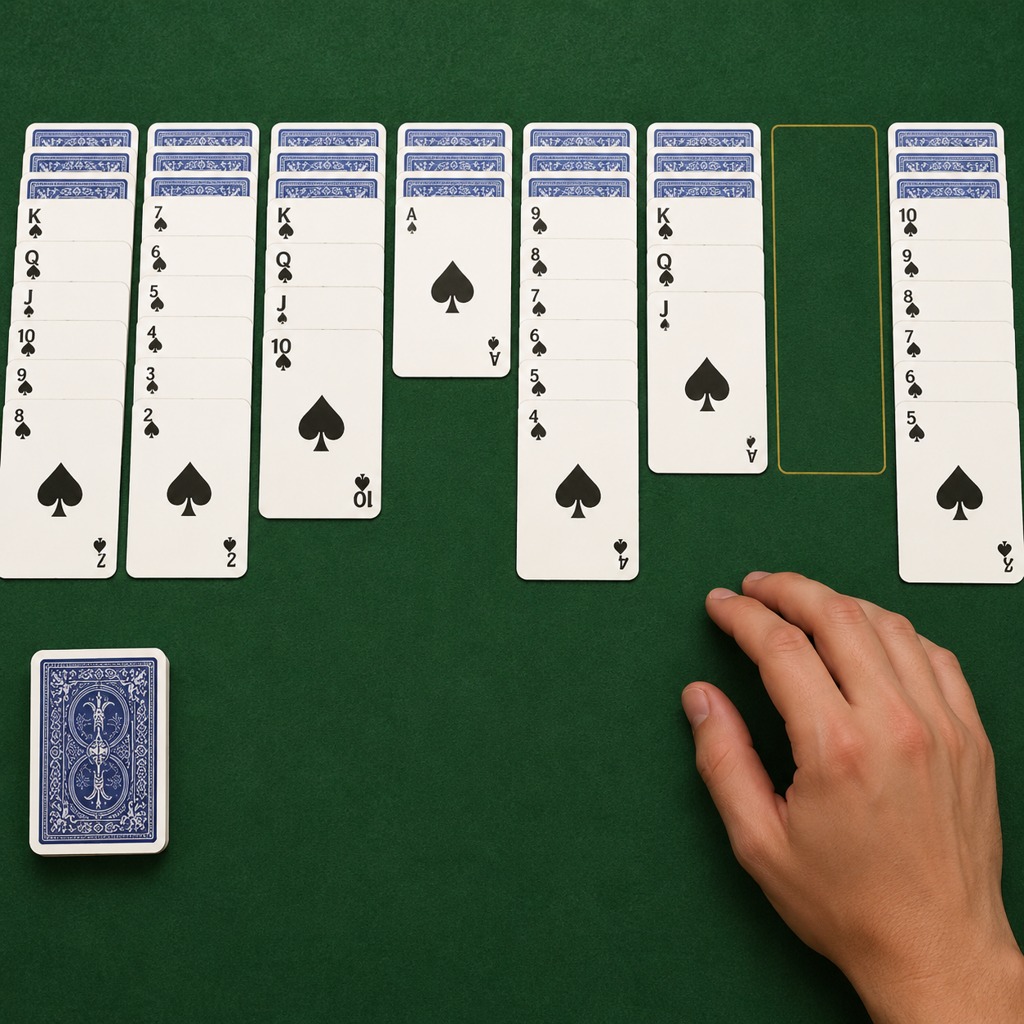
How suit count changes stock timing
One-suit Spider is forgiving. The Spider Solitaire stock deal still matters, but almost every card belongs to the same suit, so descending runs repair more easily. A new row can create useful connections faster.
Two-suit Spider is where many players first feel the cost. Mixed stacks become tempting because they are often necessary, but they are not finished work. Before the stock deal, try to turn at least one temporary mixed stack back into a clean run.
Four-suit Spider is colder. The board gives fewer easy repairs, and the stock can bury a fragile setup quickly. In four-suit games, one extra hidden-card reveal before dealing can matter more than a whole row of fresh cards.
The rule does not change. The patience changes.
That is a good way to choose your session, too. If you want a light break, one suit lets you practice flow. If you want the board to push back, two suits or four suits make the stock deal feel like a real decision.
For a wider puzzle break after cards,Easy Daily Puzzle has other daily games that use the same kind of small pause: read the board, make one clean move, then let the next problem appear.
The old patience lesson behind the stock
Spider Solitaire looks modern online because the restart is instant. A bad deal disappears in a click. A fresh game is always waiting.
But the older patience-game lesson is still sitting underneath it. The shuffled pack creates imperfect information. You do not know what is buried. You cannot control every card. You can only decide how much information to extract before adding more uncertainty.
That is why the Spider Solitaire stock deal is more interesting than it looks. It turns a simple digital button into a timing test.
There is no need to make the game feel heavy. The whole point of a browser card game is that it can fit into a short break. But a short break can still have a better habit inside it.
Before the next stock deal, pause long enough to find one useful thing the current tableau still offers. One covered card. One repair. One column worth protecting.
Then deal if you must.
The best Spider moves often look quiet at first. They do not celebrate. They just leave the next row a little less messy than it would have been.