



A standard deck of playing cards holds more than just a system of numbers and suits—it is a gallery of historical and mythological figures preserved in paper and ink. The royal court cards, the Jack, Queen, and King (collectively known as the "face cards"), are not arbitrary inventions but are believed to be based on specific, illustrious personalities from European history and legend. While regional variations exist, the most widely accepted and enduring tradition, especially in the French-suited decks used globally today, links these figures to a fascinating cast of characters.
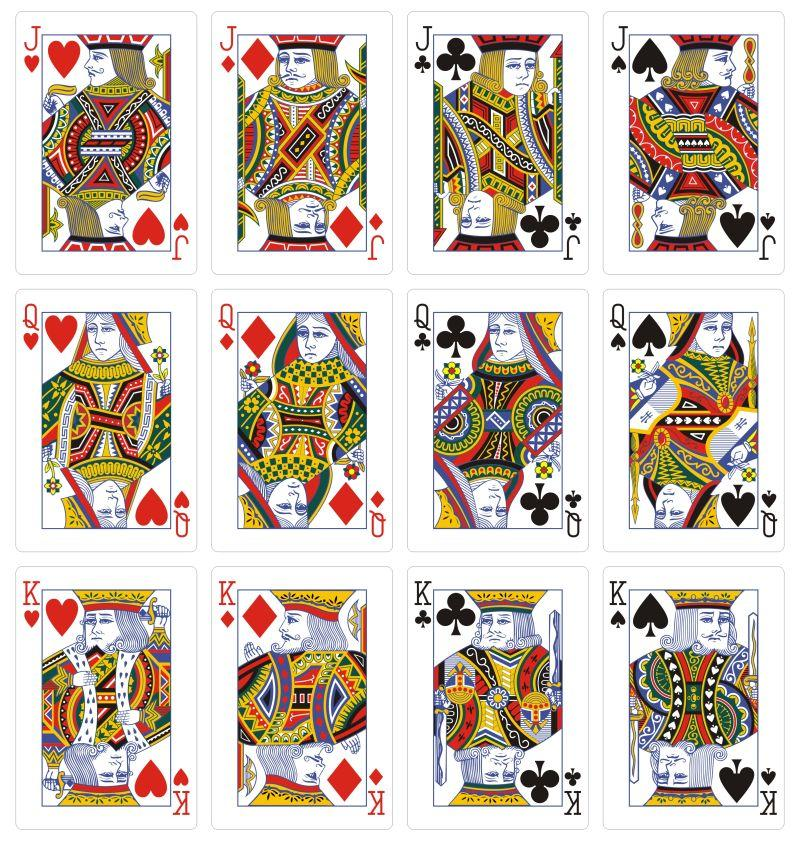
The Kings: Rulers of History and Myth
The four Kings typically represent great rulers, blending historical and legendary archetypes of power and leadership.
- King of Spades: King David. The Biblical King of Israel, renowned as a warrior, poet, and author of the Psalms. He is often depicted holding a harp or a sword, symbolizing both his artistic and martial prowess. His presence signifies divinely sanctioned authority and complex humanity.
- King of Hearts: Charlemagne (Charles the Great). The first Holy Roman Emperor, who unified much of Western Europe in the early Middle Ages. In some older traditions, this card represented his grandson, Charles the Bald. The King of Hearts is unique as the only king without a moustache and is often shown with a sword behind his head, sometimes called the "suicide king."
- King of Diamonds: Julius Caesar. The legendary Roman general and statesman. His inclusion bridges the classical and medieval worlds, representing imperial power, military genius, and the political foundation of Europe.
- King of Clubs: Alexander the Great. The ancient Macedonian king who created one of the largest empires in history. He embodies the ideals of conquest, ambition, and the spread of Hellenistic culture across continents.
The Queens: Embodiments of Virtue and Sovereignty
The Queens often symbolize a mix of virtue, beauty, strategy, and sovereignty.
- Queen of Spades: Pallas Athena (often simplified to Minerva). The Greek goddess of wisdom, justice, and strategic warfare. She represents intellect and righteous strength, rather than brute force.
- Queen of Hearts: Judith. The Biblical heroine who saved her city by beheading the Assyrian general Holofernes. She symbolizes courage, cunning, and decisive action. In some interpretations, she is linked to Helen of Troy.
- Queen of Diamonds: Rachel. The Biblical figure from the Book of Genesis, the favored wife of Jacob. She is traditionally associated with beauty, virtue, and sometimes earthly wealth, fitting the material symbolism often attached to the diamond suit.
- Queen of Clubs: Argine. This figure's origin is the most obscure. "Argine" is believed to be an anagram of the Latin Regina, meaning "Queen." She may represent a generic queenly ideal or could be linked to Mary of Anjou, the wife of King Charles VII of France, or the mythological Argea.
The Jacks: Knights and Heroic Youths
Originally called "Knaves," these cards represent heroic young men, often knights or legendary attendants to the kings.
- Jack of Spades: Ogier the Dane (Holger Danske). A legendary Danish knight who served under Charlemagne, featured in the Chanson de Roland and other chivalric romances. He is the loyal paladin.
- Jack of Hearts: La Hire. The nickname for Étienne de Vignolles, a loyal and fierce commander who fought alongside Joan of Arc for Charles VII of France. He embodies martial valor and nationalistic spirit.
- Jack of Diamonds: Hector. The greatest Trojan hero of Homer's Iliad, known for his nobility and military skill. He represents the classic epic hero and paragon of chivalry. In some traditions, he is Roland, another of Charlemagne's paladins.
- Jack of Clubs: Lancelot or Judas Maccabeus. The most common association is with Lancelot, the greatest knight of the Round Table from Arthurian legend, symbolizing perfect chivalry (and its flawed humanity). An older, alternative figure is Judas Maccabeus, the Jewish leader who revolted against the Seleucid Empire.
Evolution and Cultural Variations
It is crucial to note that these associations crystallized over centuries. Early playing cards from Mamluk Egypt and medieval Europe featured abstract court figures. The specific personalization likely began in 15th-century France, as cardmakers sought to give the figures recognizable identities rooted in popular culture, history, and the Bible.
Different countries developed their own pantheons. For instance, German-suited decks (with Acorns, Leaves, Hearts, and Bells) historically featured entirely different sets of kings from the Germanic world. Swiss and German decks sometimes replaced Queens with two "Obers" (Upper Knaves) and "Unters" (Lower Knaves). The English pattern, derived from the French, ultimately cemented the global standard.
In conclusion, the next time you hold a hand of cards, remember that you are not just holding game pieces, but a piece of historical storytelling. The Jacks, Queens, and Kings are a silent tribute to the archetypes that shaped the Western imagination—the wisdom of Athena, the power of Charlemagne, the courage of La Hire, and the romance of Lancelot—all dealt randomly across the green felt of history.