



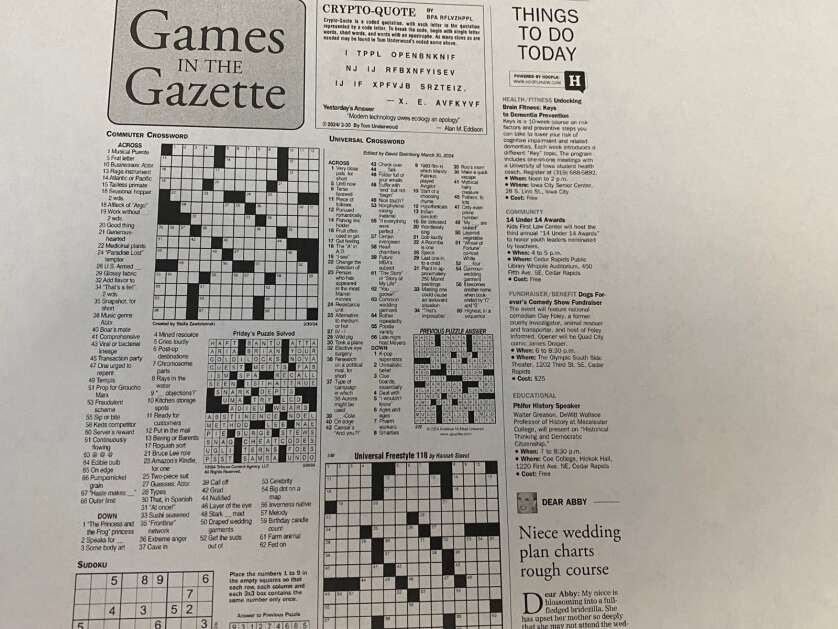
For millions around the globe, the day hasn’t truly begun until they’ve picked up a pen and tackled the daily crossword. This humble grid of black and white squares is more than a pastime; it’s a ritual, a mental gym, and a quiet sanctuary. The appeal of crossword puzzles is both simple and profound, offering a unique blend of challenge, learning, and calm in an increasingly noisy world.
The primary pleasure lies in the "Aha!" moment—that sudden spark of clarity when an elusive answer snaps into place. It’s the satisfaction of connecting seemingly disparate clues: knowing that "French river" leads to "Seine," which then unlocks the crossing answer for "Royal headwear." This process is an active dance with language, testing not just our vocabulary, but our lateral thinking, our knowledge of trivia, and our ability to spot subtle puns and wordplay. Each solved clue is a small, personal victory.
Beyond the immediate thrill, the cognitive benefits are substantial. Regularly engaging with crosswords is a full-brain workout. It strengthens memory recall as we dig into our mental archives for facts. It enhances verbal fluency and vocabulary, introducing us to new words and phrases. The need to interpret cryptic clues ("Arrange broken nets for a performer" for "TENNIS ACE") sharpens problem-solving skills and fosters cognitive flexibility. Studies suggest that such mentally stimulating activities can help maintain brain health and may even contribute to building cognitive reserve as we age.
Perhaps the most underrated gift of the crossword is its capacity for mindfulness. In a state of focused concentration, the outside world recedes. The relentless chatter of worries, to-do lists, and digital notifications fades away, replaced by a singular mission: to fill the grid. This immersive focus is a form of active meditation, providing a legitimate mental break from stress and anxiety. It’s a pocket of purposeful quiet in a hectic day.
Furthermore, crosswords connect us—to culture, to history, and to each other. A single puzzle might reference Shakespeare, modern pop culture, ancient geography, and scientific terms. They are a delightful trove of lifelong learning. They also foster community, whether it’s the shared struggle with a notoriously difficult Thursday edition, the friendly competition between partners, or the collaborative spirit of solving a puzzle together, pooling knowledge across generations.
In essence, the crossword puzzle is a perfect paradox: a structured challenge that liberates the mind, a solitary activity that connects us to a wider world of knowledge, and a simple game that delivers complex rewards. It entertains, educates, and soothes in equal measure. So, the next time you see a half-finished grid, consider picking up the pen. You might just find more than the answer to 1-Across; you might find a moment of peace, a spark of joy, and a sharper, happier mind.