



Chess, often hailed as the "game of kings," boasts a rich and fascinating history that spans over a millennium. Its evolution from ancient strategy games to the modern intellectual sport reflects cultural exchanges, intellectual advancements, and enduring human creativity.
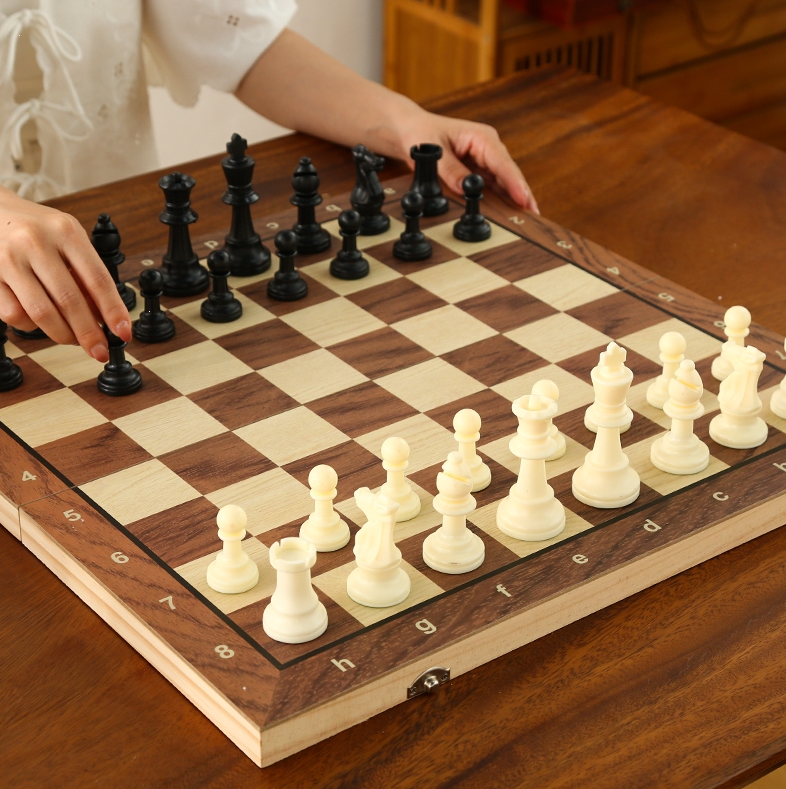
Origins: The Ancient Beginnings
The earliest precursor of chess is believed to have originated in India around the 6th century CE. Known as Chaturanga, which means "four divisions" in Sanskrit, the game simulated Indian military strategy, featuring infantry, cavalry, elephants, and chariots—represented by pieces that would later evolve into pawns, knights, bishops, and rooks. Played on an 8x8 board, Chaturanga involved two key elements still central to chess: different pieces with unique movements and the objective of capturing the opponent's king.
From India, the game spread to Persia, where it became known as Shatranj. The Persians refined the rules and introduced terms like "Shah" (king) and "Shah Mat" (the king is helpless), which eventually morphed into "checkmate." Following the Islamic conquest of Persia in the 7th century, Arab scholars adopted and further developed Shatranj, documenting strategies and theories that preserved the game during Europe's Middle Ages.
Medieval Transformation: Chess in Europe
Chess entered Europe through Islamic Spain and Sicily by the 9th century. Initially, the game retained its Arabic and Persian characteristics, but European players gradually modified it to reflect their own societal values. By the late Middle Ages, key changes emerged:
- The queen replaced the vizier (advisor) and gained immense power, likely influenced by the rise of strong female monarchs like Isabella I of Spain.
- The bishop substituted the elephant, aligning with Christian religious symbolism.
- Rules such as castling and the two-square pawn advance were introduced, speeding up gameplay.
These innovations, solidified by the 15th century, transformed chess into a faster, more dynamic game—often called "Mad Queen Chess." The first known chess books, like Luis Ramírez de Lucena's Repetición de Amores y Arte de Ajedrez (1497), documented these new rules.
Modernization and Global Spread
The 19th century marked chess's transition into a structured, competitive sport. Key developments included:
- Standardized rules: Tournaments like the 1851 London Chess Tournament adopted consistent regulations.
- The rise of competitive play: Wilhelm Steinitz, the first official World Chess Champion (1886), pioneered positional strategy, laying the groundwork for modern theory.
- Time controls: The introduction of chess clocks in the 1880s added a new dimension of urgency.
The 20th century saw chess become a global phenomenon, fueled by legendary world champions like José Capablanca, Alexander Alekhine, and later, Soviet dominance under Mikhail Botvinnik and Garry Kasparov. The Cold War era turned chess into a symbolic battlefield between ideological systems, most notably during the 1972 "Match of the Century" between Bobby Fischer and Boris Spassky.
The Digital Revolution
The late 20th and early 21st centuries ushered in a technological transformation:
- Computer chess: IBM's Deep Blue defeated Garry Kasparov in 1997, showcasing artificial intelligence's potential.
- Online platforms: Websites like Chess.com and Lichess made the game accessible to millions, enabling real-time play across continents.
- Educational tools: AI engines and databases revolutionized training, allowing players to analyze games with unprecedented depth.
Recently, chess has experienced a popular resurgence, driven by streaming platforms, documentaries like The Queen's Gambit, and the engaging content of grandmasters such as Magnus Carlsen and Hikaru Nakamura. This new era blends tradition with innovation, ensuring chess remains relevant in the digital age.
From Chaturanga's ancient battlefields to today's digital arenas, chess has continuously adapted while preserving its core essence: a battle of wits, foresight, and creativity. More than a game, it serves as a mirror to human history—a testament to our enduring fascination with strategy, competition, and intellectual discovery. As it enters a new chapter, chess continues to inspire, challenge, and connect people across cultures and generations.