



Hearts is one of the most beloved and enduring trick-taking card games in the world. Unlike games where the goal is to win tricks, Hearts challenges players to avoid certain cards—specifically, hearts and the dreaded Queen of Spades. Its unique blend of strategy, risk, and psychological play has captivated players for generations. But where did Hearts come from, and how did it evolve into the game we know today?
Early Origins: The European Ancestors
The roots of Hearts can be traced back to late 19th-century Europe, where it likely evolved from a family of trick-avoidance games. One of its closest relatives is Reversis, a Spanish game from the 1750s where players aimed to avoid taking tricks containing certain penalty cards. Another influence may have been Polignac, a French game that involved avoiding specific high-value cards.
These early games shared a core mechanic: penalties for taking certain tricks, a reversal of traditional trick-taking objectives like those in Whist or Bridge. By the late 1800s, a game called "Hearts" began appearing in English and American rulebooks, though early versions varied widely in rules and scoring.
The American Standardization
Hearts gained massive popularity in the United States in the early 20th century, particularly among college students and social clubs. The game was easy to learn, required a standard 52-card deck, and accommodated 3–6 players (though the four-player version became the standard). Key developments during this period included:
- The Queen of Spades ("The Black Lady") was introduced as a high-penalty card (usually 13 points), adding a major strategic layer.
- Shooting the Moon—the risky but rewarding move of taking all penalty cards to reverse scores—emerged as a game-changing tactic.
- Standard scoring solidified: each heart = 1 point, the Queen of Spades = 13 points, and the goal being to have the lowest score when someone reaches 100 points.
These rules created the perfect balance of control and chaos, where players had to carefully manage their hands while sabotaging opponents.
The Digital Revolution and Global Reach
Hearts might have remained a niche parlor game if not for the digital age. Its inclusion in Microsoft Windows as a pre-installed game from Windows 95 onward introduced Hearts to millions worldwide. The digital version:
- Standardized rules for a global audience.
- Allowed solo play against AI, making it accessible anytime.
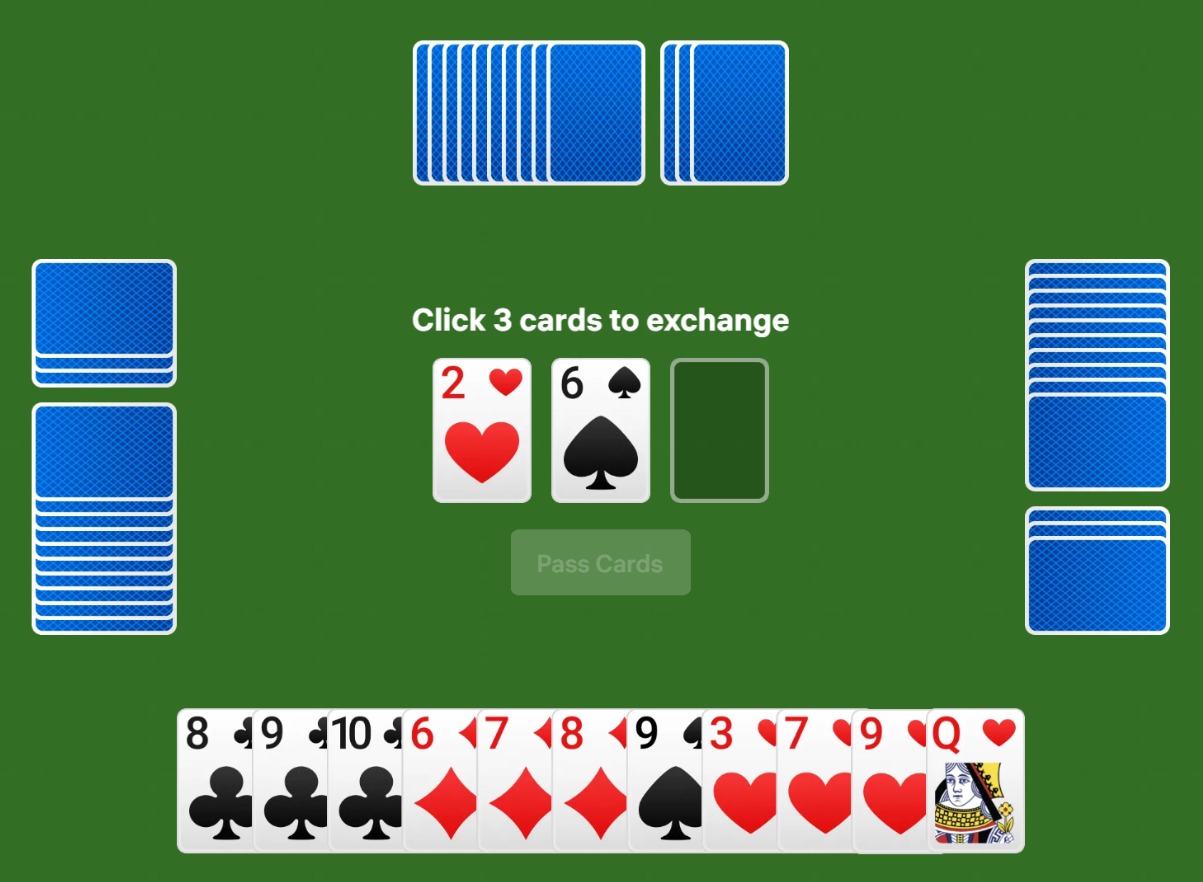
- Popularized the "pass three cards" mechanic at the start of each round (left, right, or across), deepening strategy.
Online platforms like Yahoo! Games, early internet servers, and later mobile apps further cemented its place in casual gaming culture.
Modern Variations and Competitive Play
While the classic version remains dominant, several popular variations exist:
- Spot Hearts: Different heart cards carry point values equal to their rank (e.g., Ace = 14, King = 13), increasing risk.
- Omnibus Hearts: Bonus points for taking the Jack of Diamonds or other specific cards, rewarding calculated risks.
- Black Lady Hearts: The standard Queen-of-Spades-and-hearts version popularized digitally.
- Hearts for 3 or 6 players: Adapted rules for non-four-player games, often removing cards or adjusting passes.
Though less formalized than Bridge, Hearts has a dedicated competitive scene in some clubs and online platforms, with tournaments focusing on strategic depth and long-term risk management.
Why Hearts Endures
Hearts thrives because it masterfully combines simple rules with deep strategy. Unlike purely luck-based games, it requires:
- Memory and deduction (tracking played cards, especially hearts and the Queen).
- Strategic passing to offload risks or sabotage opponents.
- Psychological play, such as luring others into taking penalties.
It’s a game where a single round can turn the tide, and alliances are fleeting—a perfect recipe for engaging social play.
From 19th-century European parlors to the digital decks of Windows PCs, Hearts has evolved while keeping its core intact: a game of avoidance, clever maneuvering, and occasional daring. It remains a testament to how a simple concept—"don’t take the wrong tricks"—can inspire decades of play, strategy, and friendly competition. Whether played with family at a table or against AI on a screen, Hearts continues to capture the hearts of card game enthusiasts everywhere.