



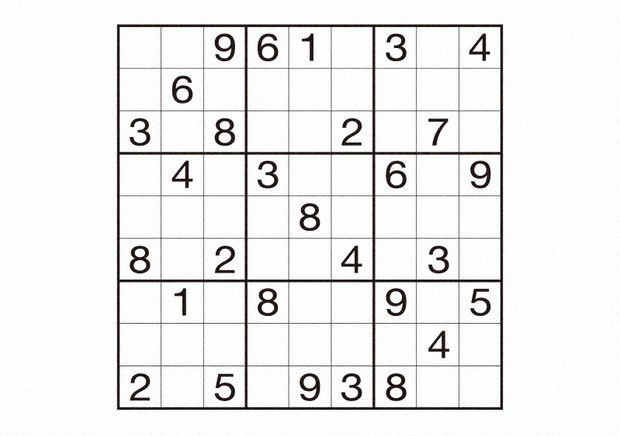
Sudoku, with its grid of numbers and deceptively simple rules, has become a global phenomenon. Yet, its journey to becoming the world's most popular pencil-and-paper puzzle is a fascinating tale of cross-cultural exchange and accidental discovery.
The Precursors: Not Quite Sudoku
While the modern Sudoku puzzle is often associated with Japan, its mathematical roots lie in the West. The concept is based on the "Latin Square," an idea pioneered by Swiss mathematician Leonhard Euler in the 18th century. In a Latin Square, each symbol or number appears only once in each row and column. However, Euler's work did not include the vital sub-grid constraint that defines Sudoku.
The Birth of "Number Place"
The direct ancestor of Sudoku first appeared in the United States. In 1979, a puzzle creator named Howard Garns designed a puzzle called "Number Place" for Dell Pencil Puzzles & Word Games magazine. Garns' innovation was to take a 9x9 Latin Square and divide it into nine distinct 3x3 sub-grids, requiring numbers 1 through 9 to be unique in each row, column, and these sub-grids. This added the crucial layer of logical interdependence that makes the puzzle so engaging. Garns' name was never publicly attached to the puzzle during his lifetime, but he is now widely recognized as its inventor.
The Japanese Transformation
The puzzle crossed the Pacific in 1984 when it was discovered by Nikoli, Japan's premier puzzle publishing company. They recognized its potential but made several key refinements. First, they gave it a memorable name: "Sūji wa dokushin ni kagiru" (数字は独身に限る), which translates to "the digits must be single" or "the digits are limited to one occurrence." This was later abbreviated to "Sudoku" (数独), meaning "single number."
More importantly, Nikoli's editor Maki Kaji, often called the "Godfather of Sudoku," introduced the rule of symmetrical clue placement. The given numbers (clues) were arranged in a pattern that was visually balanced and pleasing, which became a hallmark of quality. Nikoli also limited the number of clues to 30 or fewer, increasing the puzzle's elegance and logical depth. These changes transformed "Number Place" into the polished, intellectually satisfying Sudoku we know today.
Global Explosion and the Digital Age
For years, Sudoku remained a niche hobby in Japan and among puzzle enthusiasts. Its global explosion began almost by accident in 1997 when a New Zealand judge named Wayne Gould, visiting Tokyo, discovered a Sudoku book in a bookstore. He became obsessed, spending six years writing a computer program that could generate unique puzzles quickly.
In 2004, he persuaded The Times of London to publish one of his puzzles. Its success was immediate and spectacular. British newspapers, locked in a circulation war, quickly adopted Sudoku as a must-have feature. The craze swept across Europe, North America, and then the entire world within a matter of months. Sudoku's language-independent nature—relying solely on numbers—made it universally accessible.
The digital age further cemented its place. Sudoku became a staple of mobile apps, online gaming portals, and even competitive championships. Software could now generate puzzles of near-infinite variety and precise difficulty levels, from "Easy" to "Diabolical."
The Enduring Appeal
The success of Sudoku lies in its perfect blend of simplicity and complexity. The rules can be learned in a minute, yet the puzzles can challenge the sharpest minds. It exercises logical deduction, pattern recognition, and focus, offering a satisfying sense of completion with each solved grid. It is a pure logic puzzle, requiring no mathematical arithmetic, only reasoning.
From Howard Garns' creative spark in a New York magazine to Maki Kaji's refinement in Tokyo and Wayne Gould's digital propagation, Sudoku's history is a testament to how a great idea can evolve, cross borders, and captivate millions. Today, it stands not just as a pastime, but as a cultural icon of 21st-century logic and leisure.